




403
Sorry!!
Error! We're sorry, but the page you were looking for doesn't exist.
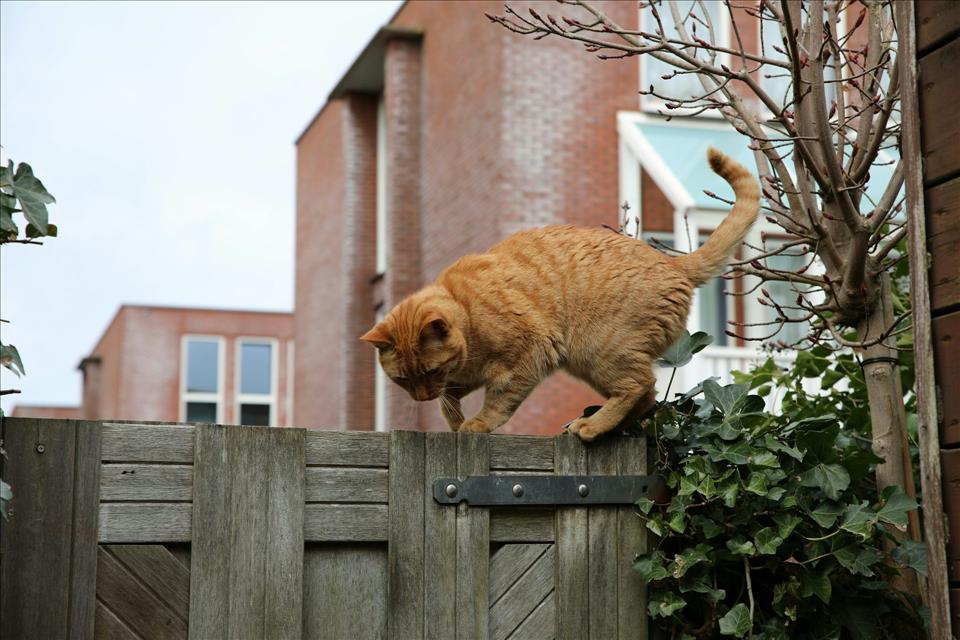
How You Can Stop Your Cat From Bringing Home Unwelcome Pathogens
Author: Amy Wilson
(MENAFN- The Conversation) Pets form an important part of many people's lives, providing meaningful companionship. However, our pets can sometimes also be a source of unwelcome pathogens and diseases, particularly if they frequently roam outdoors.

We are ecologists and a veterinarian who study wildlife health and the movement of pathogens among wildlife, domestic animals and people. If you let your cat outdoors, or if outdoor cats visit your yard, our recent findings may be relevant.
Zoonotic pathogens are organisms that can infect both animals and humans. From a pathogen's perspective, humans are just another animal host. Wildlife is often emphasized as a source of emerging disease for humans because there are vastly more wild animal species than domestic animal species.
However, even if a pathogen is capable of infecting people, it needs a way to reach us. Humans share more zoonotic pathogens with domestic animals than with wildlife, because domestic animals live close to us. Pathogens benefit even further if they can infect a companion animal.
In our newly published research, we compiled data from more than 400 studies to investigate how a cat's lifestyle, whether they're mostly indoors, outdoor-roaming or feral, affects that cat's likelihood of carrying pathogens that can infect people.
Across this compilation, there were nearly 100 pathogens detected in cats that are considered zoonotic and capable of infecting humans. Familiar examples are rabies, Toxoplasma gondii, roundworms and Salmonella.
Our researchWe found that outdoor-roaming pet cats had three to five times the odds of carrying a zoonotic pathogen compared with indoor-only cats. More surprisingly, cats allowed to roam outdoors had similar odds of carrying at least one zoonotic pathogen as feral cats. Outdoor-owned cats carried fewer types of pathogens than feral cats, but the same pathogens that infect feral cats can also infect owned cats.
These risks become a large-scale problem because pet cats that roam freely interact closely with people, wildlife and other domestic animals. Across the studies we reviewed, about 60 per cent of owned cats had unsupervised outdoor access; in some regions, that rate exceeded 90 per cent.
Roaming cats hunt, interact with wildlife or other domestic animals, and move through environments contaminated with pathogens and toxins. Research suggests that cat owners may underestimate hunting by around 80 per cent, meaning that many prey captures and animal contacts go unnoticed.
These interactions are not uncommon and not limited to so-called pest species. Single-country estimates of wildlife killed by cats run into the billions, with more than 2,000 wildlife species documented as prey for domestic cats.
Read more: Do you speak cat? Take this quiz to find out
Cats hunt animals that can carry zoonotic pathogens, including rodents, birds and bats, many of which would otherwise have little direct contact with people. Owned cats might bring home rodents carrying viruses, and there are documented cases of cats bringing rabies-positive bats into homes. A cat returning home with prey can therefore create a pathway by which pathogens circulating in wildlife populations reach people.
In addition, it is not only owners who are at risk. Outdoor cats defecate in gardens, parks, playgrounds and other shared spaces, potentially leading to high contamination rates. One study estimated that outdoor cats deposited more than 60 tonnes of feces per 10,000 households each year.
Depending on the parasite, faeces can contain hundreds to hundreds of thousands of parasite eggs that can persist in soil or water for months to years, which can infect people or other animals that come in contact with those eggs.
What cat owners can doThe most straightforward intervention is also the most economical and humane: prevent unsupervised roaming. That does not mean denying cats access to the outdoors. It can mean building“catios” or enclosures, leash walks, supervised time outside or other forms of contained outdoor access.
Veterinary care still matters. Treating existing parasitic infections and vaccinating against diseases like rabies are essential precautions, even for indoor cats. Since neither vaccines nor anti-parasitic treatment cover the full spectrum of wildlife-associated pathogens, managing exposure remains the more comprehensive protective approach.
The free-roaming debate is often framed as a false choice: either cats roam freely, or they are deprived of a natural life. That framing is misleading and inconsistent with how we manage other companion animals.
We do not assume dogs need unrestricted access to roads, neighbours' yards or to hunt wildlife to have good welfare. Indoor cats and cats with supervised outdoor access can live healthy, enriched and longer lives.
Policies and strategies that address how and where owned cats roam outdoors can help safeguard biodiversity, feline and wildlife welfare and public health. That is the central insight of One Health, that the same choices that protect ecosystems can also protect the animals and people who share them.
This article was co-authored by David Lapen, who works for and receives research funding from Agriculture and Agri-Food Canada.
Institution:Georgetown University

Legal Disclaimer:
MENAFN provides the
information “as is” without warranty of any kind. We do not accept
any responsibility or liability for the accuracy, content, images,
videos, licenses, completeness, legality, or reliability of the information
contained in this article. If you have any complaints or copyright
issues related to this article, kindly contact the provider above.
Most popular stories
Market Research

More Story








Comments
No comment