




403
Sorry!!
Error! We're sorry, but the page you were looking for doesn't exist.
War Heats Up As Russia, Ukraine Trade Drone And Missile Attacks
(MENAFN- Asia Times)
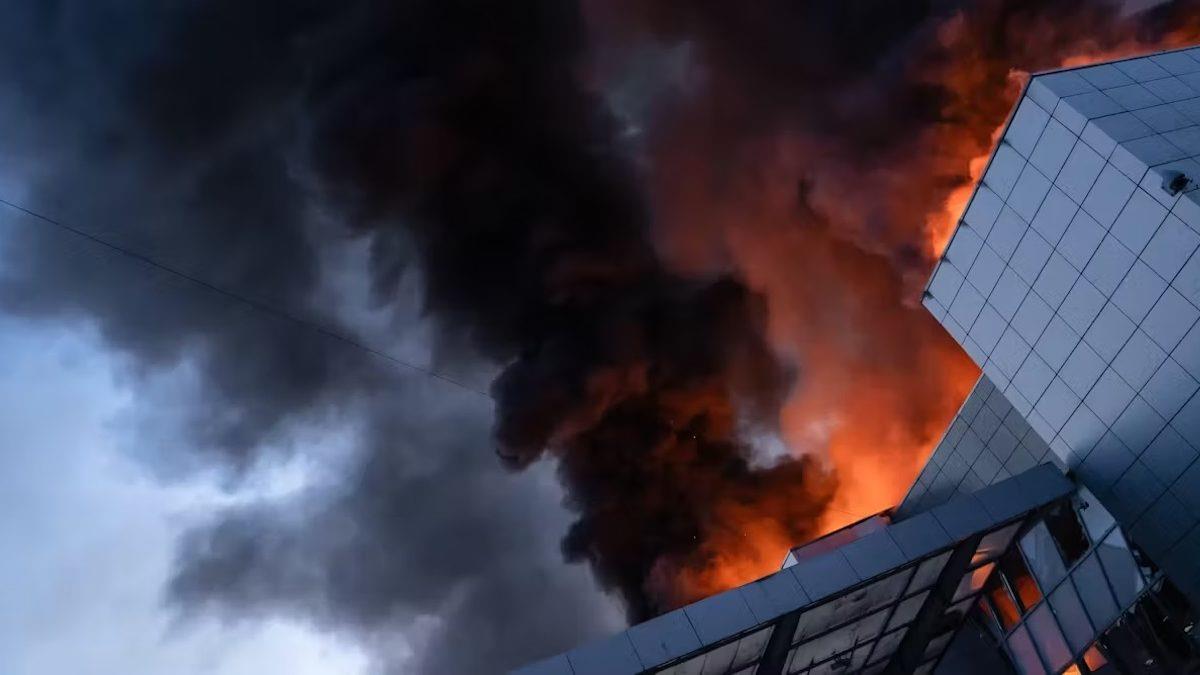
Over the past month, there has been a notable increase in the intensity of the air war in Russia's aggression against Ukraine. Strikes in mid- and late-May and early June have been characterised by significantly larger numbers of drones and missiles deployed by Russia in single attacks, leading to more destruction and more casualties.
At the same time, Russian territorial gains on the ground have slowed significantly, and in some cases have been reversed by successful Ukrainian counter-attacks.
The change in intensity in the air war, however, is what generates headlines, and for good reason. Two consecutive Russian attacks on May 13 and 14 were the largest in the war to date.
Ten days later, a similar strike hit Kyiv and other Ukrainian cities. And a week after that, Russia launched yet another large-scale strike.
Just focusing on the Russian strikes, however, masks an important pattern of increasingly effective Ukrainian retaliation.
The first Russian attack in May was followed by Ukrainian strikes on the Moscow region. The second one saw Ukrainian strikes on St Petersburg on June 3, just before Vladimir Putin's St Petersburg International Economic Forum was due to begin there.
At the same time, Ukraine has also intensified its strikes on Crimea and critical Russian supply lines to the peninsula, which Moscow has illegally occupied since 2014.
This series of Russian and Ukrainian airstrikes represents a high-intensity retaliation cycle. Ukraine responds to a Russian strike, which Moscow then uses to justify its massive strike, and so on.
Latest stories Beijing vows to retaliate as EU warns of China Shock 2.0 Russia's Afghan pivot risks entanglement in old traps Israel's military creep killing Gaza peace planWhat is new is both the scale of the Russian strikes, with larger numbers of drones and missiles compared even with the peak of attacks in late 2025, and the quickening cycle of these tit-for-tat attacks.
Ukrainian attacks deep into Russia are no longer just symbolic but highly effective – prompting Russia to accuse Ukraine of a terror campaign, in an attempt to deflect from its own systematic targeting of civilian infrastructure.
In their levels of destruction and civilian casualties, the Russian strikes also seem more effective than in the past – and Ukraine's air defenses less so. But this is only partially true. Ukraine's intercept rate of drones remains high. However, the larger number of drones being deployed by Russia means that, in absolute numbers, more drones hit their targets.
Russia in recent strikes has also deployed more missiles, which Ukraine finds harder to intercept – not least because its stockpiles of anti-missile defenses have been depleted over time, with the decrease in US support since Donald Trump's return to the White House in January 2025.
The recent diversion of US interceptors to the American war effort in the Middle East has also run down the stocks of these defense systems that are available to Kyiv.
Can this intensity be sustained?Russia has thus been presented with an opportunity that it is ruthlessly exploiting. But how sustainable is the current pattern?
The scale and frequency of the past four weeks is probably beyond Russia's capacity to sustain indefinitely. While still large in scale, the strikes in late May and early June did not involve the same number of munitions as the first wave.
Russia is clearly able to mass-produce cheap attack drones, but less able to do the same with missiles. So, sustaining larger-scale attacks over time is likely to decrease their frequency, while more frequent attacks will mean a more limited scale.
A mixture of the two is most likely – a sustained campaign of frequent massed drone strikes, with intermittent spikes of large missile barrages.
While this may be a sustainable attack pattern for Russia, it does not mean the current level of effectiveness is equally sustainable. Ukrainian air defenses will adapt and become more effective, including against Russian missiles.
Its defense cooperation with the EU is simultaneously improving. The lifting of Hungary's veto on €40 billion of EU reimbursements for military support is likely to free additional funds to supply critical air defense systems to Ukraine.
Even with a sustained Russian air campaign, a manageable equilibrium is likely to set in over time. But critically, this will be characterized not merely by better Ukrainian defences against Russian attacks – but also by more effective Ukrainian strikes at Moscow's critical war infrastructure.
The Russian air campaign, and the war against Ukraine more generally, will thus become more costly for the Kremlin – and not just on the battlefield inside Ukraine.
Sign up for one of our free newsletters-
The Daily Report
Start your day right with Asia Times' top stories
AT Weekly Report
A weekly roundup of Asia Times' most-read stories
It remains to be seen whether this simply creates a different stalemate at a more costly level for both sides in their ongoing war of attrition or prompts them to reassess their exit strategies.
For Moscow, there is a hard choice to be made: toward escalation, including potential nuclear mobilization, or toward a peace deal. The middle ground of simply continuing is quickly eroding, because none of Putin's strategic goals in the war can be achieved this way – and the ongoing waste of resources cannot be sustained indefinitely.
On the Ukrainian side, a statement by Ukraine's president, Volodymyr Zelensky – that Ukraine's recent strikes on Russia put the country on an equal footing with Moscow in negotiations – hints at Kyiv's willingness to negotiate an end to the war with Moscow. However, it may take several more rounds in the air campaign retaliation cycle before the Kremlin reaches a similar conclusion.
Stefan Wolff is a professor of international security, University of Birmingham. Tetyana Malyarenko is a professor of international security and Jean Monnet Professor of European Security, National University Odesa Law Academy.
This article is republished from The Conversation under a Creative Commons license. Read the original article.
Sign up here to comment on Asia Times stories OrThank you for registering!
-
Share on X (Opens in new window)
Share on LinkedIn (Opens in new window)
LinkedI
Share on Facebook (Opens in new window)
Faceboo
Share on WhatsApp (Opens in new window)
WhatsAp
Share on Reddit (Opens in new window)
Reddi
Email a link to a friend (Opens in new window)
Emai
Print (Opens in new window)
Prin

Legal Disclaimer:
MENAFN provides the
information “as is” without warranty of any kind. We do not accept
any responsibility or liability for the accuracy, content, images,
videos, licenses, completeness, legality, or reliability of the information
contained in this article. If you have any complaints or copyright
issues related to this article, kindly contact the provider above.
Most popular stories
Market Research

More Story


Comments
No comment