

Herbal Medicine Markett Size, Share, Growth, Report, 2034


| Company | Recent Activity | Timeline | Details |
|---|---|---|---|
| Insilico Medicine | Strategic Investment & Partnership | March 2026 | Insilico Medicine signed an AI-driven drug discovery agreement valued at nearly USD 2.75 billion to strengthen botanical and small-molecule therapeutic research capabilities. |
| Enveda Biosciences | Series C Funding | January 2026 | Enveda Biosciences raised approximately USD 130 million to accelerate AI-powered natural compound discovery and expand plant-based drug development programs. |
| Dei BioPharma | Government Investment | February 2025 | Dei BioPharma continued receiving large-scale government-backed investment support for herbal-based pharmaceutical research, including plant-derived malaria treatment development initiatives. |
| Market Metric | Details & Data (2025-2034) |
|---|---|
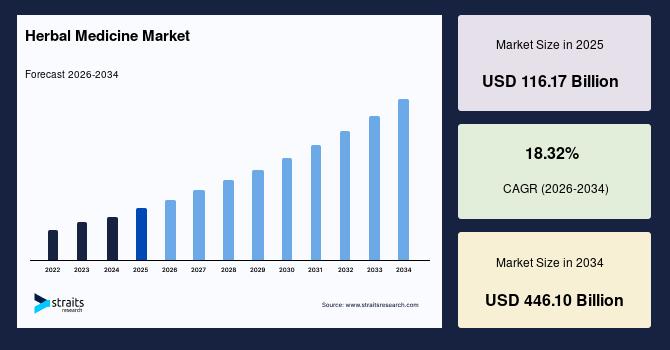
| 2025 Market Valuation | USD 116.17 Billion |
| Estimated 2026 Value | USD 116.17 Billion |
| Projected 2034 Value | USD 446.10 Billion |
| CAGR (2026-2034) | 18.32% |
| Study Period | 2022-2034 |
| Dominant Region | Europe |
| Fastest Growing Region | Asia Pacific |
| Key Market Players | Herbalife (US), Himalaya Wellness Company (India), Patanjali Ayurved (India), Dabur India Ltd. (India), Blackmores Limited (Australia) |
Download Free Sample Report to Get Detailed Insights.
Herbal Medicine Market Dynamics Market DriversIncreasing Use of Standardized Botanical Extracts for Chronic Care and Expansion of Medicinal Mushroom Therapeutics Drives Market
The growing use of standardized botanical extracts for chronic disease management is accelerating demand in the herbal medicine sector, particularly for liver health, metabolic disorders, and inflammatory conditions. Healthcare manufacturers are increasingly focusing on clinically quantified phytochemical concentrations instead of traditional raw-herb preparations. For example, Bionorica SE applies its phytoneering platform to standardize medicinal plant compounds for respiratory and urological therapies, improving formulation consistency and therapeutic reliability, significantly supporting the herbal medicine market growth.
The rapid commercialization of medicinal mushroom formulations is driving specialized growth across the herbal medicine industry, especially for cognitive wellness, immunity, oncology-supportive care, and stress management applications. Manufacturers are increasingly developing dual-extraction mushroom tinctures and beta-glucan standardized products using reishi, lion's mane, cordyceps, and chaga. For example, Host Defense develops mycelium -based mushroom supplements supported by DNA-authenticated fungal cultivation systems and bioactive compound profiling technologies for targeted wellness formulations.
Market RestraintsVariability in Botanical Compound Standardization and Contamination Risks in Multi-herb Formulations Restrain Market
Herbal medicine formulations often face issues in maintaining consistent phytochemical composition because active compounds in medicinal plants vary depending on soil quality, climate conditions, harvesting cycles, and post-harvest processing methods. Variations in curcumin, ginsenosides, or alkaloid concentrations can directly affect therapeutic reliability and batch consistency. This issue becomes more critical for clinically targeted herbal formulations requiring standardized extracts and validated bioactive levels for chronic wellness and therapeutic applications.
Multi-herb medicinal formulations often face contamination risks associated with heavy metals, pesticide residues, microbial growth, and adulteration during raw herb sourcing and processing stages. Complex botanical blends sourced from multiple geographic regions increase difficulties in maintaining uniform safety and purity standards across production batches. This issue becomes more significant for exported herbal medicines that require strict compliance with pharmacopeia standards, residue limits, and international botanical authentication regulations before commercial distribution.
Market OpportunitiesExpansion of Clinically Validated Botanical Therapeutics and Revival of Prescription Kampo & Integrative Herbal Clinics Offer Growth Opportunities for Herbal Medicine Market Players
A major herbal medicine market growth opportunity is emerging from the increasing commercialization of clinically validated botanical therapeutics for metabolic health, cognitive wellness, liver disorders, and women's health applications. Consumers and healthcare providers are increasingly demanding evidence-backed herbal formulations supported by pharmacological studies and standardized phytochemical profiles. This trend is encouraging manufacturers to invest in clinically tested herbal extracts, bioavailability-enhanced formulations, and physician-targeted botanical products for integrative healthcare applications.
The expansion of prescription-based Kampo and integrative herbal treatment clinics across Japan, China, and parts of Europe is creating strong commercial potential for herbal medicine manufacturers. Hospitals and physicians are increasingly incorporating standardized herbal therapies alongside conventional medicine for gastrointestinal disorders, menopausal symptoms, and chronic pain management. For example, Tsumura & Co. continues supplying prescription Kampo formulations to more than 80% of Japanese physicians, supporting wider clinical integration of botanical therapeutics.
Market ChallengesSustainability Pressure on Wild-Harvested Medicinal Plants and Compliance Complexity Act as Challenges in Herbal Medicine Market
The herbal medicine market faces increasing challenges from overharvesting and declining availability of wild medicinal plants used in premium botanical formulations. High-demand herbs such as goldenseal, frankincense, rhodiola, and certain Himalayan botanicals are experiencing sourcing pressure due to climate variability, biodiversity loss, and unsustainable harvesting practices. Regulatory authorities and conservation organizations are tightening controls on endangered medicinal species, creating procurement complexities and longer sourcing cycles for herbal medicine manufacturers dependent on wild-crafted raw materials.
Cross-border compliance complexity remains another major challenge because herbal medicine ingredients are governed under different pharmacopeia standards, contaminant thresholds, and traditional medicine regulations across countries. Export-oriented manufacturers must repeatedly modify formulations, labeling structures, and botanical documentation for different markets. For example, adaptogenic herbs approved in Ayurvedic formulations may face novel food or therapeutic-use restrictions in European markets. These inconsistencies increase operational costs, delay product commercialization timelines, and complicate international expansion strategies for herbal medicine companies.
Herbal Medicine Regional Outlook Europe Herbal Medicine MarketEurope: Market Dominance Led by Increasing Physician-backed Phytotherapy Adoption and Strong Consumer Preference for DTC Distributed Herbal Remedies
The Europe herbal medicine market accounted for the largest regional share of 33.48% in 2025 due to increasing physician-backed phytotherapy adoption and strong regulatory acceptance of standardized botanical formulations under traditional herbal registration pathways. Countries, including Switzerland and France, are witnessing higher prescription-based herbal remedy utilization through pharmacy-led preventive healthcare channels. Companies such as Schwabe Group are expanding clinically validated ginkgo and valerian formulations targeting cognitive wellness and stress management, while organic botanical sourcing partnerships strengthen premium herbal product positioning across European nutraceutical distribution networks.
Germany Herbal Medicine MarketThe Germany herbal medicine market was estimated to be USD 10.57 billion in 2025, led by widespread acceptance of evidence-based phytopharmaceuticals within mainstream clinical practice and strong consumer preference for DTC-distributed herbal remedies. German manufacturers such as Bionorica SE are increasingly investing in scientifically standardized botanical extraction technologies for respiratory and urological therapeutic applications. The market also benefits from physician-recommended herbal therapeutics reimbursed across selective healthcare programs, while demand for precision-dosed chamomile, ivy leaf, and St. John's wort formulations continues expanding among aging preventive healthcare consumers.
UK Herbal Medicine MarketThe herbal medicine market in the UK was valued at USD 3.71 billion in 2025, driven by increasing consumer demand for plant-based supplements, preventive healthcare, and natural wellness solutions. According to the UK Food Standards Agency, nearly 50% of adults in the UK reported using food supplements or herbal products regularly for immunity, digestion, and stress management. Retail pharmacies and online wellness platforms are expanding botanical extract, liver-health, and adaptogenic supplement offerings. Growing demand for organic formulations, clean-label ingredients, and personalized herbal nutrition programs continues supporting market growth.
Asia Pacific Herbal Medicine MarketAsia Pacific: Fastest Growth Driven by Increasing Integration of Traditional Botanical Therapeutics and Expanding Ayurveda-centered Preventive Healthcare Adoption
The Asia Pacific herbal medicine market is expected to grow at a CAGR of 19.79% during the forecast period, showcasing the fastest regional growth. This growth is fueled by increasing integration of traditional botanical therapeutics within modern preventive healthcare systems and strong government-backed traditional medicine promotion programs. Countries including Japan, South Korea, and Thailand are expanding reimbursement support and institutional herbal treatment adoption. According to Japan's Ministry of Health, Labour and Welfare, Kampo medicines are prescribed in nearly 80% of physician practices in Japan, while expanding cross-border botanical ingredient trade and digital wellness ecosystems continue accelerating regional herbal medicine accessibility among urban health-conscious consumers.
China Herbal Medicine MarketThe herbal medicine market in China, which was estimated to be USD 5.68 billion in 2025, is growing due to strong state-backed Traditional Chinese Medicine (TCM) modernization initiatives and rising hospital integration of standardized botanical therapeutics. According to China's National Administration of Traditional Chinese Medicine, thousands of public hospitals now operate dedicated TCM departments nationwide. China's cross-border e-commerce ecosystem is accelerating premium herbal supplement consumption through Tmall Global and JD Worldwide platforms, where imported liver-detox and botanical wellness supplements are witnessing rising urban demand among younger consumers focused on preventive healthcare and metabolic wellness.
India Herbal Medicine MarketThe herbal medicine market in Australia was valued at USD 3.34 billion in 2025, fueled by expanding Ayurveda-centered preventive healthcare adoption and strong government promotion through the Ministry of AYUSH. Rapid retail penetration across urban and semi-urban regions further support market growth. According to the Ministry of AYUSH, India has over 8,500 licensed Ayurvedic medicine manufacturing units and more than 550 medicinal plant species actively traded across domestic herbal supply. These factors are collectively supporting the market growth in India.
Australia Herbal Medicine MarketThe Australia herbal medicine market was estimated to be USD 1.74 billion in 2025, supported by rising demand for practitioner-prescribed complementary medicines and strong regulatory oversight under the Therapeutic Goods Administration (TGA), which strengthens consumer confidence in standardized herbal formulations. Companies such as Blackmores and Swisse Wellness are expanding clinically formulated adaptogen and liver-support botanical portfolios targeting preventive healthcare consumers. Growing utilization of native Australian botanicals, including kakadu plum and lemon myrtle, in premium herbal supplements further supports product differentiation across pharmacy and wellness retail channels.
Herbal Medicine Market Segmentation Analysis By SourceBy source, roots accounted for the largest herbal medicine market share of 437.23% in 2025 due to higher adoption of pharmaceutical-grade rhizome concentrates in adaptogenic nutraceutical formulations. Hydroponically cultivated roots gained preference because of superior phytochemical consistency and traceability compliance among premium botanical extract manufacturers.
The leaves segment is projected to grow at a CAGR of approximately 19.34% during the forecast period due to increasing incorporation of chlorophyll-rich moringa and matcha leaf extracts in metabolic wellness beverages. Pharmaceutical formulators also expanded usage of standardized leaf polyphenols within liver-detox and glycemic-control nutraceutical capsules targeting preventive healthcare consumers.
By FormulationBased on formulation, the tablets & capsules segment is expected to grow at a CAGR of 45.31% during the forecast period due to increasing demand for enteric-coated probiotic capsules within gut-microbiome therapeutics. AI-assisted dosage customization platforms also accelerated adoption of precision herbal tablet formulations across condition-specific preventive healthcare.
The powder segment is projected to grow at a CAGR of 18.95% during the forecast period due to increasing incorporation of freeze-dried botanical powders within sports recovery sachets and protein fortification blends. Manufacturers also expanded utilization of nano-milled herbal powders for faster solubility and enhanced bioavailability in personalized wellness drink formulations.
By Distribution ChannelThe direct sales segment is projected to grow at a CAGR of 19.30% during the forecast timeframe, as nutraceutical brands increasingly adopted practitioner-led subscription dispensing models for condition-specific herbal supplementation. Herbal nutraceutical firms increasingly utilized telehealth-integrated dispensing networks.
The e-commerce segment is projected to grow at a CAGR of 19.69% during the forecast period, driven by subscription-based refill algorithms. Influencer-led live commerce campaigns also accelerated online conversion for condition-specific botanical supplement portfolios among digitally engaged preventive healthcare consumers. Cross-border herbal supplement fulfillment hubs improved premium botanical product accessibility.
Competitive LandscapeThe herbal medicine market competitive landscape is moderately fragmented, with competition among traditional medicine manufacturers, botanical extract companies, nutraceutical firms, and pharmaceutical companies expanding into plant-based therapeutics. Established players such as Himalaya Wellness Company, Dabur India Ltd., and Tsumura & Co. compete through standardized formulations, strong physician trust, clinical validation, and extensive retail distribution. Emerging companies focus on premium adaptogens, DNA-authenticated botanicals, and clean-label herbal supplements. The herbal medicine market ecosystem is increasingly influenced by traceable sourcing, phytochemical standardization, sustainable cultivation, and AI-assisted botanical research technologies.
List of Key and Emerging Players in Herbal Medicine Market-
Herbalife (US)
Himalaya Wellness Company (India)
Patanjali Ayurved (India)
Dabur India Ltd. (India)
Blackmores Limited (Australia)
Bionorica SE (Germany)
Gaia Herbs (US)
Nature's Sunshine Products (US)
Traditional Medicinals (US)
Herb Pharm (US)
Ricola AG (Switzerland)
Emami Limited (India)
Weleda AG (Switzerland)
Arkopharma (France)
Schaper & Brümmer GmbH & Co. KG (Germany)
ZeinPharma Germany GmbH (Germany)
Baidyanath Ayurved (India)
Organic India (India)
Tsumura & Co. (Japan)
Tong Ren Tang (China)
April 2026: Emami Ltd announced the acquisition of the remaining 73.5% stake in Axiom Ayurveda, strengthening its position in the health and wellness beverage segment through the AloFrut and Ayurvedic juice portfolio.
March 2026: The Estée Lauder Companies announced an agreement to acquire the remaining stake in Forest Essentials, expanding its position in modern Ayurveda-led premium wellness and beauty.
Report Scope| Report Metric | Details |
|---|---|
| Market Size in 2025 | USD 116.17 Billion |
| Market Size in 2026 | USD 116.17 Billion |
| Market Size in 2034 | USD 446.10 Billion |
| CAGR | 18.32% (2026-2034) |
| Base Year for Estimation | 2025 |
| Historical Data | 2022-2024 |
| Forecast Period | 2026-2034 |
| Report Coverage | Revenue Forecast, Competitive Landscape, Growth Factors, Environment & Regulatory Landscape and Trends |
| Segments Covered | By Source, By Formulation, By Distribution Channel |
| Geographies Covered | North America, Europe, APAC, Middle East and Africa, LATAM |
| Countries Covered | US, Canada, UK, Germany, France, Spain, Italy, Russia, Nordic, Benelux, China, Korea, Japan, India, Australia, Taiwan, South East Asia, UAE, Turkey, Saudi Arabia, South Africa, Egypt, Nigeria, Brazil, Mexico, Argentina, Chile, Colombia |
Download Free Sample Report to Get Detailed Insights.
Herbal Medicine Market Segments By Source-
Leaves
Roots
Bark
Seeds
Flowers
Whole Plant Extracts
-
Tablets & Capsules
Powder
Liquid & Gel
Ointments & Creams
Others
-
Direct Sales
E-commerce
-
North America
Europe
APAC
Middle East and Africa
LATAM

Legal Disclaimer:
MENAFN provides the
information “as is” without warranty of any kind. We do not accept any
responsibility or liability for the accuracy, content, images, videos,
licenses, completeness, legality, or reliability of the information
contained in this article. If you have any complaints or copyright issues
related to this article, kindly contact the provider above.
Comments
No comment