




403
Sorry!!
Error! We're sorry, but the page you were looking for doesn't exist.
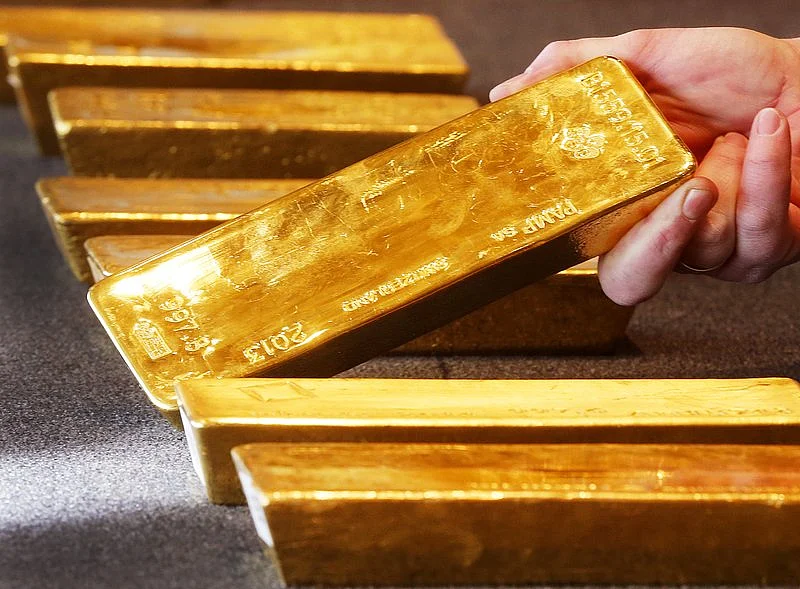
Gold Regains Shine As War Fears, Fed Uncertainty Ignite Safe-Haven Rush
(MENAFN- Khaleej Times) Gold is once again emerging as the world's preferred safe-haven asset as geopolitical tensions in the Middle East, uncertainty over US monetary policy and fears of a global economic slowdown trigger a renewed rush into precious metals.
After weeks of volatile trading driven by the Iran conflict and sharp swings in oil prices, gold rebounded strongly this week, climbing above the key $4,550-an-ounce level as investors returned to defensive assets amid weakening US Treasury yields and a softer dollar.
Recommended For You UAE's Eid Al Adha 2026 prayer timings: What you need to knowSilver also recovered sharply, hovering near $78 an ounce, although both metals remain trapped within critical technical ranges that analysts say could determine the next phase of the rally.
The rebound reflects a changing global market environment in which gold is no longer viewed merely as an inflation hedge, but increasingly as a strategic store of value during a period marked by geopolitical fragmentation, energy insecurity and slowing economic growth.
Analysts say the recent easing in oil prices after tensions around the Strait of Hormuz showed signs of stabilising has paradoxically supported gold. Lower oil prices have eased immediate inflation concerns and reduced pressure on the Federal Reserve to keep interest rates elevated for longer.
That has weakened the US dollar and Treasury yields - conditions traditionally favourable for non-yielding assets such as gold and silver.
Simon-Peter Massabni, head of Business Development at XS, said markets are increasingly prioritising geopolitical risks over interest-rate concerns.“Gold has evolved into a strategic asset reflecting declining confidence in the stability of the global economic system,” he said.
Inverse relationship with oil
The precious metals market has displayed a striking inverse relationship with oil prices since the outbreak of the US-Iran conflict earlier this year. When crude surged towards $120 a barrel amid fears of disruptions to Gulf shipping lanes, Treasury yields and the dollar strengthened, dragging gold prices lower.
However, once oil prices retreated and failed to sustain gains above $120, investors quickly rotated back into bullion, reinforcing gold's enduring safe-haven appeal.
Analysts believe this shift reflects growing expectations that the Federal Reserve may eventually soften its monetary stance if global growth slows further and energy prices stabilise.
Investors are now closely watching the upcoming US Personal Consumption Expenditures (PCE) inflation data for clues on the Fed's next policy move. Stronger-than-expected inflation could revive fears of prolonged high interest rates and temporarily pressure gold prices.
However, many strategists believe geopolitical uncertainty is currently exerting a stronger influence on bullion markets than monetary policy expectations.
What is particularly notable, analysts say, is gold's resilience despite intermittent signs of progress in possible US-Iran negotiations.
US President Donald Trump on Sunday indicated that Washington would not rush into any agreement with Tehran, reinforcing fears that the conflict could continue to destabilise energy markets and global trade flows.
As a result, investors increasingly see gold as insurance against a prolonged period of economic and geopolitical turbulence.
Central bank buying
Central banks have also emerged as one of the strongest pillars supporting the long-term gold rally. According to market analysts and industry estimates, reserve diversification by emerging economies continues at a strong pace as countries seek to reduce dependence on dollar-denominated assets amid rising geopolitical fragmentation.
Institutional forecasts remain overwhelmingly bullish. Several major analysts expect gold prices to climb towards the $5,000-$5,800 range by the end of the year, driven by persistent safe-haven demand, central bank buying and fears of recession in major economies.
Analysts at ING believe gold could test the $5,000 mark, while MKS PAMP projects prices may surge towards $5,800 if geopolitical tensions intensify further and central bank accumulation accelerates.
Silver, meanwhile, is attracting increasing investor attention because of its dual role as both a precious and industrial metal. Apart from benefiting from safe-haven demand, silver is also supported by rising industrial consumption linked to solar energy, electronics and electric vehicle manufacturing.
Yet both gold and silver remain technically vulnerable in the short term. Gold is currently consolidating within a broad $4,500-$4,900 trading range, with analysts warning that a decisive breakout is needed to determine the next major directional move.
A sustained rise above $4,900 could trigger a fresh bullish wave towards new record highs, while a break below $4,500 may expose the metal to a deeper correction towards the $4,380-$4,000 zone.
Silver's battle
Silver faces a similar technical battle. The metal has repeatedly failed to break above the crucial $89 resistance level, although strong support near $72 has so far prevented a major sell-off.
Despite near-term uncertainty, economists believe the broader outlook for precious metals remains constructive as investors continue repositioning portfolios defensively amid mounting global risks.
For Gulf investors and Indian expatriates, the rally in gold carries major implications for jewellery demand, savings and remittance-linked buying behaviour. With the Indian rupee remaining under pressure against the dollar, local gold prices in India and the Gulf are expected to remain elevated even if international prices witness periodic corrections.

Legal Disclaimer:
MENAFN provides the
information “as is” without warranty of any kind. We do not accept
any responsibility or liability for the accuracy, content, images,
videos, licenses, completeness, legality, or reliability of the information
contained in this article. If you have any complaints or copyright
issues related to this article, kindly contact the provider above.
Most popular stories
Market Research

More Story








Comments
No comment