




403
Sorry!!
Error! We're sorry, but the page you were looking for doesn't exist.
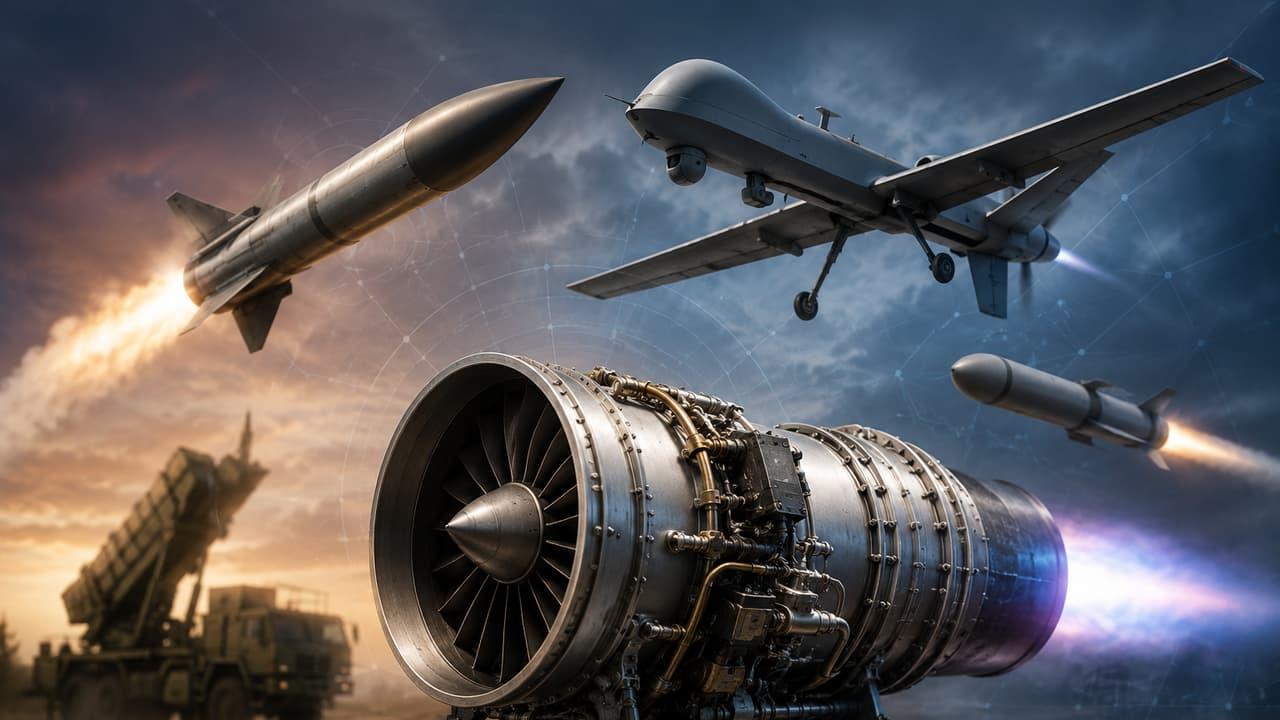
DRDO Hunts For Compact Turbojet Engine To Power Next-Generation Missiles And Drones
(MENAFN- AsiaNet News)
New Delhi: The Defence Research and Development Organisation (DRDO) has floated an Expression of Interest (EoI) inviting domestic and international aerospace manufacturers to supply a compact turbojet engine in the 130–180 kilogram-force (kgf) thrust class, intended for integration into advanced air- and ground-launched platforms. One kgf equals to ~9.807 newtons.
Exacting Specifications
The engine must be flight-proven and must operate within a tightly constrained physical envelope: no more than 275mm in diameter, 540mm in length, and under 25kg inclusive of all accessories.
Thrust output must fall between 130 and 180 kgf at sea level under Indian standard atmospheric conditions, delivered without installation losses.
The structural demands are equally stringent. The engine must withstand high inertial loading – axial forces of ±10G and lateral forces of ±8G – conditions characteristic of agile, fast-manoeuvring platforms such as cruise missiles, loitering munitions, and high-speed target drones.
Critically, the engine must also demonstrate reliable air-start capability above 5,500 metres altitude across a velocity band of Mach 0.3 to 0.6, a requirement that narrows the field to designs with proven high-altitude restart credentials.
Vendor Obligations
RCI-DRDO will develop the fuel tank independently. However, shortlisted vendors will be required to supply the complete propulsion system stack, encompassing the fuel pump, fuel and drainage lines, engine control unit, valves, and a dedicated ground test system. Integration responsibility, in other words, falls substantially on the supplier.
Strategic Context
DRDO has not formally linked the EoI to any named programme, but the specifications align closely with propulsion requirements for several categories of systems already in or approaching development.
DRDO's 'Abhyas' high-speed aerial target – a subsonic expendable drone used for weapons evaluation – currently relies on a small turbojet in a comparable thrust class.
An upgraded or alternative engine could extend its performance envelope or reduce dependence on foreign supply chains.
The Russia-Ukraine war and ongoing West Asian conflicts have demonstrated that small jet-powered cruise weapons and loitering munitions can reshape battlefield dynamics at relatively low cost.

Legal Disclaimer:
MENAFN provides the
information “as is” without warranty of any kind. We do not accept
any responsibility or liability for the accuracy, content, images,
videos, licenses, completeness, legality, or reliability of the information
contained in this article. If you have any complaints or copyright
issues related to this article, kindly contact the provider above.
Most popular stories
Market Research

More Story








Comments
No comment