

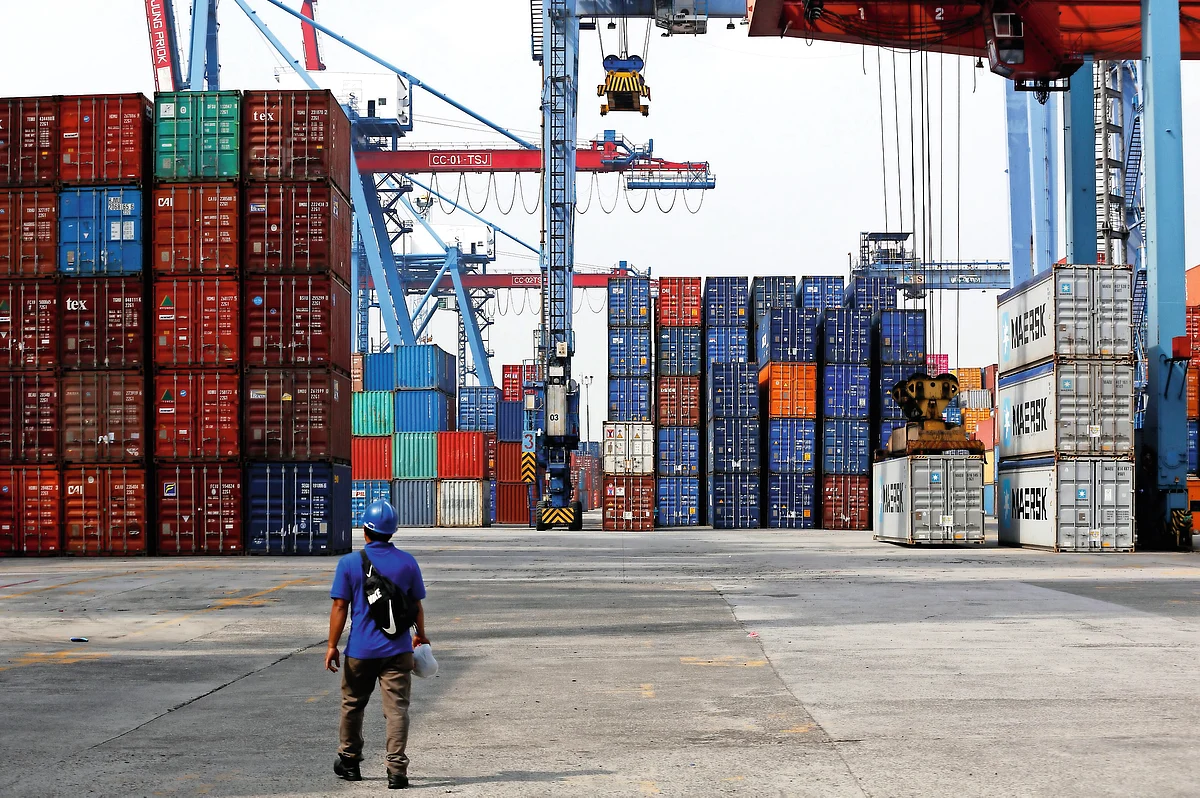
UK-GCC Trade Pact To Unlock $5 Billion In Gains As UAE Boosts Global Trade Hub Status


The agreement, signed in London on Wednesday, marks the first free trade pact between the GCC and a G7 nation and is expected to deepen economic integration between Britain and the Gulf at a time of rising geopolitical tensions, supply-chain disruptions and slowing global trade growth.
Recommended For YouThe UK government said the deal with the six GCC member states - United Arab Emirates, Saudi Arabia, Qatar, Kuwait, Bahrain and Oman - could add around $5 billion annually to the British economy over the long term while boosting wages by nearly $2.5 billion a year.
Stay up to date with the latest news. Follow KT on WhatsApp Channels.
Officials said the agreement would eliminate approximately $780 million in annual tariffs on British exports to the Gulf once fully implemented, significantly improving market access for sectors ranging from food products and manufacturing to financial services, technology, digital trade and clean energy.
Products expected to benefit from tariff reductions include British dairy products, chocolates and processed foods, while UK companies are also expected to gain broader access to Gulf government procurement projects and investment opportunities.
The agreement was formally concluded by Jasem Mohamed Albudaiwi and Chris Bryant during a signing ceremony in London.
Albudaiwi described the pact as a“qualitative leap” in GCC-UK relations that would shape economic cooperation for generations.
“This step will contribute to strengthening the economic pathways of both regions for generations to come,” he said, adding that the agreement reflected years of negotiations and deepening economic integration between the Gulf and Britain.
The comprehensive agreement covers trade in goods and services, financial services, digital commerce, telecommunications, investment protection, government procurement and movement of professionals.
Analysts say the UAE is likely to emerge as one of the biggest beneficiaries of the deal due to its position as the region's leading re-export centre, aviation hub and gateway for international companies operating across the Middle East, Africa and South Asia.
The UAE is already Britain's largest trading partner in the Middle East, with bilateral non-oil trade between the two countries exceeding Dh90 billion in recent years. UAE sovereign wealth funds and private investors also hold substantial stakes across British infrastructure, ports, energy, real estate, healthcare and technology sectors.
Industry experts say the agreement could accelerate UAE-UK collaboration in high-growth sectors such as artificial intelligence, fintech, renewable energy, logistics, healthcare and advanced manufacturing.
The pact also comes at a time when the UAE is strengthening its position as a preferred destination for global capital and multinational corporations seeking politically stable and business-friendly markets amid rising global uncertainty.
Economists say the GCC's combined GDP of more than $2.2 trillion and sovereign wealth assets exceeding $4 trillion are making the region increasingly important to global investment and trade strategies.
The agreement is also viewed as a major milestone in Britain's post-Brexit trade diversification strategy as London seeks deeper partnerships with fast-growing economies outside Europe.
UK Prime Minister Keir Starmer described the agreement as“a huge win” for British workers and businesses.
“This agreement will create more opportunities, support jobs and strengthen economic ties with one of the world's most dynamic regions,” Starmer said.
The deal follows Britain's recent trade agreements with India and South Korea and highlights London's growing focus on Asia and the Gulf as key engines of future economic growth.
HSBC Group Chief Executive Officer Georges Elhedery said the GCC region had become increasingly important to global trade and investment flows.
“The GCC is a region of growing strategic importance and long-term opportunity,” Elhedery said.“We see first-hand the opportunity this agreement can unlock and stand ready to help deepen economic ties and support businesses to connect, invest and grow.”
The agreement comes against the backdrop of mounting geopolitical tensions in the Middle East and disruptions to global shipping routes, which have increased the strategic importance of stable trade corridors and diversified economic partnerships.
Analysts say the UAE's advanced logistics infrastructure, global aviation connectivity, free zones and financial ecosystem position it to capture a disproportionate share of the trade and investment flows expected to emerge from the GCC-UK agreement.
The UAE's flagship trade and logistics operators, including DP World and Emirates airline, are also expected to benefit from stronger trade volumes and rising commercial connectivity between the Gulf and Britain.
The agreement could further reinforce Dubai's position as one of the world's leading re-export and financial centres as companies increasingly use the emirate as a gateway for regional and international operations.
Despite criticism from some rights groups in Britain over labour and human rights concerns, economists say the agreement represents a major geopolitical and economic breakthrough that further strengthens the Gulf's role - particularly that of the UAE - as a pivotal player in the future global trade architecture.
ALSO READ- UAE and UK trade rises 3.7% to Dh123 billion in 2025 GCC-India FTA reboot could redraw trade map amid global tariff tensions

Legal Disclaimer:
MENAFN provides the
information “as is” without warranty of any kind. We do not accept any
responsibility or liability for the accuracy, content, images, videos,
licenses, completeness, legality, or reliability of the information
contained in this article. If you have any complaints or copyright issues
related to this article, kindly contact the provider above.
Comments
No comment