




403
Sorry!!
Error! We're sorry, but the page you were looking for doesn't exist.
UN Appeals For $710.5M For Rohingya Refugees In Bangladesh Crisis
(MENAFN- AsiaNet News)
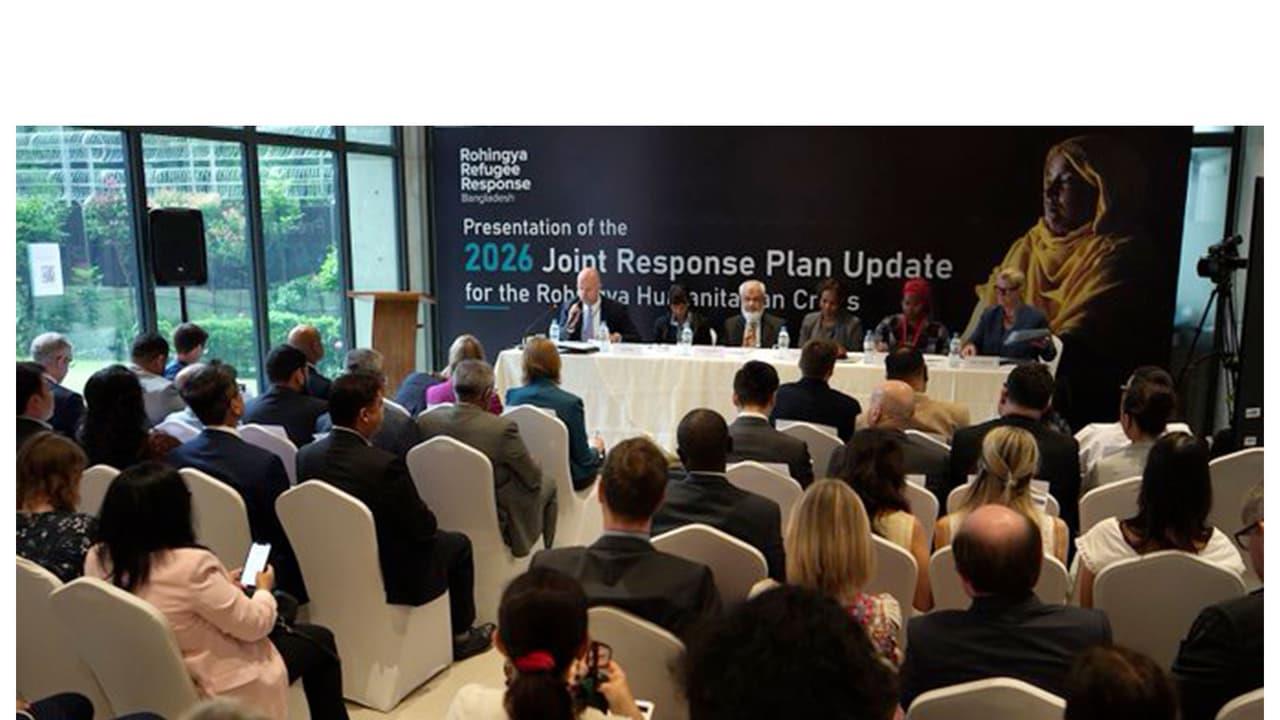
The United Nations and its partners, in close coordination with the Government of Bangladesh, appealed for USD 710.5 million to meet the most critical needs of Rohingya refugees in the Cox's Bazar camps and on Bhasan Char, as well as local host communities.
The call comes amid growing global instability and rising humanitarian pressures, which have forced difficult prioritisation and threatened essential services for vulnerable populations. Sustained international assistance remains crucial to bolstering Bangladesh's response as it continues to generously host refugees until a durable solution is achieved.
Breakdown of the Appeal
The scaled-down, hyper-prioritised 2026 update of the Joint Response Plan (JRP) for the Rohingya humanitarian crisis will reach up to 1.56 million people, including refugees and Bangladeshi host communities. The USD 710.5 million appeal -- 26% lower than in 2025 -- covers only the minimum required to sustain lifesaving assistance. It includes USD 247.3 million for food, USD 128 million for shelter, USD 61.2 million for water, sanitation and hygiene, USD 52.7 million for education, USD 49.9 million for health, and USD 35.1 million for livelihoods and skills development. It also includes USD 36.2 million, across all sectors, in support for host communities affected by the crisis.
Funding Declines and the Need for Self-Reliance
From 2017 to the end of 2025, the international community has contributed nearly USD 5.42 billion in humanitarian funding to the Rohingya response - with the United States remaining the largest donor - allowing Bangladesh to sustain life-saving assistance and making possible major progress in refugee education, health and protection. However, significant humanitarian needs persist, and, without continued international solidarity, Rohingya families risk losing precious gains.
"As resources become more limited, it is more important than ever to help refugees build skills and resilience, so they can gain independence, hold on to hope, and rebuild their lives," said Kelly T. Clements, Deputy High Commissioner of UNHCR, the UN Refugee Agency. "Until the Rohingya can return home in safety and can rebuild their communities there, we must continue to provide safety, care, and dignity where they are. The humanitarian community is working hard to deliver this support as efficiently as possible as we continue to see resources decline. But the needs remain enormous, and efficiencies alone cannot offset the very real impacts of funding cuts on the Rohingya people and the impact on their host communities. Helping the refugee community become more self-reliant remains a crucial goal," he added.
Deepening Economic Hardship
Amid sharp reductions in humanitarian funding and declining development support, Rohingya refugees remain largely reliant on aid. In 2025, some 35% of camp households relied fully on humanitarian food assistance, 42% had access to temporary and unstable income sources, and only 23% earned income through cash-for-work-based humanitarian activities. Limited economic opportunities and reduced assistance continue to heavily impact Rohingya households--a situation exacerbated for new arrivals and vulnerable groups, including women and girls, persons with disabilities, and older people.
Desperate Measures Amid Fading Hopes
As conflict inside Rakhine State continues, hopes for an imminent return to Myanmar are fading. As conditions worsen, more refugees resort to desperate choices, including dangerous and often deadly sea journeys in search of opportunities elsewhere in the region. 2025 was the deadliest year on record for such voyages--just last month, a vessel carrying more than 270 people, many of them refugees, capsized, leaving only nine survivors.
High-Level Donor Mission and Call for Solidarity
The appeal followed a four-day joint high-level donor mission, led by Kelly T. Clements and Rania Dagash-Kamara, which brought together a group of key international donor representatives. The mission included a two-day visit to Rohingya camps and host communities in Cox's Bazar, with participation from key partners: Australia, Canada, the European Union, France, the Netherlands, Sweden, and the United Kingdom. The delegation also engaged with the Government, UN and NGO partners, as well as the broader donor community, in Cox's Bazar and Dhaka.
The humanitarian community reiterates that the most desirable and durable solution to the Rohingya crisis is the voluntary, safe, dignified, and sustainable return of refugees to Myanmar. Until conditions in Myanmar are conducive, continued international solidarity and support remain essential--not only as a humanitarian imperative but also to uphold human rights, preserve regional stability, and ensure that refugees and their host communities are not abandoned. (ANI)
(Except for the headline, this story has not been edited by Asianet Newsable English staff and is published from a syndicated feed.)
Legal Disclaimer:
MENAFN provides the
information “as is” without warranty of any kind. We do not accept
any responsibility or liability for the accuracy, content, images,
videos, licenses, completeness, legality, or reliability of the information
contained in this article. If you have any complaints or copyright
issues related to this article, kindly contact the provider above.
Most popular stories
Market Research

More Story







Comments
No comment