




403
Sorry!!
Error! We're sorry, but the page you were looking for doesn't exist.
QEERI Research Drives Qatar's Push For Cleaner Air And Better Public Health
(MENAFN- The Peninsula)
Fazeena Saleem
|
The Peninsula
Doha, Qatar: Researchers at the Qatar Environment and Energy Research Institute (QEERI), part of Hamad Bin Khalifa University, are advancing efforts to improve air quality and protect public health in Qatar through cutting-edge environmental research, according to Research Director of the Environment Center at QEERI, Dr. Rami Alfarra.
Dr. Alfarra told The Peninsula that QEERI's work is strengthening the national understanding of the relationship between natural and built environments, providing the evidence needed to develop policies that enhance environmental resilience, safeguard public health, and promote sustainable development in Qatar and across other arid regions.
“Our ambient air quality research at QEERI is providing science-based evidence to inform the development of national mitigation and intervention strategies to help improve air quality and protect public health,” he said.
Research Director of the Environment Center at QEERI, Dr. Rami Alfarra
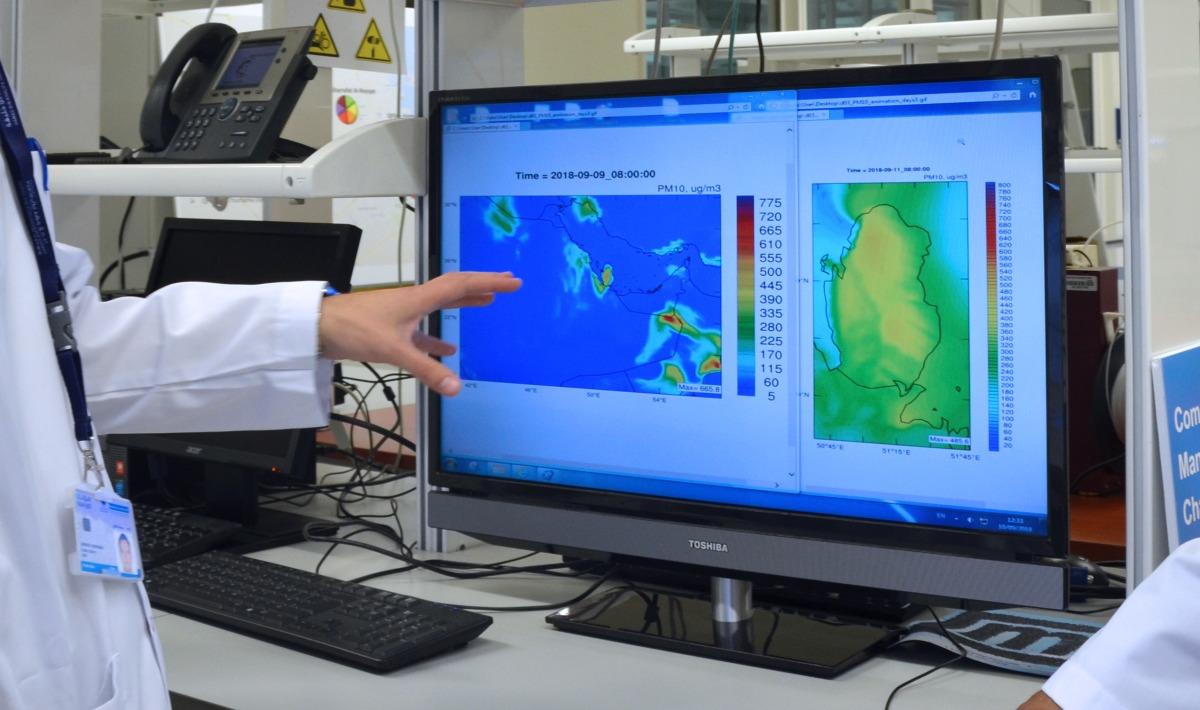
The research focuses on understanding the levels and sources of major pollutants, including particulate matter and gaseous compounds, while also developing advanced forecasting systems that combine meteorology and atmospheric chemistry. These systems are designed to provide early warnings for pollution episodes such as high ozone levels, helping authorities and the public take preventive action.
Dr. Alfarra explained that QEERI's work extends beyond outdoor pollution monitoring.“Integrated exposure assessments covering both outdoor and indoor environments quantify how pollutants impact individuals across different settings,” he said, adding that the findings support the development of healthier buildings, better ventilation strategies, and targeted health interventions.
The institute is also examining the long-term health effects of air pollution in Qatar and other urbanised arid regions. According to Dr. Alfarra, researchers are studying both population-level exposure risks and the specific impact of natural dust and human-made emissions on respiratory and cardiovascular health.
QEERI's studies have identified a mix of natural and anthropogenic sources contributing to air pollution in Qatar. Dr. Alfarra said that desert dust, sandstorms, and resuspended dust are major natural contributors, particularly under the country's arid climate conditions.
“Alongside this, anthropogenic emissions from traffic, regional industrial and shipping activities, energy production, and construction play a major role, particularly in influencing air quality in urban locations,” he said.
Read Also-
MoPH advises safe dining and food preparation for celiac patients
Health Ministry highlights key lung cancer risk factors
Qatar achieves 35% water reserve surplus
The research has also highlighted the role of secondary pollutants such as ozone and secondary aerosols, which form through photochemical reactions influenced by sunlight, temperature, and regional emissions.
Seasonal patterns further affect pollution levels, with natural and photochemical sources dominating during summer months, while winter conditions tend to amplify human-made emissions.
By integrating emission inventories with atmospheric modelling, QEERI aims to provide policymakers with a clearer understanding of how pollution sources interact and affect both climate and public health. Collaboration with government entities forms a key part of the institute's mission. Dr. Alfarra said QEERI works closely with the Ministry of Environment and Climate Change and the Ministry of Public Health to translate scientific findings into actionable policy recommendations.
“QEERI contributes to shaping regulatory frameworks, informing emission reduction strategies, and guiding urban planning decisions,” he said. He added that the institute provides modelling and forecasting tools that support the refinement of national air quality standards and policies. At the centre of QEERI's monitoring efforts is the Air Quality Research Network, which includes seven research stations strategically located across Qatar to study pollution levels in and around Doha.
One of the network's flagship facilities is located at Al Thumama Stadium, which serves as an“air quality research supersite.” The station operates advanced research-grade instruments capable of identifying the chemical composition of pollutants and quantifying pollution sources in near real time. Dr. Alfarra said the network combines ground-based monitoring stations with satellite observations and high-resolution atmospheric models to provide continuous insights into air quality at both local and regional scales.
“This enables the identification of pollution hotspots, supports the validation of predictive models, and allows for real-time tracking of pollution patterns in urban areas such as Doha,” he said. Beyond public health, the research is also expected to support Qatar's long-term sustainability agenda and the goals of Qatar National Vision 2030.
According to Dr. Alfarra, climate modelling and future environmental projections are helping researchers understand how temperature patterns and extreme weather events may evolve through to 2100. These insights can help policymakers prepare for challenges such as extreme heat, dust storms, and worsening air pollution episodes.
“At the urban scale, the research supports the implementation of heat mitigation solutions such as green infrastructure, reflective materials, and shading, which improve thermal comfort while reducing energy demand,” he said.

Legal Disclaimer:
MENAFN provides the
information “as is” without warranty of any kind. We do not accept
any responsibility or liability for the accuracy, content, images,
videos, licenses, completeness, legality, or reliability of the information
contained in this article. If you have any complaints or copyright
issues related to this article, kindly contact the provider above.
Most popular stories
Market Research

More Story







Comments
No comment