




403
Sorry!!
Error! We're sorry, but the page you were looking for doesn't exist.
What World Urban Forum In Baku Means For Future Of Climate-Resilient Cities
(MENAFN- AzerNews)
Qabil Ashirov
Read more
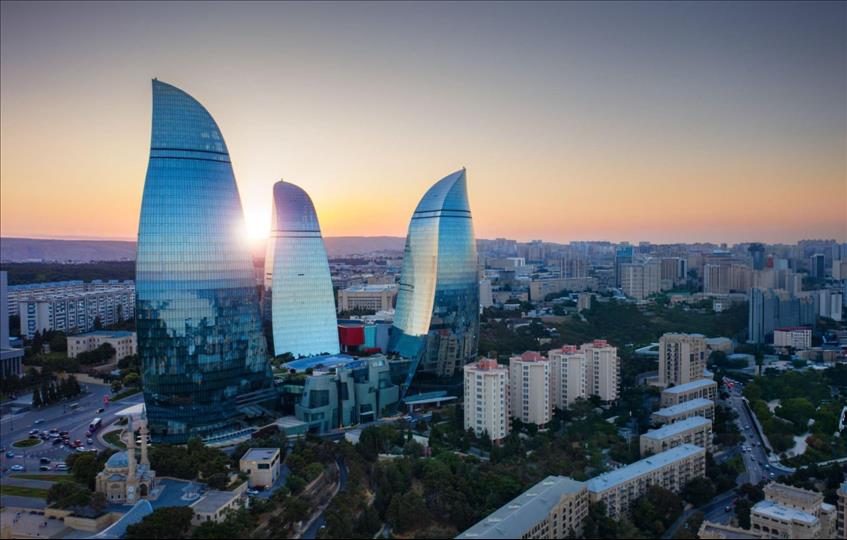
In an era defined by rapid urbanization, climate vulnerability, and the pressing need for post-conflict regeneration, the global community frequently looks for practical, scalable models of resilience. The traditional paradigms of urban planning often fail to keep pace with the multifaceted challenges of the twenty-first century. However, a transformative shift is currently underway in the South Caucasus. As President Ilham Aliyev recently highlighted during his meeting with Anaclaudia Rossbach, the Executive Director of the United Nations Human Settlements Programme (UN-Habitat), Azerbaijan's innovative urban planning practices, particularly the large-scale restoration and reconstruction efforts in its liberated territories, have evolved from a domestic necessity into an exemplary international benchmark. This transformation underscores a profound truth: true urban resilience is not merely about rebuilding physical structures, but about pioneering systemic, innovative frameworks that seamlessly merge sustainable development with global climate action.
The thirteenth session of the World Urban Forum (WUF13) to be hosted today in Baku represents a watershed moment for international urban policy. Coming on the heels of the successfully organized COP29, Azerbaijan's stewardship of WUF13 signifies a deliberate and strategic effort to bridge two traditionally distinct global agendas: climate change mitigation and sustainable urbanization. Historically, environmental architecture and municipal engineering operated in institutional silos. By creating a strategic continuum between COP and WUF, Azerbaijan is actively reshaping the global discourse, demonstrating that the commitments made in environmental summits must be physically and structurally manifested in the cities of tomorrow. This deliberate alignment ensures that green energy transitions, smart-city technologies, and climate adaptation strategies are embedded directly into the fabric of urban environments, establishing a holistic blueprint for future generations.
The international confidence reposed in Azerbaijan by the United Nations is neither accidental nor merely diplomatic. UN-Habitat's high assessment of the innovative approaches applied in the preparatory process of WUF13 reflects Azerbaijan's growing stature as a reliable, institutionally capable global partner. The country's commitment is further substantiated by its voluntary financial support to UN-Habitat and the institutionalization of its National Urban Forums. These domestic platforms have served as rigorous testing grounds for cutting-edge architectural concepts, digital governance, and eco-friendly infrastructure. The institutional maturity gained from hosting a succession of high-profile global events has equipped Azerbaijan with a unique capability to manage complex logistical, organizational, and intellectual frameworks, solidifying its reputation as a venue where global consensus is forged.
Central to this emerging legacy is the Letter of Intent signed between the State Committee on Urban Planning and Architecture of the Republic of Azerbaijan and UN-Habitat. This document transcends standard organizational protocols; it represents a pioneering effort to institutionalize operational efficiency. By transforming the preparatory and organizational model of WUF13 into a formal institutional experience, this agreement establishes a practical roadmap for all future host nations. For too long, major international forums have suffered from institutional amnesia, with each host country reinventing the wheel. The codification of the preparatory processes into a structured, replicable model ensures a level of operational continuity and decision-making clarity previously unseen in global governance platforms.
This institutional breakthrough culminates in what is now being recognized as the "WUF13 Baku Standards." These standards are poised to become an institutional paradigm for future urban forums, significantly enhancing operational efficiency and fostering a unified approach across international urban planning platforms. The Baku Standards encapsulate a comprehensive management philosophy that prioritizes synchronized coordination, multi-stakeholder engagement, and the integration of digital tools in event logistics and substantive policy formulations. By elevating the benchmarks of organizational excellence, Azerbaijan is not only ensuring the success of its own forum but is also donating a durable administrative asset to the international community, thereby optimizing how global urban policy is debated, formulated, and implemented for years to come.
Ultimately, the narrative of Azerbaijan's urban planning success is rooted in the tangible, inspiring rebirth of its liberated regions. The reconstruction of these territories, built from the ground up utilizing smart-city technologies, zero-emission zones, and sustainable agricultural integration, serves as a living laboratory for the ideals that WUF13 seeks to propagate. When global delegates gather in Baku, they will not merely discuss abstract theories of sustainable development; they will witness a nation that has translated those theories into physical reality under the most challenging circumstances. Azerbaijan's journey from a nation managing restoration to an architect of global urban standards proves that with visionary leadership, institutional capacity, and innovative thinking, the cities of the future can indeed be built today, offering hope and a concrete path forward for the global community.

Legal Disclaimer:
MENAFN provides the
information “as is” without warranty of any kind. We do not accept
any responsibility or liability for the accuracy, content, images,
videos, licenses, completeness, legality, or reliability of the information
contained in this article. If you have any complaints or copyright
issues related to this article, kindly contact the provider above.
Most popular stories
Market Research

More Story







Comments
No comment