




403
Sorry!!
Error! We're sorry, but the page you were looking for doesn't exist.
Tawasul 2026 Forum Addresses Smart City Concept In Jordan
(MENAFN- Jordan News Agency)
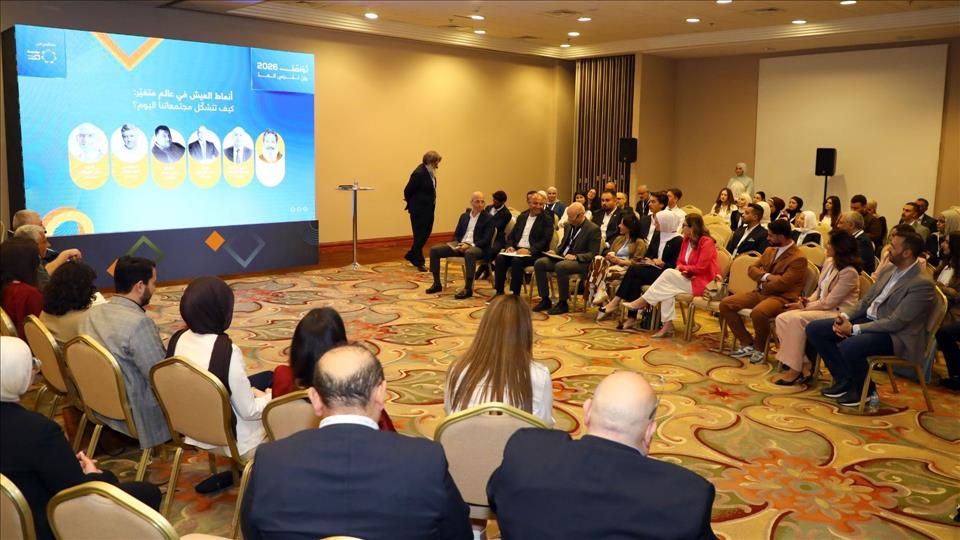
Amman, May 16 (Petra) -- Experts on Saturday debated the concept of smart city in Jordan as a strategic path that transcends the technological dimension to encompass profound human and legislative dimensions at the fourth Tawasul 2026 Forum, organized by the Crown Prince Foundation.
The discussion took place at a specialized session of the forum, themed "Visions for Tomorrow's Opportunities," which opened at the King Hussein Bin Talal Convention Center in the Dead Sea area, under the patronage of His Royal Highness Crown Prince Al Hussein Bin Abdullah II.
The session, titled "Lifestyles in a Changing World: How Our Societies Are Being Shaped Today", brought together officials and experts in urban planning, economics, and architecture. They tackled the transformations of smart cities and the quality of life in Jordan, considering it as the intersection of planning, legislation, technology, and societal behavior.
Greater Amman Municipality Committee Chairman, Yousef Shawarbeh, said the smart cities' concept is not restricted to digital infrastructure, but revolves around improving the daily quality of life for citizens.
The mayor stressed that legislation is the gateway to the future and the true key to any sustainable urban transformation.
He told Petra in an interview on the sidelines of the session that the future model for the city should be based on access to services, proximity to residents, and the provision of green spaces.
Shawarbeh said weak infrastructure in the face of climate change, haphazard urban development, and a lack of public spaces are key challenges facing Jordanian cities.
He said Amman faces a gap between citizens' expectations and the level of implementation on the ground, which he attributed to historical planning shortcomings. The city was not designed to accommodate population growth due to waves of refugees and migration, which weakened its capacity, he added.
The mayor said the Greater Amman Municipality drew up a five-year strategic plan focused on improving quality of life, strengthening the city's resilience, transforming into a green and clean city, and turning initiatives into implementable projects.
It incorporates procedural reforms, such as simplifying land use and enhancing citizen participation in planning decision-making.
Saad Al-Maasher, Chairman of the Board of Directors of the National Bank, said the private sector is no longer just an implementer of projects, but a key partner in shaping the cities' identity. The success of any urban model requires good governance, institutional integration, and a balance between profitability and social value, he pointed out.
Architectural expert Rami Taher gave a critical reading of the concept of spatial identity as a dynamic entity shaped by social and cultural transformations, rather than a fixed template. He cautioned against imposing ready-made organizational models that disregard the unique characteristics of a place and its natural resources.
Architect Ammar Khamash presented practical models of urban projects that consider both people and the environment, affirming that urban design can be an effective tool for creating interactive spaces and strengthening community bonds.
On transport, engineer Hazem Zreiqat said finding solutions to Amman's traffic crisis requires replanning neighborhoods and developing an efficient public transport system, while involving various stakeholders in the decision-making process.
He said a rapid growth in vehicle numbers and a limited infrastructure exacerbated traffic congestion, noting that addressing the crisis requires a comprehensive approach that integrates urban planning, the economy, and community behavior.
Participants were unanimous that the transition to smart cities in Jordan is no longer a technological option, but a multi-dimensional strategic necessity, which requires profound legislative reform, enhanced partnerships, and a redefinition of the relationship between people and their environment.
Tawasul Forum is a national dialogue platform organized annually by the Crown Prince Foundation to enhance public participation and the exchange of views among decision-makers, experts, and youth, thereby contributing to shaping future policies.
//Petra//SS

Legal Disclaimer:
MENAFN provides the
information “as is” without warranty of any kind. We do not accept
any responsibility or liability for the accuracy, content, images,
videos, licenses, completeness, legality, or reliability of the information
contained in this article. If you have any complaints or copyright
issues related to this article, kindly contact the provider above.
Most popular stories
Market Research

More Story

Comments
No comment