




403
Sorry!!
Error! We're sorry, but the page you were looking for doesn't exist.
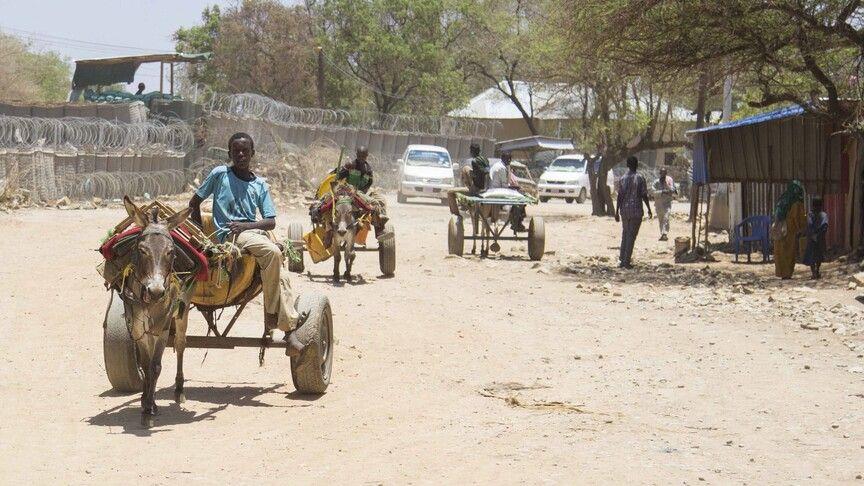
UN Agencies Warn Somalia At Risk Of Renewed Famine As Hunger Crisis Deepens
(MENAFN- AzerNews)
UN agencies warned Friday that Somalia is facing a rapidly
worsening hunger crisis that could push parts of the country toward
famine without urgent humanitarian action and increased
international funding, AzerNEWS reports, citing
Anadolu Agency.
In a joint statement, the UN Food and Agriculture Organization (FAO), the Office for the Coordination of Humanitarian Affairs (OCHA), UNICEF and the World Food Programme (WFP) said nearly 6 million people – around 31% of Somalia's population – are projected to face acute food insecurity between April and June 2026.
The agencies said close to 1.9 million people are already experiencing emergency levels of hunger, a figure that has tripled in less than a year, according to the latest Integrated Food Security Phase Classification (IPC) analysis.
The warning includes a confirmed famine risk in Burhakaba district in Somalia's Bay region, where worsening drought, rising food prices and insufficient humanitarian aid could push conditions into catastrophe if the current rainy season fails.
The agencies called for an urgent scale-up of lifesaving, multi-sectoral humanitarian assistance, including food security, nutrition, health and WASH services for populations in IPC Phase 3 and above, including those at risk of famine. They said sustained and predictable funding is critical to prevent a humanitarian catastrophe.
Etienne Peterschmitt, FAO's representative in Somalia, warned in the statement that the country is“at the precipice of a famine risk once again” due to drought, rising food and fuel prices and the growing threat of El Nino-linked flooding.
UNICEF Somalia's Representative Sandra Lattouf said children across Somalia are facing a“rapidly worsening crisis” and stressed that“time is running out.”
WFP official Hameed Nuru warned that“any further delay could cost lives” as families exhaust their coping mechanisms and emergency assistance remains extremely limited.
Speaking to reporters in Geneva via video link, George Conway said the situation is deteriorating“faster than expected.”
Children are bearing the heaviest burden of the crisis, according to the agencies. Nearly 1.9 million children are acutely malnourished, including approximately 493,000 suffering from severe acute malnutrition.
“Of these, almost half a million are so severely malnourished they require urgent treatment to survive,” Conway said.
The agencies warned that more than 500 health and nutrition facilities across Somalia have closed because of funding shortages, while measles cases doubled during the first three months of 2026 compared to the same period last year.
Conway stressed there is still a narrow window to prevent famine through rapid humanitarian action.
“With rapid and scaled-up humanitarian action now, famine can still be averted,” he said.
However, humanitarian operations remain severely underfunded, with Somalia's 2026 Humanitarian Needs and Response Plan only 15.2% funded so far, while nearly 90% of affected people are receiving little or no assistance.
The agencies called for an immediate scale-up of food, nutrition, health and water services, warning that further delays could lead to widespread loss of life.

Legal Disclaimer:
MENAFN provides the
information “as is” without warranty of any kind. We do not accept
any responsibility or liability for the accuracy, content, images,
videos, licenses, completeness, legality, or reliability of the information
contained in this article. If you have any complaints or copyright
issues related to this article, kindly contact the provider above.
Most popular stories
Market Research

More Story







Comments
No comment