




403
Sorry!!
Error! We're sorry, but the page you were looking for doesn't exist.
Two Anniversaries, One Uncomfortable Mirror
(MENAFN- ING)
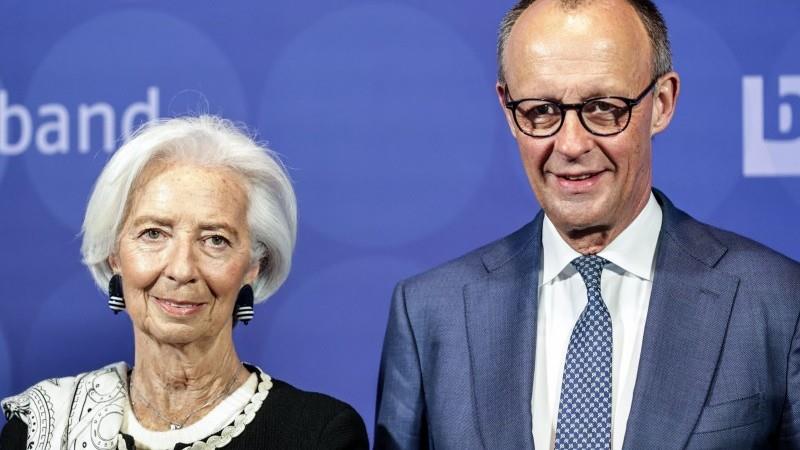
May 2026 comes with two anniversaries, and neither looks particularly flattering in the rear-view mirror. One year ago, Friedrich Merz became Germany's chancellor, confirmed by parliament on the second attempt. An inauspicious start that in hindsight foreshadowed much of what followed. And one year ago, ECB President Christine Lagarde stood in Berlin and declared that the fracturing global order had created Europe's“global euro moment”: a rare chance to step up, earn influence, and reshape the international monetary system in Europe's favour. Twelve months on, let's be honest: the optics are not good.
The global backdrop has deteriorated. The war in the Middle East has escalated, the Strait of Hormuz has remained closed for far longer than we and most others anticipated when the conflict began, and energy prices are surging in ways that featured in few base cases a year ago. US tariffs remain a threat to European exports, and global trade flows are being rewired around geopolitical fault lines rather than comparative advantage. Our new base case has brought another downward revision to eurozone growth, and not only there. On inflation, we maintain our view that the current wave will prove largely transitory with only a marginal impact on core inflation across regions. But any more substantial supply chain disruption would risk more persistent knock-on effects, and we are not yet out of those woods.
Delivering on the promises made a year ago was always going to be harder in a turbulent world. But the gap between ambition and tangible results has opened a second layer of discomfort. Populist parties now lead polls simultaneously in Europe's three largest economies, Germany, France and Italy. In Germany, the party Merz explicitly set out to shrink has overtaken him in the polls. Many of these parties hold foreign policy instincts that sit awkwardly with deeper European integration, more joint borrowing, and a stronger strategic role for the EU on the world stage. The political conditions for Europe's great leap forward have rarely been less favourable.
And yet – to borrow from Monty Python's Life of Brian – what has Europe ever done for us? Well, over the last 12 months: the Savings and Investment Union, launched in March 2025. A securitisation reform. A market integration and supervision package. Updated payment services rules. A Savings and Investment Accounts recommendation. EIB defence investment tripled. EU defence spending is up 36% since 2022. A joint letter from Europe's six largest economies demanding capital markets agreement by the summer. A European Council calling for acceleration.
Quite a lot, as it turns out. The problem is that doing things and changing things are not the same. Lagarde's central diagnosis remains unanswered: €8 trillion in European household savings sit in low-yield bank deposits, unproductive and under-deployed. Capital markets remain fragmented. The home bias is structural. Progress is real, but the gap between the legislative pipeline and lived economic reality remains wide.
Europe's“global euro moment” is still waiting to be earned. The more useful question, perhaps, is not what the Romans have done for us but what we are still willing to do for them. The window is open. What happens next is a choice.

Legal Disclaimer:
MENAFN provides the
information “as is” without warranty of any kind. We do not accept
any responsibility or liability for the accuracy, content, images,
videos, licenses, completeness, legality, or reliability of the information
contained in this article. If you have any complaints or copyright
issues related to this article, kindly contact the provider above.
Most popular stories
Market Research

More Story




Comments
No comment