




403
Sorry!!
Error! We're sorry, but the page you were looking for doesn't exist.
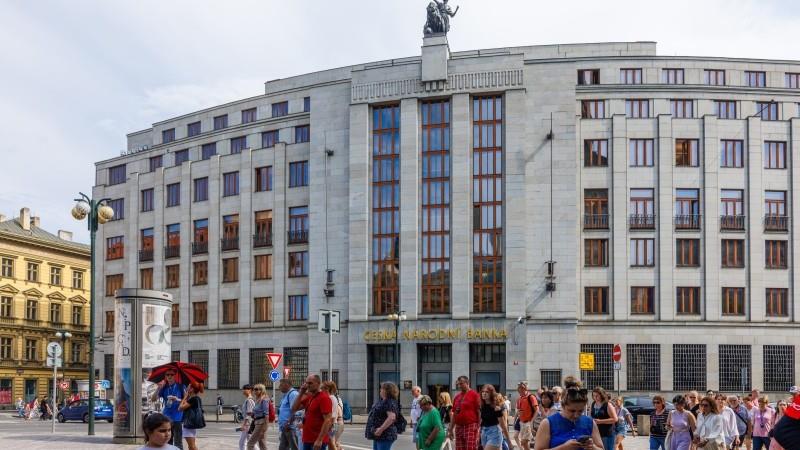
Czech National Bank Minutes: Board Aware Of Risks To Economic Activity
(MENAFN- ING)
Hawkish talk with a lot of caution
Czech policymakers left interest rates unchanged at 3.5% during their last meeting. Governor Ales Michl stated that it is necessary to persist with a strict monetary policy and not to underestimate the cost shock, with hawkish policy being further appropriate. Core inflation is the critical measure now, and the Board is prepared to tighten monetary policy should core inflation increase.
At the same time, the still prevailing optimism regarding the impact of the conflict on economic activity was mentioned by Board member Jan Prochazka, with the view that the general assessment could soon deteriorate. The situation would then lead to the scenario of higher energy prices and a pronounced economic slowdown. As Deputy Governor Jan Frait added, the current conflict would likely cause more permanent damage that could have a negative consequence for consumer and investor sentiment, weighing on economic recovery.
Despite the stagflationary character of the shock, Deputy Governor Eva Zamrazilova considers inflationary risks as more significant than the threat of a substantial weakening of economic growth that would lead to downward pressure on prices. Nevertheless, the potential weakness of the German economy was brought to attention by Board member Karina Kubelkova, with the latest growth outlook deemed as too optimistic.
The impact of uncertainty on investment plans is clearly a source of caution. Indeed, with our more muted forecast for economic expansion when looking ahead, the estimated negative output gap is about to close only as the next year comes to an end. For sure, this somewhat blunts the tip of the general inflationary environment in the medium term.
Output gap slips into negative territory againBoard members discussed the option of a monetary policy mistake, as a rate hike could be seen solely as a direct response to the current supply shock. If it were to pass soon, a subsequent movement of rates back down could be expected. Such an approach was not considered the right way forward.
On the contrary, should the supply shock drag on, the possible error of delay could be corrected by an adequate response in the rest of the year. Given the elevated uncertainty and favourable entry point of the Czech economy into the shock, most of the Board saw the probability of a monetary policy mistake related to an extended stability of rates to be rather small.
Policy setup will remain restrictive even with unchanged ratesReal interest rates would remain mostly in positive territory over the year, even in our base case scenario of an unchanged policy rate. In our view, the risk of undermining economic activity due to an external negative supply shock will only become visible as time passes, with the closure of Hormuz and high energy prices.
Interest rate differentials support the korunaThe gradually appreciating domestic currency will somewhat mitigate imported price pressures. The positive real interest rates are in stark contrast to the eurozone's real interest rate, which slipped into negative territory in March. With a nominal rate differential of just over 1ppt and a real differential approaching 2ppt, the relative carry advantage appears to favour the domestic currency (CZK), which could also lend it some support over time.

Legal Disclaimer:
MENAFN provides the
information “as is” without warranty of any kind. We do not accept
any responsibility or liability for the accuracy, content, images,
videos, licenses, completeness, legality, or reliability of the information
contained in this article. If you have any complaints or copyright
issues related to this article, kindly contact the provider above.
Most popular stories
Market Research

More Story





Comments
No comment