




403
Sorry!!
Error! We're sorry, but the page you were looking for doesn't exist.
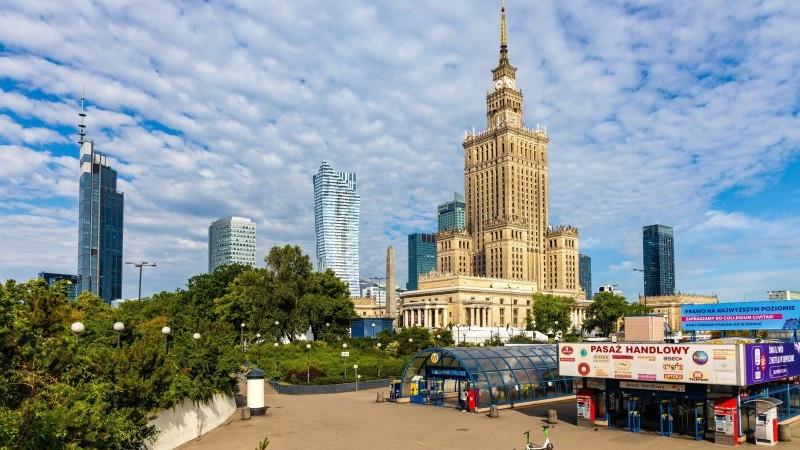
Poland's External Balance Improves Amid Rising (Re)Exports
(MENAFN- ING)
Poland's current account balance showed a small deficit of €234 million, close to our forecast of -€296 million and well above the consensus of -€1,050 million. A month earlier, it was -€1,034 million, and a year earlier -€1,091 million, which resulted in an improvement in the rolling 12-month perspective to -0.8% of GDP after March, from -0.9% of GDP after February. The March current account balance was composed of:
-
Merchandise trade balance of -€497 million, compared to -€1,043 million in February; a solid result as suggested by this morning's CSO data on foreign trade. The lower goods deficit occurred alongside a significant rise in turnover, with the value of exports expressed in euro increasing by 7.4% year-on-year, and imports by 3.8% YoY, accelerating from 1.9% YoY and 3.4% YoY in February, respectively. The increase in turnover was partly explained by one extra working day this year compared with March last year, while the low import dynamics were due to a high statistical base from the previous year. On a rolling 12-month basis, the goods balance improved in March to -1.3% of GDP from -1.4% of GDP a month earlier;
A positive services trade balance of €3,067 million, compared to €3,001 million in February;
Negative balances on the primary income account (-€2,783 million, compared to -€2,519 million the previous month) and in secondary income -€21 million, compared to -€473 million in February.
The National Bank of Poland analysts' commentary, referring to changes in the values of trade aggregates in PLN, indicates a rise in exports of intermediate goods, with significant increases in sales of copper and raw silver thanks to rising prices on commodity markets. Strong growth was also recorded in investment goods, mainly in computers, which is rather a re-export category. Agricultural exports also rose, following stagnation at the beginning of the year. Weak results were noted for exports of durable consumer goods, particularly furniture and cars. On the import side, the increase was partly due to higher fuel prices, and the upward trend in imports of durable consumer goods, investment goods and passenger cars continued.
Our research and NBP reports indicate the growing role of Poland as a logistics hub for deliveries from Asia. China's share in the structure of Polish imports is increasing, and it now ranks second after Germany. According to CSO data, in the first quarter of 2026, imports from China accounted for 16% of Poland's total imports, having increased by 3.4 percentage points over the past two years. Imports from Germany accounted for 19.6% in the first quarter of 2026, and compared with the first quarter of 2024, this was an increase of 0.6 percentage points. We write more about Polish business leaders' perceptions of Chinese competition in the report: How to strengthen the potential of Polish companies. Business facing demographic pressure and global competition (available in Polish under the following link: ).
While concerns about uneven competition from Asia represent a structural challenge for Polish firms, in the short term the greatest concerns are related to the oil shock. Following the surge in energy commodity prices since the outbreak of the war in the Middle East, the value of imports of crude oil and natural gas will rise significantly this year. We estimate that, assuming Brent oil prices remain at US$100 per barrel and TTF natural gas prices at €55 per MWh until the end of the year, Poland's import expenditures in 2026 would be about PLN27 billion (0.7% of GDP) higher than in 2025. In the latest update of macroeconomic forecasts, we predict the current account deficit will widen this year to 1.6% of GDP from a deficit of 0.9% of GDP in 2025.
Nevertheless, despite the expected deterioration this year, Poland's level of external imbalance will remain low and will not significantly affect the value of the zloty. For the EUR/US$ exchange rate, the further course of the war in the Middle East and the anticipated decisions of the Fed, ECB and other central banks are of key importance. The złoty will remain strongly influenced by global factors and expectations regarding decisions by the Monetary Policy Council.
Shares in Poland's main trading partners in merchandise imports in first quarter 2026 (%)
Legal Disclaimer:
MENAFN provides the
information “as is” without warranty of any kind. We do not accept
any responsibility or liability for the accuracy, content, images,
videos, licenses, completeness, legality, or reliability of the information
contained in this article. If you have any complaints or copyright
issues related to this article, kindly contact the provider above.
Most popular stories
Market Research

More Story








Comments
No comment