




403
Sorry!!
Error! We're sorry, but the page you were looking for doesn't exist.
THINK Ahead: Politics Meets The Bond Market (Again...)
(MENAFN- ING)
Politics meets the bond market (again...)
Let's face it: nobody does political drama quite like Britain. In a competitive field of big global stories – a global energy crisis, a meeting of two superpowers – the limelight has still somehow found its way back to London.
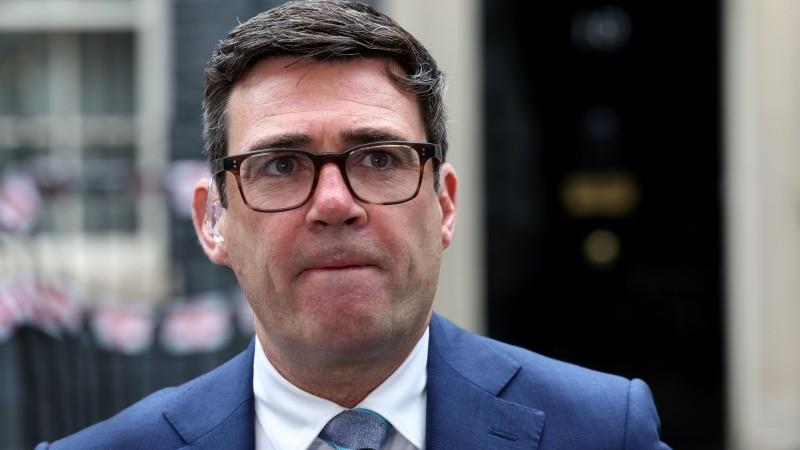
In case you're struggling to keep up (and who can blame you), the ruling Labour Party is in the midst of a leadership struggle. Prime Minister Keir Starmer, though still in office, is under existential pressure after poor local election results. A leadership contest looks increasingly inevitable. And if you believe the betting markets, Manchester Mayor Andy Burnham is the man to beat.
All of this has unfolded against the backdrop of a grim week for global bond markets. The UK's 10‐year yield rose by more than a quarter of a percentage point. But Britain is hardly alone. US yields are up around 20bp this week, while Germany's are higher by roughly 13bp.
That's an important reminder. For all the noise coming out of Westminster, it is still oil prices – and the outlook for global central banks – that are doing the heavy lifting for interest rates, both at the short and long end.
Of course, politics could matter more from here. There is certainly scope for gilt yields to rise further on domestic drama. But in practice, will politics really be a central driver of central bank decisions this year?
When it comes to Britain, I think it's important to keep things in proportion.
Yes, the political centre of gravity is likely to shift left. And yes, there is pressure to adapt the fiscal rules. But politicians across the spectrum are presumably acutely aware there are limits, with the shadow of the 2022“mini‐budget” crisis still hanging over Westminster.
Where leadership hopefuls are talking about higher borrowing, the emphasis is overwhelmingly on investment – particularly capital‐intensive areas such as defence and social housing. In practice, we suspect any additional borrowing, if it materialises, is unlikely to exceed £15–20bn per year.
That is not trivial. And investors would no doubt start to question the UK's longer‐term commitment to fiscal restraint, particularly as we edge closer to what could be a challenging 2029 general election.
But that is not quite the question facing the Bank of England.
The Bank needs to judge whether a modest fiscal pivot of this kind would materially boost inflation over a two‐year horizon. And if it's going to be centred on investment, it's worth recalling that Britain's recent track record of actually building things is... not great.
Private housebuilding is almost 20% below its pre‐Covid level. Firms consistently cite planning constraints and regulation as key bottlenecks. Britain's infrastructure delivery record is no more inspiring.
That suggests any fiscal boost is unlikely to move the dial much for the Bank of England in the near term, particularly when you remember the next Budget isn't due until late Autumn. And with investment, there is always the counter‐question of how much it lifts the supply side of the economy and productivity, offsetting any inflationary impulse.
If you want a cautionary tale, look at Germany. Optimism last spring around vast defence and infrastructure spending faded quickly as it became clear that this was not something that would happen overnight.
A year on, there are some signs of progress. Defence spending, for example, began to pick up late last year. Carsten Brzeski argues the impulse is now“real”, with effects increasingly likely to show through this year and next – energy crisis notwithstanding.
Which brings us neatly back to energy.
When it comes to politics and its relationship with central banks, the far bigger question is whether governments across Europe are forced into much larger support packages than we have seen so far. The fuel tax cuts announced in various countries are small beer compared with the 2–3% of GDP packages rolled out in 2022. That, in no small part, was why central banks across Europe were forced into steep rate hikes four years ago.
Whether similar pressure builds again this time will depend, above all, on where energy prices go next. You can find our scenarios in the latest ING Monthly, or listen back to Warren Patterson walking through his outlook in our recent webinar.
Two points from that discussion stand out.
First, even if the war were to end tomorrow, energy prices may not fall as far as many expect. Significant drawdowns in oil inventories are likely to keep upward pressure on prices for some time yet.
Second, natural gas prices currently look too low. There is meaningful upside risk if disruptions persist into the third quarter, particularly as competition intensifies between Asian and European buyers for LNG.
It's a reminder that, for all the political noise, its energy prices will remain the dominant force for central banks. It's why we're expecting rate hikes from the Bank of England and European Central Bank in June, and why we no longer expect a Federal Reserve rate cut until December.
James Smith
Three scenarios for global energy markets THINK Ahead in developed marketsUnited States (James Knightley)
-
Housing starts (Thu): It is a quiet week for US data, with a focus on housing numbers. High prices and elevated mortgage rates are an obvious headwind that is hurting affordability and depressing activity. We will also have the FOMC minutes, which will underscore the hawkish shift seen in April when three members wanted more neutral language on where interest rates may head.
United Kingdom (James Smith)
-
Inflation (Wed): Headline inflation is actually likely to dip in April's data, due next week. That might sound strange as energy prices surge. But the timing of Easter is set to temporarily push down on CPI. So too will the fact that many of last year's administrative/regulatory price hikes weren't repeated at the start of this financial year – or not to the same extent. We're also looking for signs that lower wage growth and greater economic slack results in more muted annual price hikes across the service sector. If we're right, that should make some Bank of England officials more relaxed about the risk of second-round effects from the current energy crisis.
Poland (Adam Antoniak)
-
Industry (Thu): Activity in industry is on a roller-coaster ride. Following subdued output in the first two months due to harsh weather, industry rebounded sharply in March. Still, the general trend is far from positive. Industry has been nearly stagnant in recent years and weak external demand along with mounting competitive pressure from China poses a challenge for some sectors. At the same time, the Middle East conflict and unfolding energy crisis imposed yet another layer of risks and uncertainty. We expect the recovery in manufacturing to lose momentum ahead, even if short-term performance might be boosted by stockpiling. Upward pressure from energy commodities probably lifted PPI from over two-year-long deflation.
Labour market (Thu): Wage growth continues its downward trend as the situation normalises after double-digit growth in 2023-24. In April, the lower annual dynamic was also probably facilitated by a high reference base due to high growth in mining. Employment in enterprises continues shrinking at a pace nearing 1% year-on-year as declining labour supply is facing somewhat softer demand.
Hungary (Peter Virovacz)
-
Wages (Wed): It is hard to imagine anything stealing the limelight from the political headlines in Hungary nowadays. However, the ongoing issue of high wage growth would certainly exacerbate the complicated situation of the National Bank of Hungary. Strong real wage growth and rising consumer confidence could increase pipeline price pressure on top of the energy price shock. Meanwhile, the movement of the forint towards territory that would prompt the central bank to consider a dovish pivot sooner than expected is adding spice to the situation.
Czech Republic (David Havrlant)
-
PPI (Wed): Higher oil and natural gas prices continued to pass through to producer pricing, when annual price dynamics in industry likely switched to positive territory in April, following more than a year of annual declines. This will further foster pressures on consumer prices, where goods price gains quickened in April.

Legal Disclaimer:
MENAFN provides the
information “as is” without warranty of any kind. We do not accept
any responsibility or liability for the accuracy, content, images,
videos, licenses, completeness, legality, or reliability of the information
contained in this article. If you have any complaints or copyright
issues related to this article, kindly contact the provider above.
Most popular stories
Market Research

More Story








Comments
No comment