




403
Sorry!!
Error! We're sorry, but the page you were looking for doesn't exist.
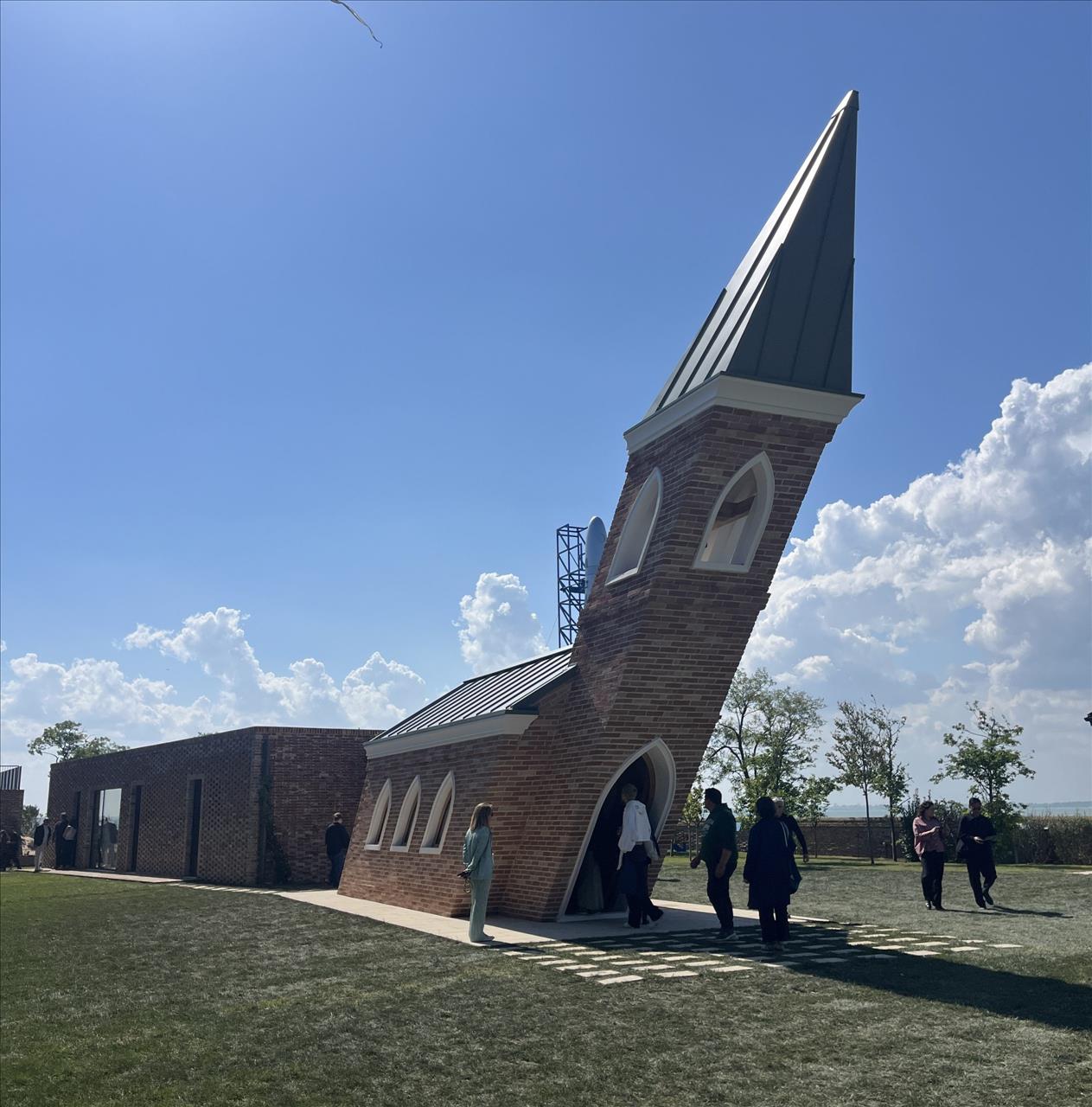
At The Venice Biennale, The Thrill Of Victory, The Agony Of Defeat
(MENAFN- USA Art News)
Venice Biennale Opens With Uneven Pavilions, but Florentina Holzinger Commands the Lagoon
The 61st Venice Biennale has opened with a familiar contradiction: a central exhibition that feels overstuffed and uneven, and a citywide spread of works that can still jolt even a jaded viewer into attention. Conceived by the late Koyo Kouoh and realized by a team of collaborators,“In Minor Keys” offers flashes of force - especially in Kaloki Nyamai's paintings - but often feels crowded by its own ambitions.
That imbalance did not prevent the opening days from producing a handful of memorable works. Taiwan's Li Yi-Fan drew notice with“Screen Melancholy,” a menacing video at the Palazzo delle Prigioni. In the Dutch pavilion, Dries Verhoeven's“The Fortress” turned confinement into performance: Jana Jacuka, shirt off, repeated short, guttural phrases while the audience was sealed inside behind rolling metal gates. The result was part border drama, part psychological pressure chamber.
At AMA Venezia, collector Laurent Asscher's newly opened private foundation, Tino Sehgal's“The Kiss (Clean Version)” appeared inside the exhibition“Aura,” where two performers writhed together in near darkness. The room's blacked-out atmosphere made the scene feel less like provocation than apparition. Nearby, Denmark's pavilion paired Maja Malou Lyse with the collective DIS in a video that recasts porn actors as scientists in a sperm bank, another example of the biennale's fixation on bodies, systems, and control.
If the official pavilions were mixed, the most forceful spectacle came from Austria. Florentina Holzinger's pavilion has already become one of the event's most talked-about sites, with a naked woman riding a jet ski in an endless loop and another performer in scuba gear suspended in a vat of recycled urine. Holzinger also staged a lagoon performance involving a barge, an all-woman mostly nude death metal band, and a performer swung over the water by hooks attached to a crane. However one reads the curatorial language around rising seas and“turbo-tourism,” the work lands as something more immediate: a display of bodily risk, theatrical excess, and hard-won freedom.
Elsewhere, the commercial circuit produced its own uneven mix. Jenny Saville appeared at Ca' Pesaro, while Mel Ramos received a full-scale presentation at the Palazzo Bragadin Carabba, including a striking double portrait of the artist and his wife, Leta, en déshabillé. The broader picture remains familiar to anyone who has spent time in Venice during biennale season: the city can be frustrating, exhilarating, and exhausting in the same afternoon. Even in a weak year, it still offers enough to reward the patient eye.
The 61st Venice Biennale may not have delivered consistency, but it did deliver a reminder of why the city remains indispensable: in Venice, the most durable works are often the ones that feel physically present, unstable, and impossible to ignore.

Legal Disclaimer:
MENAFN provides the
information “as is” without warranty of any kind. We do not accept
any responsibility or liability for the accuracy, content, images,
videos, licenses, completeness, legality, or reliability of the information
contained in this article. If you have any complaints or copyright
issues related to this article, kindly contact the provider above.
Most popular stories
Market Research

More Story







Comments
No comment