




403
Sorry!!
Error! We're sorry, but the page you were looking for doesn't exist.
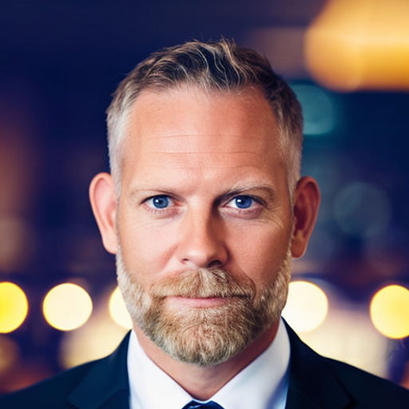
The Return Calculus: Reassessing The Gulf With Confidence
(MENAFN- Mid-East Info) Iran resumed kinetic strikes against GCC targets in early May, weeks into an indefinite ceasefire. That reset the clock for many embassies, airlines, insurers, residents and investors who are each running their own personal countdown to re-entry.
The macro indicators are there for all to see – as heard again today,“don't follow tweets, follow ships, planes, and school schedules...” The US currently holds every GCC country at Level 3“Reconsider Travel,” with ordered departure of non-emergency embassy staff and their families in place across the Gulf, with UK and others having similar“advise against all but essential travel”. Political violence cover in the Gulf, priced at $1,000 to $2,200 per million dollars before the conflict, now sits at $20,000 to $120,000. The assessment behind those numbers has been running since the conflict began with varying conclusions. For a start, insurers no longer treat the GCC as a single risk profile. Pricing, capacity and trigger language now read differently market by market across the Gulf, and that along with understood risks and in year opportunities is influencing where firms put their people and their capital. Of the many, there are three common decisions running in parallel inside most firms today. The first is where to operate from. Some are doubling down on their legacy presence in UAE – they understand it, as do their people – for many it is their home. Others are choosing Riyadh, often with senior leadership commuting between the two. This was for many, already on the agenda, and the conflict was the catalyst. Saudi Arabia is seen by some as offering more immediate stability, alongside predictable opportunity they can capitalize on in 2026. A smaller group is using the window to right-size its Gulf footprint, holding presence with regional human capital but either shedding, or moving expensive, and more risk averse nationalities to quieter markets with softer advisories and costs. The second is who you put in the country. The assessment of physical presence is also an assessment of whose passport will be the easy button and give continuity, at least until the end of 2026. With the US at Level 3 and several on a similar footing, a US-headquartered firm bringing American staff into Doha or Manama looks materially different to a Korean or French firm doing the same. Firms are mapping the resilience of their workforce by nationality and host welcome, asking who can travel, who will stay, and how the host country views their home country today. The third is what the firm, and its people can sustain if hostilities return. The reputational cost of a first evacuation was absorbed by the market. A second evacuation will not be. Clients are scenario-testing whether they could halt twice without losing credibility with customers, regulators and investors. They are weighing what closed schools would do to their expat human capital, much of which has options elsewhere, and pressure-testing whether insurance triggers, response wiring and host-country undertakings actually hold inside a second cycle, and – what self-insurance posture they need if cover restricts further. Around the edges of these reassessments are other factors and considerations. Restricted consular footprints, harder underwriting and softening real estate adjacent markets are giving some firms reason to wait while regional valuations normalise and ambitions across the Gulf are recalibrated and measured against opportunities in other markets, however, the legitimacy of waiting depends on naming it as a decision and not allowing it to drift into inertia. The work, in every case, is to commit deliberately. People we work with measure confidence by how steadily they execute... We want them to write down the trade-offs and name the executive who carries each decision. The response that follows is rehearsed before it is needed. Their workforce and clients see a leadership team that has thought through what could go wrong as that is what resilience looks like from the outside. The opportunity in the Gulf remains, more perhaps now than ever – how it is realized however, has changed – and firms need to adapt to the reality of the region today, and not kid themselves into thinking they can operate as they did and thrive. About Sicuro Group: Sicuro Group delivers global risk management and duty of care solutions across more than140 countries, supporting multinationals and leading global brands through complex and high-risk environments. Founded in 2005 and headquartered in the UAE, the Group operates through three specialist practices: Sicuro Group (travel risk and security operations), Intelyse (intelligence and due diligence), and Sicuro Technology (communications and tracking). An intelligence-driven approach and 24/7 operational capability underpin everything we do.
The macro indicators are there for all to see – as heard again today,“don't follow tweets, follow ships, planes, and school schedules...” The US currently holds every GCC country at Level 3“Reconsider Travel,” with ordered departure of non-emergency embassy staff and their families in place across the Gulf, with UK and others having similar“advise against all but essential travel”. Political violence cover in the Gulf, priced at $1,000 to $2,200 per million dollars before the conflict, now sits at $20,000 to $120,000. The assessment behind those numbers has been running since the conflict began with varying conclusions. For a start, insurers no longer treat the GCC as a single risk profile. Pricing, capacity and trigger language now read differently market by market across the Gulf, and that along with understood risks and in year opportunities is influencing where firms put their people and their capital. Of the many, there are three common decisions running in parallel inside most firms today. The first is where to operate from. Some are doubling down on their legacy presence in UAE – they understand it, as do their people – for many it is their home. Others are choosing Riyadh, often with senior leadership commuting between the two. This was for many, already on the agenda, and the conflict was the catalyst. Saudi Arabia is seen by some as offering more immediate stability, alongside predictable opportunity they can capitalize on in 2026. A smaller group is using the window to right-size its Gulf footprint, holding presence with regional human capital but either shedding, or moving expensive, and more risk averse nationalities to quieter markets with softer advisories and costs. The second is who you put in the country. The assessment of physical presence is also an assessment of whose passport will be the easy button and give continuity, at least until the end of 2026. With the US at Level 3 and several on a similar footing, a US-headquartered firm bringing American staff into Doha or Manama looks materially different to a Korean or French firm doing the same. Firms are mapping the resilience of their workforce by nationality and host welcome, asking who can travel, who will stay, and how the host country views their home country today. The third is what the firm, and its people can sustain if hostilities return. The reputational cost of a first evacuation was absorbed by the market. A second evacuation will not be. Clients are scenario-testing whether they could halt twice without losing credibility with customers, regulators and investors. They are weighing what closed schools would do to their expat human capital, much of which has options elsewhere, and pressure-testing whether insurance triggers, response wiring and host-country undertakings actually hold inside a second cycle, and – what self-insurance posture they need if cover restricts further. Around the edges of these reassessments are other factors and considerations. Restricted consular footprints, harder underwriting and softening real estate adjacent markets are giving some firms reason to wait while regional valuations normalise and ambitions across the Gulf are recalibrated and measured against opportunities in other markets, however, the legitimacy of waiting depends on naming it as a decision and not allowing it to drift into inertia. The work, in every case, is to commit deliberately. People we work with measure confidence by how steadily they execute... We want them to write down the trade-offs and name the executive who carries each decision. The response that follows is rehearsed before it is needed. Their workforce and clients see a leadership team that has thought through what could go wrong as that is what resilience looks like from the outside. The opportunity in the Gulf remains, more perhaps now than ever – how it is realized however, has changed – and firms need to adapt to the reality of the region today, and not kid themselves into thinking they can operate as they did and thrive. About Sicuro Group: Sicuro Group delivers global risk management and duty of care solutions across more than140 countries, supporting multinationals and leading global brands through complex and high-risk environments. Founded in 2005 and headquartered in the UAE, the Group operates through three specialist practices: Sicuro Group (travel risk and security operations), Intelyse (intelligence and due diligence), and Sicuro Technology (communications and tracking). An intelligence-driven approach and 24/7 operational capability underpin everything we do.

Legal Disclaimer:
MENAFN provides the
information “as is” without warranty of any kind. We do not accept
any responsibility or liability for the accuracy, content, images,
videos, licenses, completeness, legality, or reliability of the information
contained in this article. If you have any complaints or copyright
issues related to this article, kindly contact the provider above.
Most popular stories
Market Research

More Story





Comments
No comment