




403
Sorry!!
Error! We're sorry, but the page you were looking for doesn't exist.
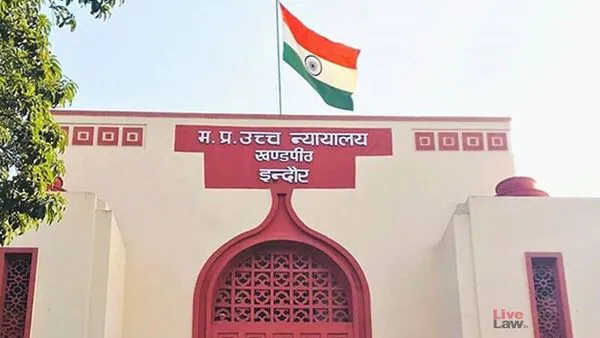
Madhya Pradesh High Court Declares Bhojshala In Dhar As Temple
(MENAFN- Live Mint) The Madhya Pradesh High Court on Friday ruled that the disputed Bhojshala Temple-Kamal Maula Mosque complex is a temple dedicated to Goddess Saraswati, while stating that the Muslim community could approach the state government for separate land in the district to build a mosque, PTI reported.
In its judgment on the Bhojshala-Kamal Maula dispute, the court further noted that there were signs suggesting the existence of a Sanskrit learning centre and a temple devoted to Goddess Saraswati at the site.
The case concerns the religious character of the ASI-protected monument located in the Dhar district.
After the controversy over the Bhojshala complex erupted, the ASI issued an order on April 7, 2003, permitting Hindus to worship at the complex every Tuesday and Muslims to offer namaz there every Friday. The Hindu side challenged the order in the High Court, seeking exclusive rights to worship at the complex.
According to a report by LiveLaw, allowing the writ petitions submitted by the Hindu Front for Justice and other petitioners, a bench comprising Justice Vijay Kumar Shukla and Justice Alok Awasthi observed that,“We have noted the continuity of the Hindu worship at the site, though regulated overtime...We record finding that historical literature of the place establishes as a centre of Sanskrit learning associated with Raja Bhoj...it indicates the existence of Temple dedicated to Goddess Sarawsati at Dhar...Therefore, the religious character of the area is held to be Bhojshala with temple of Goddess Vagdevi Saraswati.”
Here's how the arguments wentDuring the proceedings, petitioners representing the Hindu, Muslim, and Jain communities put forward extensive arguments, each demanding exclusive rights to worship at the monument.
Following a scientific survey of the site, the Archaeological Survey of India stated in its more than 2,000-page report that a large structure from the era of the Parmar rulers of Dhar existed before the mosque, and that the present disputed structure appeared to have been constructed using reused parts of a temple, PTI reported.
The Hindu side claimed that coins, sculptures, and inscriptions found by the ASI during its scientific survey prove the complex was originally a temple.
However, the Muslim side argued in court that the ASI's survey report was "biased" and prepared to support the claims of the Hindu petitioners.
Refuting this, the ASI told the court the scientific survey process was carried out with the help of experts, including three from the Muslim community.
Security beefed up in DharAhead of the court's ruling, nearly 1,200 police personnel were deployed in and around the Bhojshala-Kamal Maula complex in Dhar on Friday to maintain law and order, PTI reported.
Although the Hindu and Muslim communities currently share the site under a 2003 notification, a section of the Jain community has also asserted its claim over the ASI-protected monument.
Also Read | Bhojshala-Maul Masjid row: SC refuses to stay ASI survey in disputed sitesMeanwhile, Dhar Collector Rajeev Ranjan Meena warned of strict action against those circulating objectionable content on social media as authorities set up barricades around the disputed complex, where Friday prayers are scheduled on the same day as the court ruling expected later in the afternoon.
ASI surveyOn March 11, 2024, the High Court directed the ASI to carry out a scientific survey of the Bhojshala Temple-Kamal Maula Mosque complex. The survey began on March 22 and lasted 98 days, after which the ASI submitted its report to the court.
Also Read | Gyanvapi Mosque Case: Varanasi court dismisses Hindu side's plea for...Members of the Muslim community currently offer namaz at the complex between 1 pm and 3 pm every Friday. In anticipation of the verdict, the administration installed barricades around the site and issued a social media advisory.
During the proceedings, petitioners representing the Hindu, Muslim, and Jain communities presented extensive arguments, each seeking exclusive worship rights over the monument.
ASI report stated...In its over 2,000-page report, the ASI stated that remains of a large structure dating back to the rule of the Parmar kings of Dhar existed before the mosque, and that the present disputed structure appeared to have been constructed using reused temple materials.
Also Read | Gyanvapi mosque case: Muslim side alleges nexus between state and Hindu sideThe Hindu side argued that coins, sculptures, and inscriptions uncovered during the survey established that the complex was originally a temple.
The Muslim side, however, contended that the ASI report was biased and tailored to support the claims made by Hindu petitioners.
Rejecting the allegation, the ASI informed the court that the scientific survey was conducted with assistance from experts, including three members from the Muslim community.
(With inputs from PTI)
(This is a developing story...)

Legal Disclaimer:
MENAFN provides the
information “as is” without warranty of any kind. We do not accept
any responsibility or liability for the accuracy, content, images,
videos, licenses, completeness, legality, or reliability of the information
contained in this article. If you have any complaints or copyright
issues related to this article, kindly contact the provider above.
Most popular stories
Market Research

More Story





Comments
No comment