




403
Sorry!!
Error! We're sorry, but the page you were looking for doesn't exist.
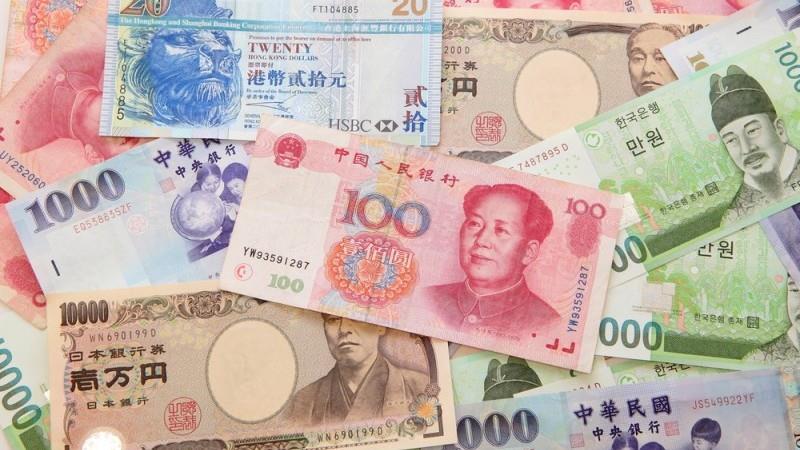
Inflationary Pressures Mount In South Korea And Japan, Raising Rate Hike Odds
| 40.8% | Korea: April Export Price (%YoY) Import price rose 20.2% |
Trade price dynamics explain why South Korea's economy is showing resilience despite energy shocks. Korean exporters have passed on input price hikes to output prices, mostly to intermediate goods such as electronics and petroleum products. With export prices rising faster than import prices, the terms of trade improved quite meaningfully.
Import prices in KRW base rose 20.2% year-on-year in April, a similar pace from the previous month's 20.5%. Dubai oil prices stabilised slightly in April compared to March, limiting further gains in import prices. For example, CPN (Coal, petroleum, natural gas) prices rose 38% YoY, but decelerated from 49% gain in March. Yet, the price excluding food and energy rose further to 15.6% from 12.6% in the previous month, indicating that price pressures widened.
Meanwhile, export prices rose much faster than import costs. Export prices rose quite sharply, by 41% compared to 29.5% in March. Export price began rising in September, in line with semiconductor price trends. Semiconductor prices rose 156% in April, following a 121% rise in March. Since the beginning of the Middle East conflict, price pressures on refinery/petrochemical products have become more pronounced. Diesel and jet fuel prices rose by 139% and 130% each.
In volume terms, exports rose by 12.4% YoY, while imports fell by 0.1%. We expect both exports and imports to decline in the coming months. But imports will likely contract more quickly than exports, so the overall trade balance should remain positive.
Inflation pressures strengthen while the terms of trade improves in April Upside risks for current GDP outlookToday's data suggested more upside risks for Korea's GDP in the current quarter. We have upgraded our growth outlook to 2.8% YoY from 2.0%, but we see a higher chance of another upgrade once we have more activity data available.
We hold a constructive view on overall growth. There are downside risks, though. Production disruption in the semiconductor industry is a key risk. A major chip manufacturer's labour union is planning a week-long strike, and the company has already pre-emptively reduced production. Given the high dependency of the growth on semiconductor activity, the duration and magnitude of the strike may pose a significant downside risk. Another downside risk is the prolonged disruption to oil and gas. The government and businesses secured a meaningful amount of materials from outside the Middle East, but still below the pre-war level. Also, the shortage of essential materials for semiconductors would hit the economy hard.
Foreigners selling KOSPI is a key driver of the recent KRW weakness BoK/KTB/KRW outlookWe expect the Bank of Korea to deliver rate hikes in the second half of 2026 amid stronger-than-expected growth and rising inflation. We expect the BoK to stay pat in May. There's still considerable uncertainty about the situation in the Middle East and potential semiconductor production cuts. Thus, the BoK is likely to extend its wait-and-see mode in May but signal rate hikes with hawkish comments. We expect dot plots to show 1-2 hikes within six months. A minor dissenting vote is even possible in May. We expect the BoK to deliver a hike in July, then another hike in the fourth quarter.
We expect Korean treasury bond (KTB) yields to rise a bit further. The rising possibility of BoK rate hikes, higher inflation expectations, and elevated geopolitical risks are likely to weigh on KTB markets. The 10YKTB yield is expected to stay above 4.0% in the near term, but is likely to decline to 3.9% by the end of the quarter. As ING views geopolitical risks gradually easing, the risk premium should decline at least modestly. We expect that once the BoK begins its rate hikes, term spreads will narrow, unwinding the earlier yield spikes.
Meanwhile, KRW should also stay above 1,475 in the near term. Despite the recent KOSPI rally, foreigners have been net sellers of KOSPI. We believe this is mostly driven by the global realisation of the gain. Also, the unrivalled outperformance of the KOSPI (+80% ytd gain) should trigger portfolio rebalancing among investors. Meanwhile, domestic retail investors' capital outflow has been stabilised this year. Thanks to Korea's inclusion in WGBI, we saw continued capital inflow for the bond market. We think foreigners' position adjustments in the KOSPI should be a dominant factor in the near-term KRW move.
Market rates tend to move ahead of monetary policy cycle| 4.9% | Japan: April Producer Price (%YoY) |
| Higher than expected |
Japan's producer prices rose 4.9% YoY in April (vs a revised 2.9% in March, 3.0% market consensus). The government tightly controls the price of gasoline at pumps, but producer price increases will be passed on to consumers in the near future. Petroleum and chemical prices rose quite sharply by 5.3% (vs -7.1% in March) and 9.2% (vs 0.8% in March) respectively. Nonferrous metal prices rose even higher to 37.9% from the previous month's 31.5%. Still, food price hikes have not been seen in Japan yet, with agricultural prices decelerating to 12.5% from 17.4%. We think the stabilisation of rice prices should be a reason.
Pipeline prices climb in Japan, likely pushing up consumer prices in coming months Japanese exporters face challenges managing rising input costsUnlike Korea, Japan's terms of trade have stayed relatively neutral. Export prices rose 18.9% YoY, while import prices rose 17.5% in April. Chemical and electrical prices rose quite sharply, outpacing the import prices of these products. However, the total weight of these products is insignificant in total exports. Thus, the overall impact should be limited. Also, Japan imports products mostly for domestic use; thus, higher import prices will put greater pressure on consumer goods.
BoJ outlookWe expect the Bank of Japan to finally deliver a rate hike in June. The April meeting minutes showed that the Board generally thinks it can't wait too long. There were already three dissenting votes at the April meeting, and recently, one of the dovish members, Kazuyuki Masu, also hinted that the BoJ needs to act soon. Today's inflation data showed pressures are firming up in the near term. Thus, the odds of a BoJ June hike rose quite meaningfully. The question will be when the BoJ will hike again. We believe that if the situation in the Middle East improves, an October hike is possible. But the key hurdle should be convincing the government. We believe that if BoJ hesitates on policy adjustments, it risks falling behind the curve. Thus, the exact timing of hikes remains uncertain, but additional rate hikes are expected to continue through 2027.
BoJ boards turned to more hawkish due to higher inflation
Legal Disclaimer:
MENAFN provides the
information “as is” without warranty of any kind. We do not accept
any responsibility or liability for the accuracy, content, images,
videos, licenses, completeness, legality, or reliability of the information
contained in this article. If you have any complaints or copyright
issues related to this article, kindly contact the provider above.
Most popular stories
Market Research

More Story






Comments
No comment