




403
Sorry!!
Error! We're sorry, but the page you were looking for doesn't exist.
New York Institutions Offer Nuanced And Inclusive Views Of US's 250Th Birthday The Art Newspaper International Art News And Events
(MENAFN- USA Art News)
New York Museums Recast the Revolution for the U.S. Semiquincentennial
As the United States marks 250 years since independence, New York institutions are using the anniversary to revisit the Revolutionary era with uncommon breadth. The result is not a single celebratory narrative, but a cluster of exhibitions that place founding documents, urban conflict, women's history, and Black self-emancipation into the same historical frame.
At the Grey Art Museum at New York University, one of the 26 surviving copies of the Declaration of Independence printed by John Dunlap in Philadelphia on the night of July 4, 1776 is now on view. The sheet, from the Berkley Collection, is displayed through July 10 alongside more than 100 other documents that help reconstruct the political and social world in which the Patriots argued for revolution. Two other surviving copies are at the Morgan Library and Museum and the New York Public Library.
William R. Berkley, who acquired the copy in a private sale in the early 1990s, said he hopes the exhibition, The Declaration of Independence: Long Trail to Liberty, will encourage a more hopeful reading of the country's origins. He described the founding documents as evidence of“a reawakening of all the potential of America,” adding that the nation's structure remains“so exciting and so wonderful” despite its failures.
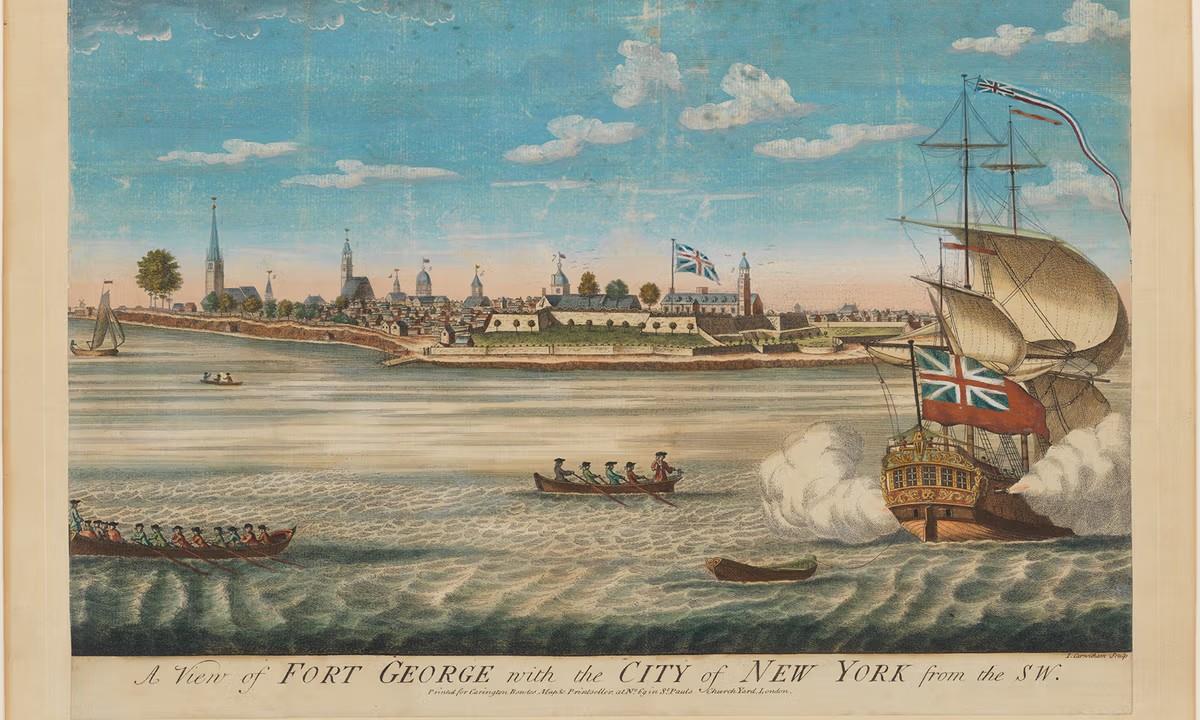
Uptown, the Museum of the City of New York is taking a different approach with The Occupied City, an exhibition that places visitors inside New York during the British occupation. The show treats the city as both a strategic prize and an ideological battleground, with references to the seven-year occupation and the Great Fire that devastated parts of Manhattan. Its interactive elements include a recreated coffee house and tavern, a simulated flythrough of the fire's destruction, and a digital reenactment of the moment when a statue of King George III was pulled down at Bowling Green.
Elisabeth Sherman, the museum's chief curator and deputy director, said the exhibition is meant to complicate the familiar shorthand of the Revolution as a fight over taxation alone. She pointed instead to economic precarity and the broader debates around trade and agriculture that shaped revolutionary thinking. The point, she suggested, is not only to revisit hardship, but to recognize how people under pressure still found ways to act.
That widening of the historical lens continues at The New York Historical, where Revolutionary Women opens on May 29 and runs through October 25. The exhibition includes Deborah Sampson, Molly Brant, Deborah Squash, Eliza Schuyler Hamilton, and Abigail Adams, extending the story of independence beyond the usual roster of founders. Together, the New York shows suggest that the semiquincentennial is becoming a moment of revision as much as commemoration - one that asks who the Revolution was for, and who has been left out of its telling.

Legal Disclaimer:
MENAFN provides the
information “as is” without warranty of any kind. We do not accept
any responsibility or liability for the accuracy, content, images,
videos, licenses, completeness, legality, or reliability of the information
contained in this article. If you have any complaints or copyright
issues related to this article, kindly contact the provider above.
Most popular stories
Market Research

More Story








Comments
No comment