




403
Sorry!!
Error! We're sorry, but the page you were looking for doesn't exist.
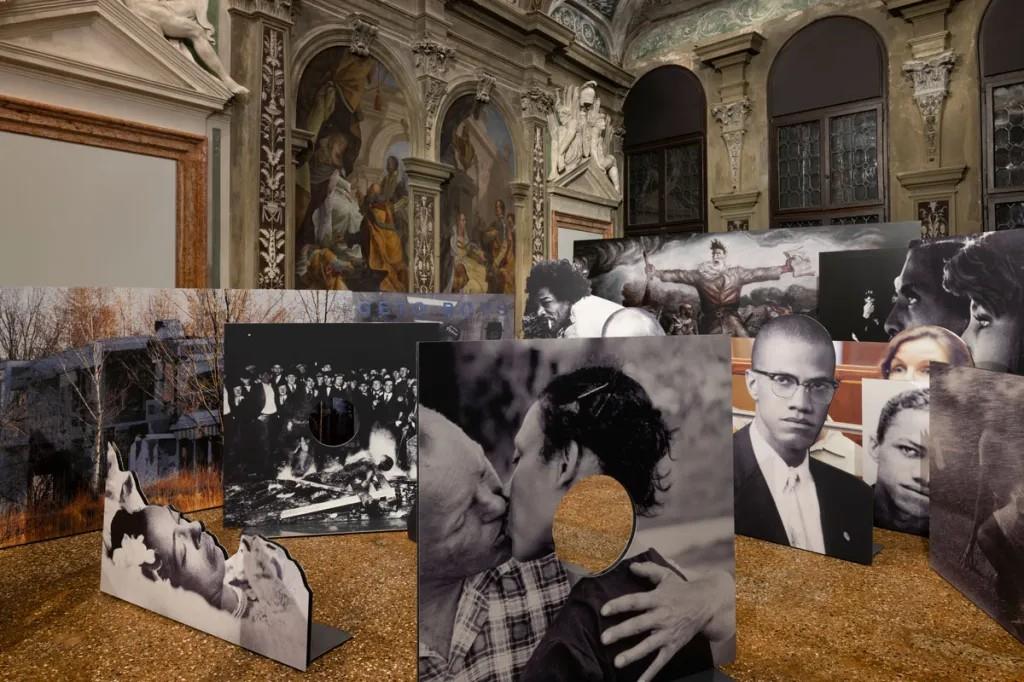
A Fondazione Prada Exhibition Pairs Arthur Jafa And Richard Prince
(MENAFN- USA Art News)
Richard Prince and Arthur Jafa Find Common Ground in Venice Through Appropriation
At Fondazione Prada in Venice, two artists long associated with borrowing, quoting, and reworking existing images are being placed in direct conversation. The exhibition, Helter Skelter, curated by Nancy Spector, brings Richard Prince and Arthur Jafa together around a question that has shadowed contemporary art for decades: what happens when appropriation becomes not just a method, but a way of thinking about authorship, race, and cultural power?
Spector has linked Prince's White Paintings with Jafa's The White Album (2018), a pairing that makes the exhibition feel less like a simple comparison than a study in artistic inheritance. Jafa has said his work would not be possible without Prince's precedent, and he has described Prince as a crucial figure in the development of strategies that allow artists to operate outside conventional expectations of originality.
The two artists first met at the debut exhibition of Jafa's AGHDRA (2021) at Gavin Brown's Enterprise in Harlem. Jafa expected Prince to stay only briefly, but Prince remained for the full 75-minute run of the work. According to Jafa, Prince responded at the end with a brief invitation to stay in touch before disappearing into the dark. That encounter later became part of the exhibition's backstory, as did the artists' ongoing exchange of images by text, which eventually formed the basis of a zine.
Spector's interest in the pairing deepened after a studio visit with Jafa about three years ago. She had previously curated Prince's 2007 retrospective at the Guggenheim, and she said she initially did not understand why Jafa was so drawn to Prince's work. Their conversation shifted toward appropriation and theft, and toward the different stakes those ideas carry for Black artists, for whom questions of property and self-determination are inseparable from historical experience.
That distinction is central to the exhibition's intellectual charge. In a video produced by the Louisiana Museum of Modern Art in Denmark, Jafa called Prince“the blackest white artist I know.” He later said the line was mostly a joke, but Spector said it prompted her to look more closely at how Jafa had also been appropriating Prince's work as a form of homage. The result is an exhibition that treats borrowing not as a closed system, but as a living exchange shaped by outsider culture, rebel culture, and the uneasy legacy of Marcel Duchamp.
By placing Prince and Jafa side by side during the Venice Biennale, Fondazione Prada has staged more than a pairing of two well-known names. It has opened a sharper conversation about how images move, who gets to claim them, and why appropriation remains one of the most contested tools in contemporary art.

Legal Disclaimer:
MENAFN provides the
information “as is” without warranty of any kind. We do not accept
any responsibility or liability for the accuracy, content, images,
videos, licenses, completeness, legality, or reliability of the information
contained in this article. If you have any complaints or copyright
issues related to this article, kindly contact the provider above.
Most popular stories
Market Research

More Story








Comments
No comment