




403
Sorry!!
Error! We're sorry, but the page you were looking for doesn't exist.
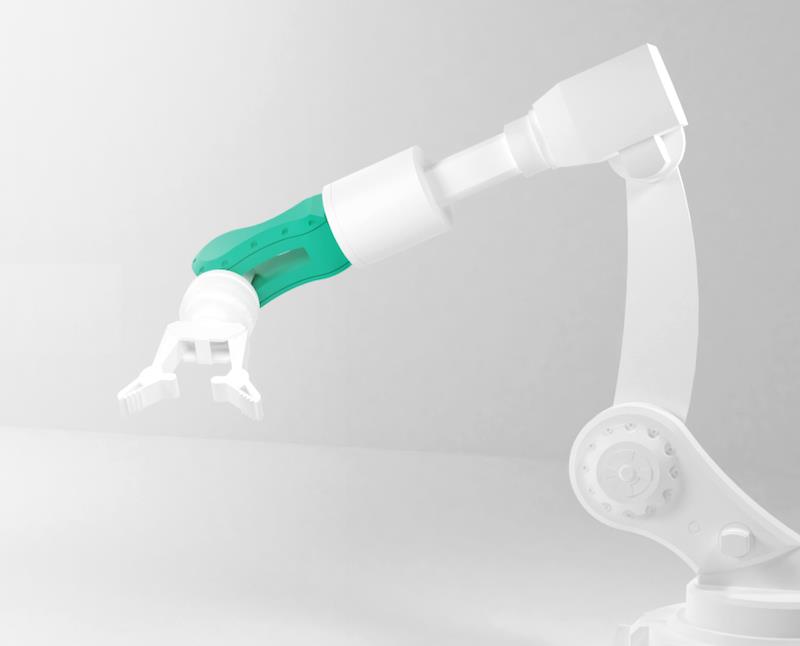
From Prototype To Production: How Digital Manufacturing Platforms Are Accelerating Robotics Development
(MENAFN- Robotics & Automation News) " itemprop="text">
The growing pressure on robotics teams to move faster
Robotics companies are under more pressure than ever to accelerate development timelines. Whether building industrial automation systems, autonomous platforms, or next-generation robotic hardware, teams are expected to move from concept to production faster – without compromising reliability or performance.
At the same time, hardware development is becoming more complex. Mechanical systems, electronics, and software must all come together seamlessly, and each iteration requires physical validation. That's where many teams run into trouble.
According to Fictiv's 2025 State of Manufacturing & Supply Chain Report, nearly half of manufacturing leaders say they are struggling to do more with fewer resources, while still navigating supply chain disruptions and rising costs. For robotics teams, those pressures show up most clearly in one place: prototyping.
Why prototyping is still the bottleneckDespite advances in simulation and design tools, prototyping remains one of the slowest parts of robotics development.
Traditional workflows often involve:
-
Multiple vendors for different manufacturing processes
Long turnaround times for custom parts
Limited feedback on manufacturability until late in the cycle
Manual quoting and sourcing processes
The result is predictable: delays, rework, and missed opportunities to iterate quickly.
This is particularly challenging in robotics, where small design changes – tolerances, materials, or geometry – can significantly impact system performance.
What robotics teams actually need from a prototyping partnerTo keep pace, robotics companies are moving away from fragmented sourcing models and looking for partners that can support the full lifecycle – from early prototypes through production.
Speed without sacrificing precisionRobotics hardware requires tight tolerances and reliable performance, especially in moving assemblies and load-bearing structures. But speed is equally critical.
Teams need rapid turnaround on functional prototypes so they can test, validate, and refine designs without delay.
Support for multiple manufacturing processesMost robotics products rely on a mix of manufacturing methods:
-
CNC machining for precision components
3D printing for rapid iteration and complex geometries
Injection molding for production validation
Managing these processes across different suppliers slows everything down.
Many teams are now turning to advanced rapid prototyping services for robotics applications that consolidate these capabilities into a single workflow – helping reduce sourcing complexity and speed up iteration.
Early design for manufacturing (DFM) feedbackOne of the biggest contributors to delays is discovering manufacturability issues too late.
Fictiv's research shows that engineering teams are increasingly prioritizing early-stage feedback and risk mitigation, especially as supply chains become less predictable.
Getting DFM insights earlier in the process helps teams:
-
Identify design risks before production
Reduce costly redesign cycles
Improve part performance and manufacturability
Another common challenge is transitioning from prototyping to production.
Switching suppliers between stages introduces:
-
New qualification processes
Quality inconsistencies
Additional supply chain risk
That's why robotics teams are increasingly adopting digital manufacturing platforms that support end-to-end product development, allowing them to scale without changing partners midstream.
How digital manufacturing platforms are changing robotics developmentDigital manufacturing platforms are reshaping how teams approach prototyping and production by removing many of the inefficiencies built into traditional workflows.
Faster decision-making with instant quotingInstead of waiting days for quotes, engineers can now access:
-
Real-time pricing
Lead time estimates
Immediate design feedback
This allows teams to make faster decisions and keep projects moving.
Simplified sourcing through distributed networksRather than managing multiple vendors, digital platforms connect teams to a network of pre-vetted manufacturers.
This reduces:
-
Supplier management overhead
Risk of inconsistent quality
Delays caused by sourcing bottlenecks
Speed is one of the biggest advantages.
With streamlined workflows, teams can move through design cycles much more quickly:
-
Design
Upload
Quote
Manufacture
Test
Iterate
This kind of iterative loop is critical for robotics development, where performance depends on continuous refinement.
Real-world impact: faster iteration, better outcomesThe impact of these changes is already being felt across the industry.
Fictiv's 2025 report highlights several key trends:
-
Onshoring is increasing, as teams look for more control over production timelines
AI adoption is accelerating, helping optimize design and manufacturing decisions
Digital manufacturing is becoming central to resilience and speed
For robotics teams, these shifts translate into:
-
Faster validation of designs
Reduced engineering rework
Shorter time-to-market
In a competitive space, those advantages matter.
Choosing the right prototyping partnerNot all prototyping partners are built for the demands of robotics development.
When evaluating options, teams should look for:
-
Multi-process capabilities (CNC, additive, molding)
Early DFM support
Reliable lead times
Scalable production pathways
Simplified sourcing workflows
The right partner doesn't just produce parts – they help accelerate development.
Prototyping as a strategic advantageFor robotics companies, prototyping is no longer just a step in the process – it's a strategic lever.
Teams that invest in the right tools and partners are able to:
-
Move faster from concept to production
Reduce risk across the development cycle
Build more reliable, higher-performing products
As the industry continues to evolve, the ability to iterate quickly and manufacture efficiently will increasingly separate leaders from the rest.
<
Legal Disclaimer:
MENAFN provides the
information “as is” without warranty of any kind. We do not accept
any responsibility or liability for the accuracy, content, images,
videos, licenses, completeness, legality, or reliability of the information
contained in this article. If you have any complaints or copyright
issues related to this article, kindly contact the provider above.
Most popular stories
Market Research

More Story








Comments
No comment