




403
Sorry!!
Error! We're sorry, but the page you were looking for doesn't exist.
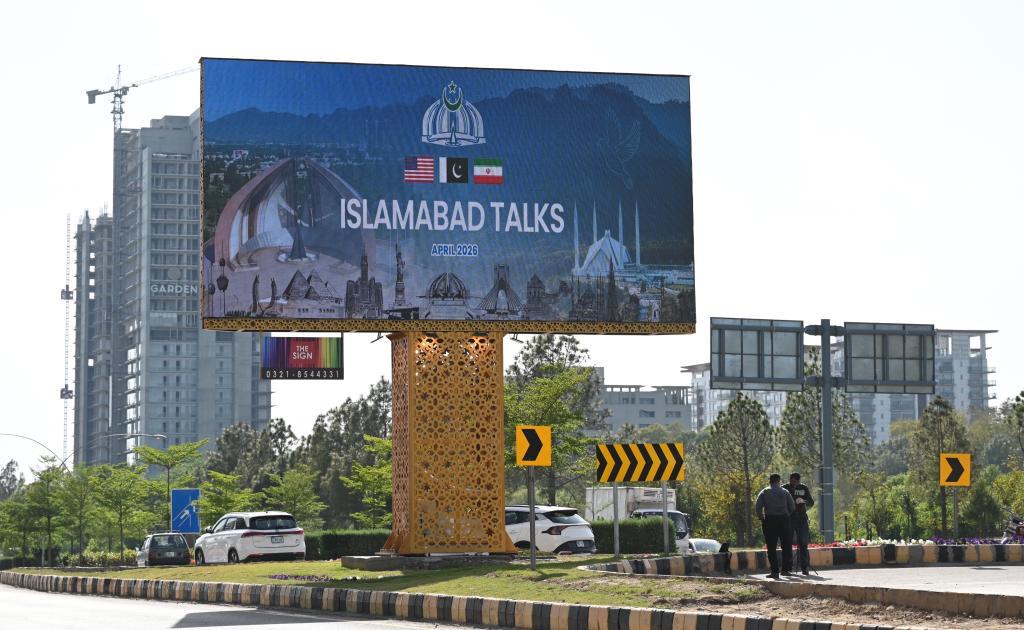
Fragile Truce Tested As US, Iran Hold Face-To-Face Talks In Pakistan
(MENAFN- Kashmir Observer) Islamabad- The United States and Iran began unprecedented face-to-face negotiations Saturday in Pakistan, days after a fragile, two-week ceasefire was announced, as the war that has killed thousands of people and shaken global markets entered its seventh week.
ADVERTISEMENT
The White House confirmed the direct nature of the talks, a rare instance of high-level engagement.
ADVERTISEMENT
Iran's state-run news agency said three-party talks including Pakistan began after Iranian preconditions, including a reduction in Israeli strikes on southern Lebanon, were met, and after U.S. and Iranian officials met separately with Pakistani Prime Minister Shehbaz Sharif.
The U.S. delegation led by Vice President JD Vance and the Iranian one led by Parliament Speaker Mohammad Bagher Qalibaf were discussing how to advance the ceasefire already threatened by deep disagreements and Israel's continued attacks against Lebanon.
Vance is joined by Trump's special envoy Steve Witkoff and son-in-law and personal advisor Jared Kushner, who took part in three rounds of indirect talks with Iranian negotiators before Trump and Israel launched the war against Iran on February 28.
President Trump has tasked the member of his inner circle who has seemed to be the most reluctant defender of the war on Iran to now find a resolution and stave off the US president's astonishing threat to wipe out its“whole civilisation”.
Vance, who has long been skeptical of foreign military interventions and outspoken about the prospect of sending troops into open-ended conflicts, to lead talks with Iran.“If the Iranians are willing to negotiate in good faith, we're certainly willing to extend the open hand,” Vance told reporters before boarding Air Force Two to make his way to the talks in Pakistan.
Now talks are underway between Vance, a reluctant defender of the war who has little diplomatic experience and warned Iran not to“try and play us,” and Qalibaf, a former commander with Iran's powerful Revolutionary Guard who has issued some of Iran's most fiery statements since fighting began.
Iran sets 'red lines'
Iran doubled down on parts of its earlier proposal, with its delegation telling Iranian state television it had presented some of the plan's ideas as“red lines” in meetings with Sharif. Those included compensation for damage caused by U.S.-Israeli strikes that launched the war on Feb. 28 and releasing Iran's frozen assets.
ADVERTISEMENTShortly before departure, Qalibaf reiterated Tehran's firm conditions: a halt to Israeli attacks in Lebanon and the release of Iran's blocked assets must precede negotiations. The demands are rooted in a 10-point proposal that forms the basis of the current ceasefire framework.
“Two measures... must be fulfilled before negotiations begin,” he said, warning that diplomacy would otherwise lack credibility.
Upon arrival, Qalibaf struck a sceptical tone, citing what he described as repeated American“betrayal” during past negotiations.“We have goodwill, but we do not have trust,” he said, adding that Iran would only engage meaningfully if Washington demonstrated genuine commitment to recognising Iranian rights.
Read Also No Breakthrough in Iran-US Talks as Vance Departs Islamabad Pak PM Hopes US-Iran Talks in Islamabad Yield PeaceHe warned that any attempt to use talks as a“deception operation” would be met with resistance, stressing Iran's readiness to defend its interests independently.
The war has killed at least 3,000 people in Iran, 1,953 in Lebanon, 23 in Israel and more than a dozen in Gulf Arab states, and caused lasting damage to infrastructure in half a dozen Middle Eastern countries. Iran's chokehold on the vital Strait of Hormuz has largely cut off the Persian Gulf and its oil and gas exports from the global economy, sending energy prices soaring.
Reflecting the high stakes, officials from the region said Chinese, Egyptian, Saudi and Qatari officials were in Islamabad to indirectly facilitate the talks. The officials spoke on condition of anonymity to discuss the sensitive matter.
A fragile ceasefire under strain
The negotiations follow a tenuous truce announced earlier this week by Pakistan's prime minister, Shehbaz Sharif, who in a televised address to his nation on Friday, described the talks as a“make-or-break moment” for the two sides.
Yet divisions over the scope of the ceasefire threaten to undermine progress. Iran insists that Israeli military operations in Lebanon fall within the truce, while Israel and Washington have rejected that interpretation, continuing strikes against Hezbollah targets.
The dispute has already pushed the ceasefire to the brink. Iran's effective shuttering of the waterway has had a major impact on the US and global economies. In the United States, consumer prices rose 3.3 per cent in March from a year earlier, the Labour Department reported Friday. The largest monthly jump in gas prices in six decades spurred the sharp spike in inflation. Still, Trump expressed confidence in an exchange with reporters on Friday evening about the US position going into the talks. He predicted that the strait will soon be reopened“with or without” Tehran's cooperation.
It's the highest-stakes moment thus far for Vance, who spent much of last year as more of a background player in the Trump White House, especially as others like Elon Musk and Secretary of State Marco Rubio took turns as ever-present advisers for the president.“I wished him luck. He's got a big thing,” Trump said of his parting message to Vance before he began his journey to Islamabad.
Vance's portfolio is fattening fast, first with a mission to root out fraud in government programmes at home and now to help solve a US war in the Middle East, where 'complicated' doesn't even begin to describe things. Vance, who served in the Iraq War while in the Marines and spent two years as a US senator for Ohio and a little more than one as vice president, has little diplomatic experience.
Rare diplomatic opening
Despite the tensions, the Islamabad meeting represents one of the most significant direct engagements between the two countries since the Iranian Revolution. The last comparable contact came in 2013, when Barack Obama spoke by phone with then Iranian president Hassan Rouhani.
With both sides publicly entrenched yet diplomatically engaged, the coming days in Islamabad will test whether mutual suspicion can give way to a workable agreement - or whether the fragile ceasefire collapses under the weight of competing demands. (inputs from AP and Trans Asia News)

Legal Disclaimer:
MENAFN provides the
information “as is” without warranty of any kind. We do not accept
any responsibility or liability for the accuracy, content, images,
videos, licenses, completeness, legality, or reliability of the information
contained in this article. If you have any complaints or copyright
issues related to this article, kindly contact the provider above.
Most popular stories
Market Research

More Story





Comments
No comment