



403
Sorry!!
Error! We're sorry, but the page you were looking for doesn't exist.
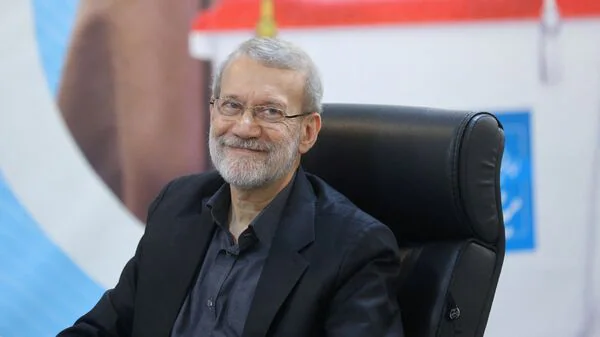
Khamenei's Trusted Insider Ali Larijani Steps Into Spotlight As Tehran Reels From Supreme Leader's Death
(MENAFN- Live Mint) Iran's Supreme Leader Ayatollah Khamenei had appointed him chief adviser mere days before hiss own death at the hands of United States and Israel. Veteran Iranian politician Ali Larijani has re-emerged as one of the most influential figures within Iran's security establishment following the killing of Supreme Leader Ayatollah Ali Khamenei in recent air strikes. On Sunday, Larijani indicated that a temporary leadership council would be formed to manage the country's transition, signalling an effort by senior officials to preserve institutional continuity amid an unprecedented political crisis. Also Read | Israel Attacks Iran LIVE: Khamenei confirmed dead, loud boom heard in Israel
Long regarded as an establishment insider from one of Iran's most prominent clerical families, Larijani has in recent years overseen an expansive portfolio encompassing nuclear negotiations, regional diplomacy and internal security policy.
Return to the centre of Iran's security apparatusAppointed Secretary of the Supreme National Security Council (SNSC) in August, Larijani formally returned to the core of Iran's decision-making system after last year's 12-day air conflict involving Iran, Israel and the United States. His appointment reinforced a career defined by loyalty to Khamenei and an ability to navigate competing factions within the Islamic Republic's political structure.
Also Read | Ali Larijani could take interim control if Iran's Khamenei is killed: ReportHis influence was underscored by diplomatic missions to Oman aimed at preparing indirect nuclear negotiations with Washington, even as the United States increased its military presence in the Middle East in the months preceding the strikes. Larijani also conducted multiple visits to Moscow, deepening security coordination with Russia, a key strategic partner for Tehran.
Iranian state television reported that Larijani accused the United States and Israel of attempting to plunder and disintegrate Iran, warning that“secessionist groups” would face a harsh response if they attempted destabilising actions.
Central role in nuclear diplomacyLarijani has consistently framed Iran's nuclear dispute with Western powers as negotiable. Speaking to Oman state television last month, he struck a pragmatic tone, stating:“In my view, this issue is resolvable. If the Americans' concern is that Iran should not move toward acquiring a nuclear weapon, that can be addressed.”
Also Read | 'Partition' warning as Iran moves to interim leadership after Khamenei's deathA former chief nuclear negotiator between 2005 and 2007, he defended Tehran's right to uranium enrichment while advocating diplomacy as a means of easing tensions with the West. During that earlier period, he famously compared European incentives to halt nuclear fuel production to“exchanging a pearl for a candy bar”.
Iran maintains that its nuclear programme is peaceful, while the United States and Israel argue that Tehran ultimately seeks nuclear weapons capability.
Sanctions and controversy over protest crackdownLarijani's resurgence has also been accompanied by international controversy. Washington imposed sanctions on him in January, alleging that he directed a violent crackdown on nationwide anti-government demonstrations.
Also Read | Iran-US conflict: Who is Ali Larijani? Khamenei picks adviser to handle affairsA US Treasury statement issued on January 15 said:“Larijani was one of the first Iranian leaders to call for violence in response to the legitimate demands of the Iranian people,” adding that he had acted at Khamenei's behest.
Human rights organisations estimate that thousands were killed during the suppression of protests, widely described as the most severe domestic unrest since the 1979 Islamic Revolution.
While expressing limited sympathy for economic grievances driving demonstrations, Larijani sharply condemned armed opposition groups. State media quoted him as saying:“Popular protests must be completely separated from these terrorist-similar groups,” and later describing rioters as“an urban quasi-terrorist group”.
Long political career spanning parliament and diplomacyLarijani served as speaker of parliament from 2008 to 2020, a period that included the negotiation of the 2015 nuclear agreement between Iran and six world powers after nearly two years of complex diplomacy. The accord later collapsed after the United States withdrew during Donald Trump's first presidential term in 2018.
Also Read | Stuck in Dubai, Abu Dhabi amid Iran-Israel conflict? Emergency numbers hereLarijani also played a role in strengthening Iran's strategic partnerships, including negotiations with China that produced a 25-year cooperation agreement in 2021. His engagement with Russia included meetings with President Vladimir Putin, reflecting Tehran's effort to counter Western pressure through closer ties with major powers.
Larijani has repeatedly argued that Iran's nuclear knowledge cannot be eliminated. Speaking to PBS Frontline in September 2025, he said:“Because once you have discovered a technology, they can't take the discovery away. It's as if you are the inventor of some machine, and the machine is stolen from you. You can still make it again.”
Political setbacks and personal backgroundDespite his establishment credentials, Larijani's political ambitions have faced obstacles. After an unsuccessful presidential bid in 2005, he was barred by the Guardian Council from contesting both the 2021 and 2024 presidential elections, reportedly over concerns related to lifestyle standards and family connections abroad.
Born in Najaf, Iraq, in 1958 into a prominent clerical family, Larijani relocated to Iran during childhood and later earned a doctorate in philosophy. Several of his brothers have occupied senior posts within Iran's judiciary and diplomatic institutions.
Also Read | Protests reported across Iran, mourners call for revenge over Khamenei's killingLarijani's family has also faced international scrutiny. One of his daughters was dismissed in January from a medical teaching role at Emory University in the United States following protests by Iranian-American activists angered by his alleged role in suppressing demonstrations.
Transitional figure in a moment of uncertaintyWith Iran entering a period of national mourning following Ayatollah Khamenei's death and senior military figures, including Armed Forces Chief of Staff Abdolrahim Mousavi, reportedly killed in the strikes, Larijani's position places him at the centre of efforts to stabilise the political system.
Also Read | US-Iran War: 'There is no need for panic selling,' advises Devina MehraObservers view Iran's Larijani as a pragmatic operator capable of balancing ideological loyalty with diplomatic engagement - a combination that may prove decisive as Iran navigates succession, internal unrest and mounting international pressure in the aftermath of a profound leadership vacuum.
(With agency inputs)

Legal Disclaimer:
MENAFN provides the
information “as is” without warranty of any kind. We do not accept
any responsibility or liability for the accuracy, content, images,
videos, licenses, completeness, legality, or reliability of the information
contained in this article. If you have any complaints or copyright
issues related to this article, kindly contact the provider above.
Most popular stories
Market Research

More Story
Comments
No comment