








403
Sorry!!
Error! We're sorry, but the page you were looking for doesn't exist.
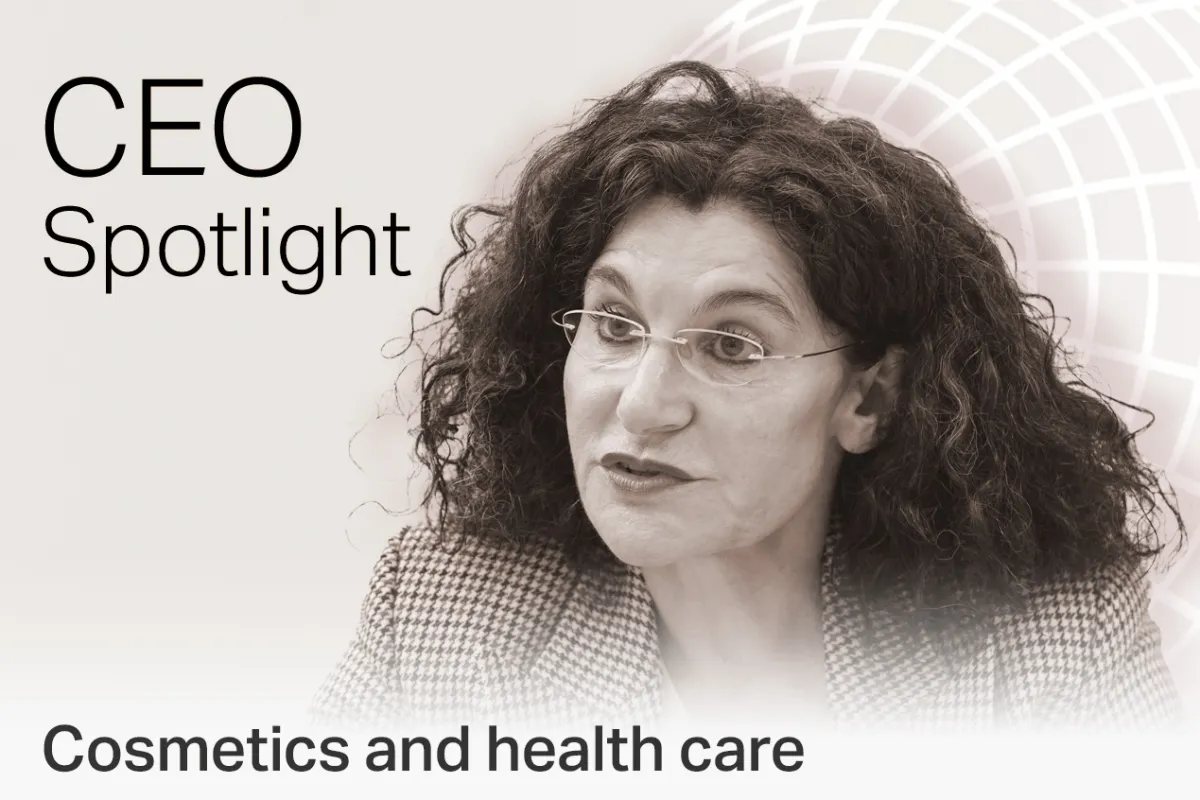
Going Global: Weleda's New CEO Wants To Put The Cosmetics Company On The Map
(MENAFN- Swissinfo)
In an exclusive interview with Swissinfo, Weleda CEO Tina Müller talks about the quiet revolution she has initiated at the Swiss cosmetics and healthcare company.
This content was published on
January 31, 2026 - 10:30
10 minutes
-
More from this aut
As a photo editor I am responsible for the editorial use of photography at SWI swissinfo and our collaborations with photographers. When the opportunity arises, I take a camera and accompany one of our journalists. I trained as a photographer in Zürich and began working as a photojournalist in 1989. I was a founder of the Swiss photographers' agency Lookat Photos in 1990. A two-time World Press Award winner, I have also been awarded several Swiss national scholarships. My work has been widely exhibited and it is represented in various collections.
-
More from this aut
Multime
When Tina Müller took the helm of Weleda in October 2023, she set out to modernise the century-old cosmetics and healthcare company.
Among other strategic moves, she launched a premium range, bringing Weleda's natural cosmetics portfolio to some 120 products. These now account for around 80% of sales.
One year later, Weleda communicated double-digit growth across key international markets, notably in Asia, the United States, Eastern and Southern Europe.
Net profit (Jahresergebnis in their annual report) surged by 93% in 2024.
But what hasn't changed is Weleda's holistic and integrative approach to healthcare; known as anthroposophical medicine. These medecines sometimes criticised for their lack of scientific evidence, have long been a defining feature of Weleda's identity and will remain so, says Müller. This will represent the remaining 20% of sales across some 860 products.
Swissinfo met Müller at the company's headquarters in Arlesheim in the Swiss canton of Basel Country to discuss challenges, competition and embracing AI.
Swissinfo: Weleda products are sold in over 50 countries on five continents. This was part of your internationalisation strategy. Expanding quickly and in so many different markets comes with risks. Would you say this expansion has been successful so far?
Tina Müller: The great thing is that we are growing in all 50 countries - which is extremely rare for a company like ours. It would make no sense to interrupt that sales momentum by withdrawing from markets that are performing well.
That said, we do prioritise our geographical footprint and invest heavily not only in our home region - Germany, Austria and Switzerland - but also in the United Kingdom and Eastern Europe, where we are seeing strong growth. Early next year, we will also enter the Indian market in a substantial way.
Swissinfo: What are the consequences, if any, for Weleda of the American tariffs decided by the new Trump administration?
T.M.: These tariffs, especially when they were at the 39% level, were certainly of concern for us, given that the US market is fast-growing and promising. However, there are mitigating factors: the US represents less than 10% of our total sales, and the majority of our exports to the US are from Germany rather than Switzerland.
Even before tariffs became an issue, we had been working with contract manufacturers in the US for specific US-only products. But we do not grow plants, conduct research and development, or manufacture in the US - and we have no plans to change this.
Swissinfo: Why does Weleda emphasise the Swiss origin of its natural cosmetics, even though the plants come from gardens in six different countries including Germany, England and the Netherlands.
T.M.: Weleda was founded in Switzerland. This is where our headquarters remain and where our main cosmetics-related activities - research and development and part of our production - are based. Switzerland enjoys an excellent global reputation for natural cosmetics, associated with quality and a deep connection to nature. By contrast, our pharmaceutical business is more concentrated in Germany, where dedicated R&D and production facilities are located.
Swissinfo: Why did you decide to locate your new logistics centre in Germany in the city of Schwäbisch Gmünd rather than in Switzerland? Was this to reduce costs?
T.M.: We aimed to place the new logistics centre close to our main production site in Germany, which greatly improves efficiency. Moreover, as Germany is part of the European Union, distributing our products across Europe and further afield is simpler from there.
Swissinfo: Weleda is strongly rooted in both Switzerland and Germany. How would you compare business conditions in the two countries?
T.M.: Switzerland is more flexible and considerably less regulated than Germany. Decisions that make our organisation more agile can therefore be taken more quickly. On the other hand, total employment costs in Switzerland, including social contributions, are about 20–30% higher than in Germany, though this is partly offset by lower taxes. There are clear advantages to both locations, and we benefit from their complementarity.
Swissinfo: You sell a wide range of products across several segments. This must generate high costs across the entire value chain?
T.M.: In cosmetics, we offer only 120 products for sales of roughly CHF360 million, which I would not consider unusually broad. In pharmaceuticals, however, our range of about 860 medicines is indeed extensive, although historically it was even broader, at 3,000 products. But anthroposophic [holistic] medicine requires highly individualised treatments, and a wide portfolio is essential for that purpose.
Swissinfo: Novelty doesn't always translate into success. When launching new products, do you rely more on rational market research or on intuition?
T.M.: This is a crucial topic because launching a new product requires substantial advertising investment, and the average failure rate in the consumer goods sector is 60–70%. Failures are therefore common and costly. At Weleda, we rely on a combination of intuition, experience and market research. Initially, we need to feel confident about a new product, but this intuition must then be validated through research to assess whether it genuinely resonates with consumers.
Swissinfo: Competition is fierce in your industry. Who are your main competitors?
T.M.: They vary greatly by country and continent. In our home region, one key competitor is Lavera, a natural cosmetics brand. In perfumeries, Börlind and Dr. Hauschka are also important competitors.
Swissinfo: Weleda operates in two very different business areas: natural cosmetics and anthroposophical medicines. What are the main synergies between them? Would you consider at some point focusing on the most profitable one?
T.M.: There are considerable synergies between our two business areas - the most significant being the plants themselves. Both our natural cosmetics and medicines draw on the same knowledge of plant cultivation and essence extraction. In addition, both businesses stem from the same founding impulse: health is not purely physical but involves harmony between body, soul and spirit.
Although cosmetics account for over 80% of our sales, our anthroposophical medicines are integral to the Weleda identity, and anthroposophic medicine continues to be practised by our principal shareholders, that is the Arlesheim clinic and the Anthroposophical Society. Selling either part of the business is therefore not an option.
Swissinfo: Few people know what anthroposophy means and the approach has been criticised as sometimes not scientific enough. Why does it remain an important pillar for Weleda?
T.M.: Anthroposophy is the philosophy from which Weleda emerged, and I believe it is better to explain the term properly than to abandon it. Essentially, it is about harmonising body, soul and spirit - a concept that is highly contemporary today. It reflects a holistic view of the human being, recognising that health is not purely physical but also involves emotional and mental strength.
Swissinfo: Can you explain how that works with your anthroposophic medicines?
T.M.: Anthroposophy always involves the interplay between the medicine, the physician and the patient. It is never limited to issuing a prescription; it also includes therapies such as art and music. The aim is not merely to treat symptoms but to strengthen the body so that it can regulate and heal itself.
Swissinfo: How important is innovation in the cosmetics market?
TM: Consumers, particularly women, are continually drawn to new products, hoping they will reduce wrinkles more effectively, improve the skin or add volume to their hair. Our innovations take various forms: some are based on new technologies, others on packaging or new ways to apply them.
More More 'Children should learn how to maintain a healthy lifestyle, not just maths and geography'This content was published on Feb 22, 2025 Peter Ohnemus, CEO of Swiss-based digital health tech company dacadoo, explains why schools should integrate health in their curriculum and outlines opportunities in keeping ageing populations healthier.
Read more: 'Children should learn how to maintain a healthy lifestyle, not just maths and geogr
Legal Disclaimer:
MENAFN provides the
information “as is” without warranty of any kind. We do not accept
any responsibility or liability for the accuracy, content, images,
videos, licenses, completeness, legality, or reliability of the information
contained in this article. If you have any complaints or copyright
issues related to this article, kindly contact the provider above.
Most popular stories
Market Research

More Story







Comments
No comment