


UN Reveals Plans for “"New Gaza"


(MENAFN) The United States has revealed its vision for a “New Gaza,” aiming to rebuild the heavily damaged Palestinian territory entirely from the ground up.
During a presentation, slides depicted numerous high-rise buildings along the Mediterranean coastline and residential developments in the Rafah region. A detailed map illustrated a phased plan for new residential, agricultural, and industrial zones intended to serve Gaza’s 2.1 million residents.
These plans were unveiled at a signing ceremony during the World Economic Forum in Davos, where President Donald Trump introduced his newly formed Board of Peace, responsible for ending the two-year conflict between Israel and Hamas and overseeing reconstruction efforts.
“We're going to be very successful in Gaza. It's going to be a great thing to watch,” Trump stated. “I'm a real estate person at heart and it's all about location. And I said: 'Look at this location on the sea. Look at this beautiful piece of property. What it could be for so many people.'”
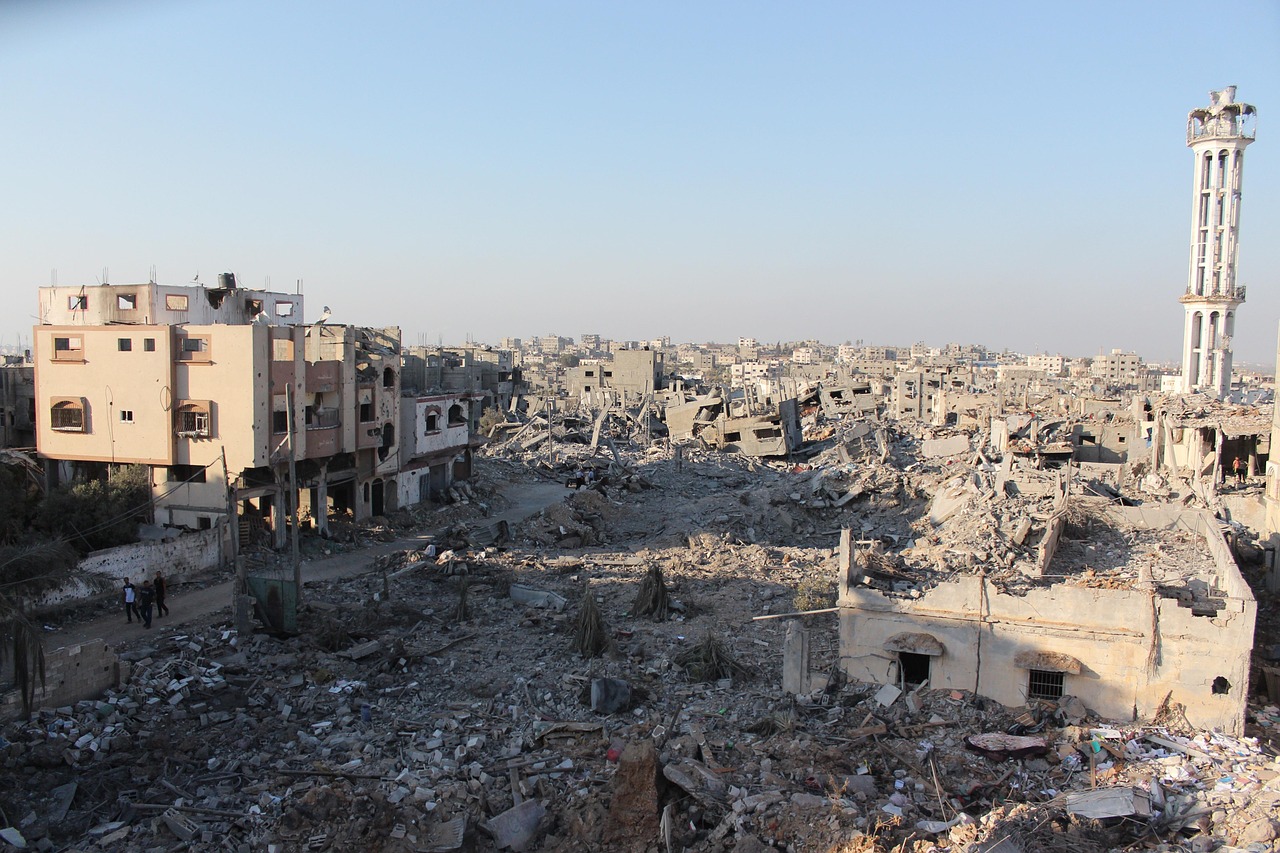
Trump’s son-in-law, Jared Kushner, who helped negotiate the October ceasefire, noted that Gaza had been subjected to 90,000 tonnes of munitions and currently contains 60 million tonnes of rubble.
“In the beginning, we were toying with the idea of saying: 'Let's build a free zone, and then we have a Hamas zone.' And then we said: 'You know what, let's just plan for catastrophic success'," Kushner said. “Hamas signed a deal to demilitarise, that is what we are going to enforce. People ask us what our plan B is. We do not have a plan B.”
The US “Master Plan” map indicated a dedicated “coastal tourism” area with 180 tower blocks, alongside zones earmarked for residential neighborhoods, industrial facilities, data centers, advanced manufacturing, parks, agricultural projects, and sports complexes. Plans also include a new seaport and airport near the Egyptian border, plus a “trilateral crossing” where Egypt, Israel, and Gaza meet.
Reconstruction will proceed in four stages, beginning in Rafah and gradually moving north toward Gaza City. A strip along the Egyptian and Israeli borders, marked on the map, corresponds with what the 20-point US peace plan terms the “security perimeter,” where Israeli forces will remain stationed “until Gaza is properly secure.”
One slide detailed that “New Rafah” would feature over 100,000 permanent homes, 200 educational centers, and 75 medical facilities. Once home to roughly 280,000 residents, Rafah has been extensively flattened by Israeli strikes and controlled demolitions during the conflict and now lies within Israeli-controlled territory.
Kushner expressed confidence that “New Rafah” could be constructed within two to three years. “We've already started removing the rubble and doing some of the demolition. And then New Gaza. It could be a hope, it could be a destination, have a lot of industry,” he said.
He added that a forthcoming conference in Washington would present international contributions and highlight “amazing investment opportunities” for private enterprises.
Earlier, Trump drew global criticism by proposing that Gaza’s population could be relocated to neighboring countries while the US would take over the territory and transform it into “the Riviera of the Middle East.”
Kushner emphasized that Gaza’s demilitarisation process was “starting now,” asserting that “without security nobody is going to make investments.” He explained that Gaza’s newly formed technocratic government, the National Committee for the Administration of Gaza (NCAG), would coordinate with Hamas to implement demilitarization measures according to prior agreements.
Hamas has previously refused to relinquish weapons without the establishment of an independent Palestinian state. Trump, however, warned: “They have to give up their weapons and if they don't do that, it's going to be the end of them.” He also insisted that Hamas return the body of the last deceased Israeli hostage in Gaza, which Israel maintained should have occurred before the second phase of the peace plan began.
Phase one of the peace plan saw Hamas and Israel agree to a ceasefire, an exchange of living and deceased Israeli hostages for Palestinians detained in Israel, partial Israeli troop withdrawal, and an increase in humanitarian aid deliveries.
Despite this, the ceasefire has remained fragile. According to Gaza’s health authorities, at least 477 Palestinians have died in Israeli strikes over the past three months, while Israel reports three soldiers killed in attacks by Palestinian armed factions. On one recent Thursday, five Palestinians were reportedly killed by Israeli fire, including four in an artillery strike in eastern Zeitoun, Gaza City.
Humanitarian conditions remain dire. The UN reports that nearly one million people lack proper shelter, while 1.6 million face severe food insecurity.
Hamas issued a statement affirming its commitment to the October agreement and accused Israel of attempting to “undermine international efforts aimed at consolidating the ceasefire.”
At Davos, Israeli President Isaac Herzog praised Trump’s leadership but cautioned that “The real test has to be Hamas leaving Gaza.” Palestinian Authority President Mahmoud Abbas called for full implementation of the plan, including Israeli troop withdrawal and a central role for the PA in Gaza’s administration.
NCAG head Ali Shaath announced that the Rafah border crossing with Egypt would reopen next week in both directions, having been mostly closed since May 2024 after Israeli forces took control. “Opening Rafah signals that Gaza is no longer closed to the future and to the war,” he said.
The conflict erupted after Hamas launched an attack on southern Israel on 7 October 2023, killing around 1,200 people and taking 251 hostages. Israel’s subsequent military campaign in Gaza has reportedly claimed over 71,560 lives, according to the territory’s health ministry.
During a presentation, slides depicted numerous high-rise buildings along the Mediterranean coastline and residential developments in the Rafah region. A detailed map illustrated a phased plan for new residential, agricultural, and industrial zones intended to serve Gaza’s 2.1 million residents.
These plans were unveiled at a signing ceremony during the World Economic Forum in Davos, where President Donald Trump introduced his newly formed Board of Peace, responsible for ending the two-year conflict between Israel and Hamas and overseeing reconstruction efforts.
“We're going to be very successful in Gaza. It's going to be a great thing to watch,” Trump stated. “I'm a real estate person at heart and it's all about location. And I said: 'Look at this location on the sea. Look at this beautiful piece of property. What it could be for so many people.'”
Trump’s son-in-law, Jared Kushner, who helped negotiate the October ceasefire, noted that Gaza had been subjected to 90,000 tonnes of munitions and currently contains 60 million tonnes of rubble.
“In the beginning, we were toying with the idea of saying: 'Let's build a free zone, and then we have a Hamas zone.' And then we said: 'You know what, let's just plan for catastrophic success'," Kushner said. “Hamas signed a deal to demilitarise, that is what we are going to enforce. People ask us what our plan B is. We do not have a plan B.”
The US “Master Plan” map indicated a dedicated “coastal tourism” area with 180 tower blocks, alongside zones earmarked for residential neighborhoods, industrial facilities, data centers, advanced manufacturing, parks, agricultural projects, and sports complexes. Plans also include a new seaport and airport near the Egyptian border, plus a “trilateral crossing” where Egypt, Israel, and Gaza meet.
Reconstruction will proceed in four stages, beginning in Rafah and gradually moving north toward Gaza City. A strip along the Egyptian and Israeli borders, marked on the map, corresponds with what the 20-point US peace plan terms the “security perimeter,” where Israeli forces will remain stationed “until Gaza is properly secure.”
One slide detailed that “New Rafah” would feature over 100,000 permanent homes, 200 educational centers, and 75 medical facilities. Once home to roughly 280,000 residents, Rafah has been extensively flattened by Israeli strikes and controlled demolitions during the conflict and now lies within Israeli-controlled territory.
Kushner expressed confidence that “New Rafah” could be constructed within two to three years. “We've already started removing the rubble and doing some of the demolition. And then New Gaza. It could be a hope, it could be a destination, have a lot of industry,” he said.
He added that a forthcoming conference in Washington would present international contributions and highlight “amazing investment opportunities” for private enterprises.
Earlier, Trump drew global criticism by proposing that Gaza’s population could be relocated to neighboring countries while the US would take over the territory and transform it into “the Riviera of the Middle East.”
Kushner emphasized that Gaza’s demilitarisation process was “starting now,” asserting that “without security nobody is going to make investments.” He explained that Gaza’s newly formed technocratic government, the National Committee for the Administration of Gaza (NCAG), would coordinate with Hamas to implement demilitarization measures according to prior agreements.
Hamas has previously refused to relinquish weapons without the establishment of an independent Palestinian state. Trump, however, warned: “They have to give up their weapons and if they don't do that, it's going to be the end of them.” He also insisted that Hamas return the body of the last deceased Israeli hostage in Gaza, which Israel maintained should have occurred before the second phase of the peace plan began.
Phase one of the peace plan saw Hamas and Israel agree to a ceasefire, an exchange of living and deceased Israeli hostages for Palestinians detained in Israel, partial Israeli troop withdrawal, and an increase in humanitarian aid deliveries.
Despite this, the ceasefire has remained fragile. According to Gaza’s health authorities, at least 477 Palestinians have died in Israeli strikes over the past three months, while Israel reports three soldiers killed in attacks by Palestinian armed factions. On one recent Thursday, five Palestinians were reportedly killed by Israeli fire, including four in an artillery strike in eastern Zeitoun, Gaza City.
Humanitarian conditions remain dire. The UN reports that nearly one million people lack proper shelter, while 1.6 million face severe food insecurity.
Hamas issued a statement affirming its commitment to the October agreement and accused Israel of attempting to “undermine international efforts aimed at consolidating the ceasefire.”
At Davos, Israeli President Isaac Herzog praised Trump’s leadership but cautioned that “The real test has to be Hamas leaving Gaza.” Palestinian Authority President Mahmoud Abbas called for full implementation of the plan, including Israeli troop withdrawal and a central role for the PA in Gaza’s administration.
NCAG head Ali Shaath announced that the Rafah border crossing with Egypt would reopen next week in both directions, having been mostly closed since May 2024 after Israeli forces took control. “Opening Rafah signals that Gaza is no longer closed to the future and to the war,” he said.
The conflict erupted after Hamas launched an attack on southern Israel on 7 October 2023, killing around 1,200 people and taking 251 hostages. Israel’s subsequent military campaign in Gaza has reportedly claimed over 71,560 lives, according to the territory’s health ministry.

Legal Disclaimer:
MENAFN provides the
information “as is” without warranty of any kind. We do not accept
any responsibility or liability for the accuracy, content, images,
videos, licenses, completeness, legality, or reliability of the information
contained in this article. If you have any complaints or copyright
issues related to this article, kindly contact the provider above.


Comments
No comment