




403
Sorry!!
Error! We're sorry, but the page you were looking for doesn't exist.
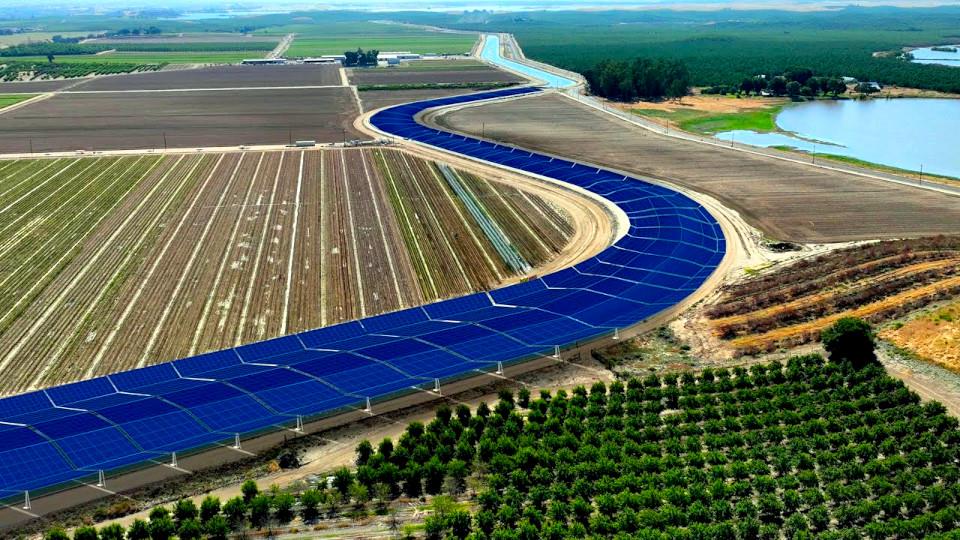
California's Project Nexus: Conserving Water And Generating Clean Energy With Solar-Covered Canals
(MENAFN- Bangladesh Monitor)
Dhaka: California has brought its first solar-covered canal project fully online, marking a fresh step in combining renewable energy generation with water conservation in one of the most drought-prone regions of the United States.
The project, called Project Nexus, is a 1.6-megawatt solar installation built over irrigation canals in the Central Valley. The USD 20 million state-funded pilot was completed in late December 2024 and spans multiple sections of the Turlock Irrigation District's canal system.
Project Nexus is only the second operational solar-canal project in the United States and among a limited number worldwide. The first US installation began producing power in October 2024 on the Gila River Indian Community's reservation near Phoenix, Arizona, where additional canal-top arrays are already underway.
Globally, solar-over-water concepts remain uncommon, but interest is growing as regions grapple with land constraints, rising electricity demand, and increasing water stress. California's move places it among early adopters testing how existing water infrastructure can support clean energy expansion.
Construction of Project Nexus was completed in two phases. A 20-foot-wide section became operational in March 2024, followed by a wider 110-foot stretch finished in August. Researchers will now monitor performance, while California universities and Solar Aquagrid are working to fast-track similar projects across the state.
Supporters say the design delivers multiple benefits. Panels installed above canals remain cooler due to the water below, improving efficiency and electricity output. In addition, the shade also reduces water evaporation and limits algae growth.
Another key advantage is siting. By placing panels over existing canals, projects avoid land acquisition and landscape disruption. The relatively compact systems can also connect to nearby distribution lines, sidestepping the lengthy grid-connection process required for large solar farms.
Initially, Project Nexus is intended to supply electricity for on-site canal operations such as pumps and gates. However, studies suggest much larger potential. Environmental groups estimate that covering 8,000 miles of federally owned canals could generate more than 25 gigawatts of renewable power while cutting water losses substantially.
Despite its promise, the solar-canal model faces clear hurdles. Compared to conventional ground-mounted solar farms, these projects are costlier, as they require greater amounts of steel and concrete.
Such concerns have slowed adoption in some areas. In early 2025, Arizona's Salt River Project recommended against moving ahead with a solar-canal pilot after assessing the approach alongside rooftop and utility-scale solar options.
Even so, developers argue the economics can still favor irrigation districts burdened by high electricity costs. Although upfront spending is higher, long-term access to stable, low-cost power over a 30-year operating life could translate into meaningful savings and stronger energy security.
Now that Project Nexus is operational, California will be watching closely to determine whether solar-covered canals can progress beyond pilot initiatives and become a scalable tool for conserving water while expanding clean energy generation.
V

Legal Disclaimer:
MENAFN provides the
information “as is” without warranty of any kind. We do not accept
any responsibility or liability for the accuracy, content, images,
videos, licenses, completeness, legality, or reliability of the information
contained in this article. If you have any complaints or copyright
issues related to this article, kindly contact the provider above.
Most popular stories
Market Research

More Story








Comments
No comment