




403
Sorry!!
Error! We're sorry, but the page you were looking for doesn't exist.
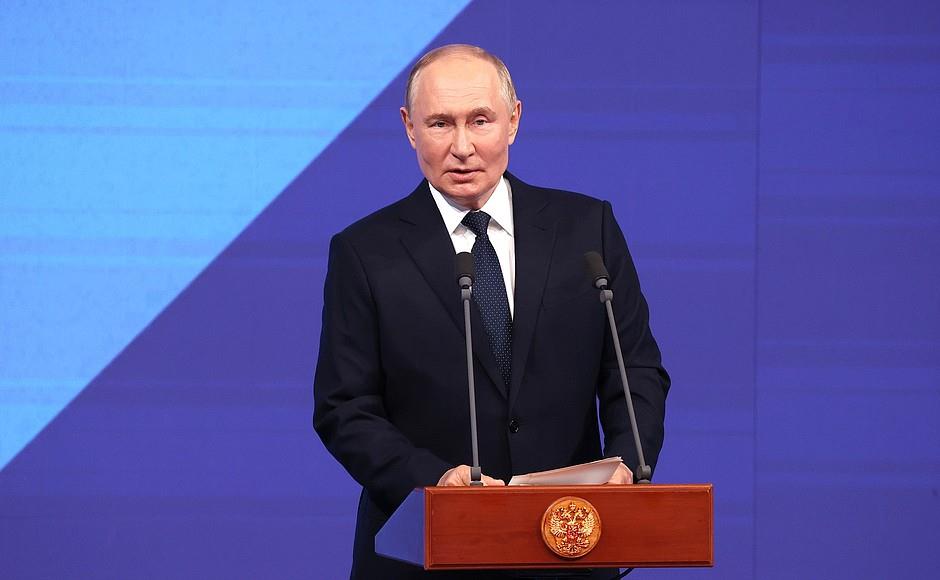
Putin Talks In Moscow Highlight Deep Territorial Divide
(MENAFN- The Arabian Post)
Arabian Post Staff -Dubai

Russian President Vladimir Putin and envoys of the United States wrapped up around four hours of negotiations in the Kremlin on Thursday night, with Moscow underscoring that any peace settlement to end the war in Ukraine hinges on agreement over territorial control. The talks, which included Steve Witkoff, Jared Kushner and White House adviser Josh Gruenbaum, were described by the Kremlin as substantive, yet they failed to bridge a core gap between Russian and Ukrainian positions.
Putin's insistence that territorial arrangements must be resolved before durable peace can be achieved was articulated by his foreign policy aide Yuri Ushakov, who told reporters that the“territorial issue” remains the central sticking point in negotiations. Russian officials have reiterated their long-standing demand that Ukraine withdraw from regions such as Donetsk and Luhansk, parts of which Russia claims as its own, a proposition Kyiv rejects as incompatible with its sovereignty.
The Kremlin talks took place against the backdrop of heightened diplomatic activity, with planned trilateral security discussions involving delegations from Russia, Ukraine and the United States set to convene in Abu Dhabi on Friday and Saturday. These talks, the first of their kind since Moscow's full-scale invasion of Ukraine in 2022, aim to focus on tangible mechanisms for security guarantees, post-war reconstruction and economic recovery.
Ukrainian President Volodymyr Zelenskyy has framed the Abu Dhabi talks as a critical juncture for diplomacy, noting that negotiators will address both security assurances and economic recovery frameworks. Zelenskyy has insisted that any peace framework must protect Ukraine's territorial integrity and reject demands to cede land that its forces have defended at high cost.
See also IHC–US development finance pact signals strategic capital pushOn the Moscow meeting's U. S. side, Witkoff indicated at the World Economic Forum in Davos that negotiations had narrowed to what he described as“one final issue”, without specifying further details. His remarks underscored the perception in Washington that most elements of a peace framework have been discussed extensively, leaving territorial status and security arrangements as the remaining hurdles.
The United States has pursued parallel diplomatic channels with both Kyiv and Moscow, with Trump's envoys engaging separately with Ukrainian officials and meeting European partners to build support for a comprehensive peace plan. Despite these efforts, the territorial dispute has persisted as a threshold issue, with Russian authorities reluctant to consider any agreement they believe undermines their strategic goals.
Putin's demands reflect longstanding positions articulated by Russian leadership that pivot on control of territory seized since 2014 and expansions during the 2022 invasion. Russian foreign policy pronouncements over the past year have reiterated demands that Ukraine cede control of regions such as Donetsk, Luhansk, Zaporizhzhia and Kherson, and abandon aspirations to join NATO - positions Kyiv and Western partners view as non-starters for peace.
Kyiv has countered that maintaining sovereignty over its internationally recognised borders is non-negotiable, and any peace must be anchored in security guarantees that prevent future aggression. Ukrainian negotiators have also pressed for economic recovery plans that would support reconstruction in war-torn regions and uphold the rule of law and democratic governance.
The diplomatic push comes amid an extended winter offensive by Russian forces, with attacks on Ukrainian energy infrastructure compounding civilian hardship and complicating life across major cities during extreme cold. Ukrainian officials have tied continued hostilities to the broader peace process, arguing that unrelenting military pressure undermines trust and the feasibility of settlement talks.
See also Saipem secures major QatarEnergy LNG offshore contractAs the Abu Dhabi meetings commence, diplomats and analysts expect discussions to probe deeper into mechanisms for enforcing security guarantees and managing contested territories. The unprecedented trilateral format reflects a shift in the negotiating dynamic, moving from shuttle diplomacy to broader multilateral engagement, though the core territorial dispute remains unresolved.
Notice an issue? Arabian Post strives to deliver the most accurate and reliable information to its readers. If you believe you have identified an error or inconsistency in this article, please don't hesitate to contact our editorial team at editor[at]thearabianpost[dot]com. We are committed to promptly addressing any concerns and ensuring the highest level of journalistic integrity.

Legal Disclaimer:
MENAFN provides the
information “as is” without warranty of any kind. We do not accept
any responsibility or liability for the accuracy, content, images,
videos, licenses, completeness, legality, or reliability of the information
contained in this article. If you have any complaints or copyright
issues related to this article, kindly contact the provider above.
Most popular stories
Market Research

More Story






Comments
No comment