




403
Sorry!!
Error! We're sorry, but the page you were looking for doesn't exist.
Chibi: A Tapestry Of History, Tea Culture And Green Development
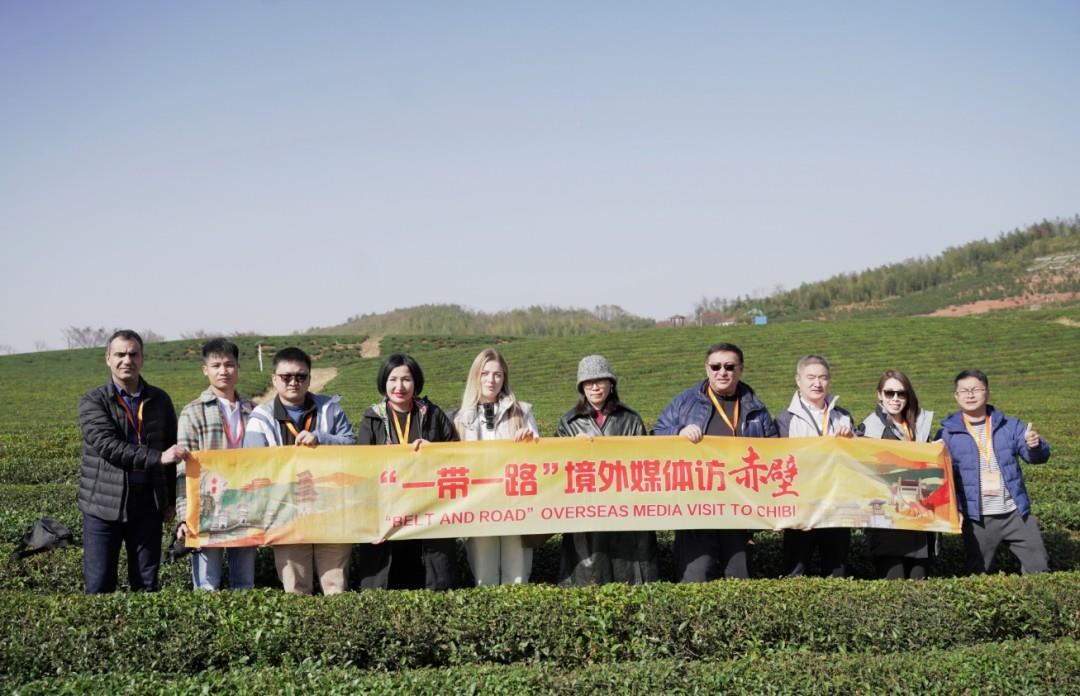
(MENAFN- GetNews) In November late, 10 foreign journalists from Kazakhstan, Azerbaijan, Vietnam and other countries embarked on a cultural tour to Chibi, an ancient yet vibrant city in Central China's Hubei province. Nestled on the Yangtze River's southern bank, Chibi is renowned as both a legendary Three Kingdoms battlefield and the origin of the Eurasian "tea road".
The Battle of Chibi, fought 1,800 years ago, shaped China's historical trajectory with its "defeating the strong with the weak" legacy. Today, the ancient battlefield scenic area in the city's northwest is a national 5A-level tourist attraction and a national key cultural relic protection unit. More than a mere historical site, it functions as an open-air museum dedicated to the history of the Three Kingdoms. Within the scenic area, two Chinese characters chi bi (red cliff) are carved on the reddish-brown stone cliffs along the Yangtze River. The scenic area is dotted with many other relics. For example, the Fengchu Hut is said to be where the strategist Pang Tong studied military tactics, and a millennia-old ginkgo tree outside the hut is a living link to the past. The Baifeng Platform, meanwhile, is reputed to be where Zhuge Liang, the era's most celebrated strategist, observed the weather and prayed for the east wind which turned the tide of the Battle of Chibi. Chibi's cultural tourism has evolved beyond mere relic preservation. To bring history to life, the scenic area hosts the live-action drama Red Cliff: Borrowing the East Wind, which blends dramatic intensity with historical ambience-an experience that left a Vietnamese journalist saying, "I could almost smell the smoke of the Three Kingdoms military camps; seeing the scenes I read about in books felt like fulfilling a lifelong dream."
As the "hometown of Chinese Qingzhuan tea", Chibi's tea culture runs deep. Yangloudong, a historic town, was the starting point of the China-Russia Great Tea Road, with tea production dating back to the Song Dynasty. Zhaoliqiao Tea Factory's intricate 72-step Qingzhuan tea-making technique, a UNESCO intangible heritage, fascinates international visitors. Modern innovations like tea bags and cold-brew options, plus cross-border e-commerce sales, have helped Chibi's tea brands gain global popularity, with a public brand value exceeding 5.1 billion yuan.
Boasting 44% forest coverage and top-tier air quality, Chibi is a national ecological model city. Its 2024 GDP reached 57.5 billion yuan, up 6.9% year-on-year. Blending historical charm, cultural vitality and green growth, Chibi stands as a vivid window into Chinese civilization and high-quality development.
Economically, the city has maintained a good momentum in recent years. With its blend of historical charm, cultural vitality and green development, Chibi has emerged as a key window for the international community to witness the inheritance of Chinese civilization and China's high-quality development in the new era.

Legal Disclaimer:
MENAFN provides the
information “as is” without warranty of any kind. We do not accept
any responsibility or liability for the accuracy, content, images,
videos, licenses, completeness, legality, or reliability of the information
contained in this article. If you have any complaints or copyright
issues related to this article, kindly contact the provider above.
Most popular stories
Market Research

More Story







Comments
No comment