




403
Sorry!!
Error! We're sorry, but the page you were looking for doesn't exist.
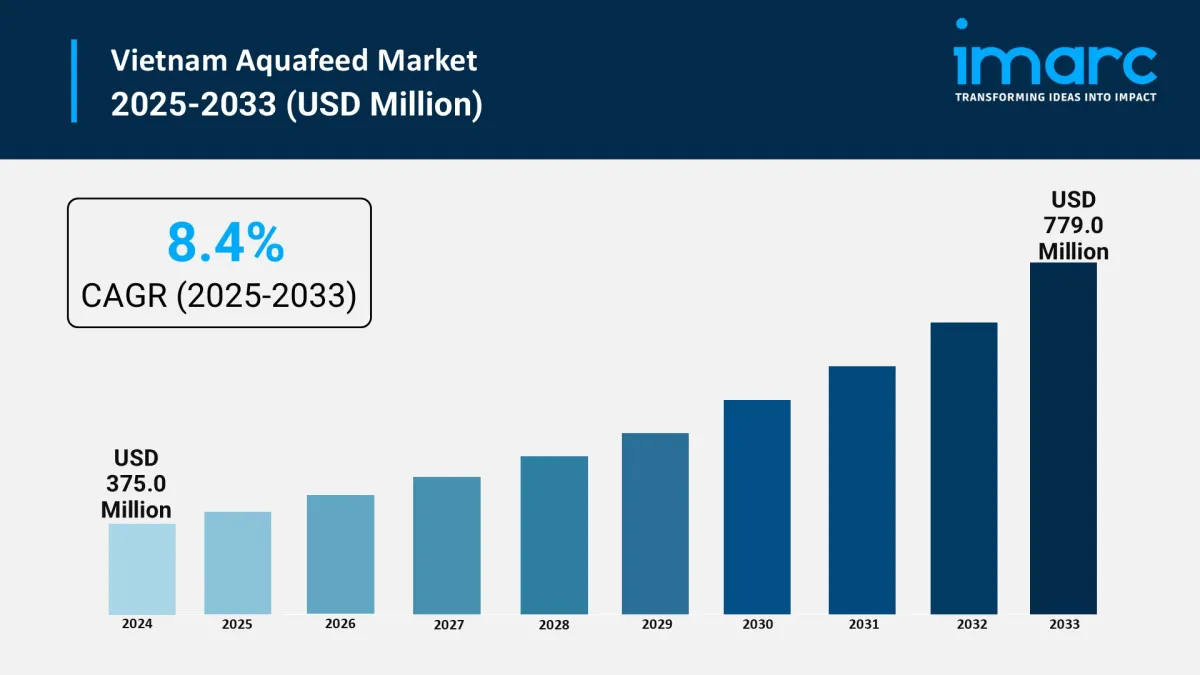
Vietnam Aquafeed Market Size, Share, Trends, Demand And Forecast 2025-2033
(MENAFN- IMARC Group)
The Vietnam aquafeed market size reached USD 375.0 Million in 2024. Looking forward, IMARC Group expects the market to reach USD 779.0 Million by 2033, exhibiting a growth rate (CAGR) of 8.4% during 2025–2033. This expansion is anchored in Vietnam's large and export-oriented aquaculture sector - particularly shrimp and pangasius - rising domestic seafood consumption, and steady investment in modern feed technologies and farming practices.
Key Highlights
-
Market size (2024): USD 375.0 Million .
Forecast (2033): USD 779.0 Million
CAGR (2025–2033): 8.4% .
Primary demand : strong aquaculture base (shrimp, pangasius), rising exports, modernization of feed production, and government support for aquaculture.
Segmentation covered : Ingredient (grains & cereals, soybean, fish meal, additives, fish oil, others); Additives (amino acids, antibiotics, vitamins, feed acidifiers, others); Product forms (pellets, extruded, powdered, liquid); End users (catfish/pangasius, shrimp, mollusks, tilapia, carps, salmon, others); Distribution channels (direct to farmers, local wholesalers, exports, others); Regions (Southern, Northern, Central Vietnam).
Market Trends and Growth
-
Rising per-capita seafood consumption, export growth, modernization of aquaculture (better farming practices), and stronger focus on feed quality and disease management. Vietnam's ranking among top aquaculture producers as a structural demand enabler.
capacity expansion by local manufacturers to fill gaps left by exiting multinationals; premium and value-add feeds (functional additives, organic/natural labels) targeted at export buyers; ingredient innovation (alternate proteins, enzyme blends) to cut costs and improve sustainability.
Ingredient price volatility (soybean meal, fishmeal), trade-policy shocks (tariffs/inspections), disease outbreaks in intensive farming, and the need for investment in cold chain and quality-control to meet export standards. Recent calls from industry groups for strategic ingredient reserves and stronger logistics illustrate these pressures.
Prioritize flexible formulations that can swap costly ingredients during volatility; invest in additives and functional feeds to command margin; grow direct-to-farmer relationships and technical services.
Request Sample For PDF Report: https://www.imarcgroup.com/vietnam-aquafeed-market/requestsample
Industry segmentation
Breakup by Ingredient:
-
Grains and Cereals
Soybean
Fish Meal
Additives
Fish Oil
Others
Breakup by Additives:
-
Amino Acids
Antibiotics
Vitamins
Feed Acidifiers
Others
Breakup by Product Forms:
-
Pellets
Extruded
Powdered
Liquid
Breakup by End User:
-
Catfish
Shrimp
Mollusks
Tilapia
Carps
Salmon
Others
Breakup by Distribution Channel:
-
Direct to Farmers
Local Wholesalers
Exports
Others
Breakup by Region:
-
Southern Vietnam
Northern Vietnam
Central Vietnam
Latest developments & impact analysis
-
Major strategic shifts among global players - Cargill exit: In mid-2025, several trade outlets reported that Cargill announced it would exit the aquafeed business in Vietnam and close multiple feed facilities as part of a global realignment. This is a material development for the market because it removes one large multinational supplier from local competition and may accelerate consolidation or open opportunities for regional manufacturers to capture displaced volumes. Potential short-term effects include reallocation of supply contracts, pressure on logistics/ingredient sourcing, and room for domestic brands to expand.
Export dynamics and species demand (pangasius & shrimp): Vietnam's pangasius and shrimp exports remain central to aquafeed demand. Recent trade reporting shows strong pangasius shipments and shifting market patterns (for example, increased routing to China and careful management of U.S. tariff risks). These trade dynamics drive feed demand volatility and higher emphasis on feed formulations tailored to export-spec requirements. Producers and feed formulators are monitoring tariff, sanitary and market-access developments closely.
Domestic players & sustainability push: Regional feed producers such as GreenFeed and local integrators (plus Asian majors like CP Foods and De Heus) continue investing in sustainable feed formulations, additives, and production upgrades. Market participants are focusing on reducing reliance on marine fishmeal, adopting plant-based and alternative proteins, and improving feed conversion ratios to meet both cost and sustainability targets.
About Us:
IMARC Group is a global management consulting firm that helps the world's most ambitious changemakers to create a lasting impact. The company provide a comprehensive suite of market entry and expansion services. IMARC offerings include thorough market assessment, feasibility studies, company incorporation assistance, factory setup support, regulatory approvals and licensing navigation, branding, marketing and sales strategies, competitive landscape and benchmarking analyses, pricing and cost research, and procurement research.
Contact Us:
IMARC Group
134 N 4th St. Brooklyn, NY 11249, USA
Email: sales[@]imarcgroup.com
Tel No:(D) +91 120 433 0800
United States: +1-201971-6302

Legal Disclaimer:
MENAFN provides the
information “as is” without warranty of any kind. We do not accept
any responsibility or liability for the accuracy, content, images,
videos, licenses, completeness, legality, or reliability of the information
contained in this article. If you have any complaints or copyright
issues related to this article, kindly contact the provider above.
Most popular stories
Market Research

More Story








Comments
No comment