




403
Sorry!!
Error! We're sorry, but the page you were looking for doesn't exist.
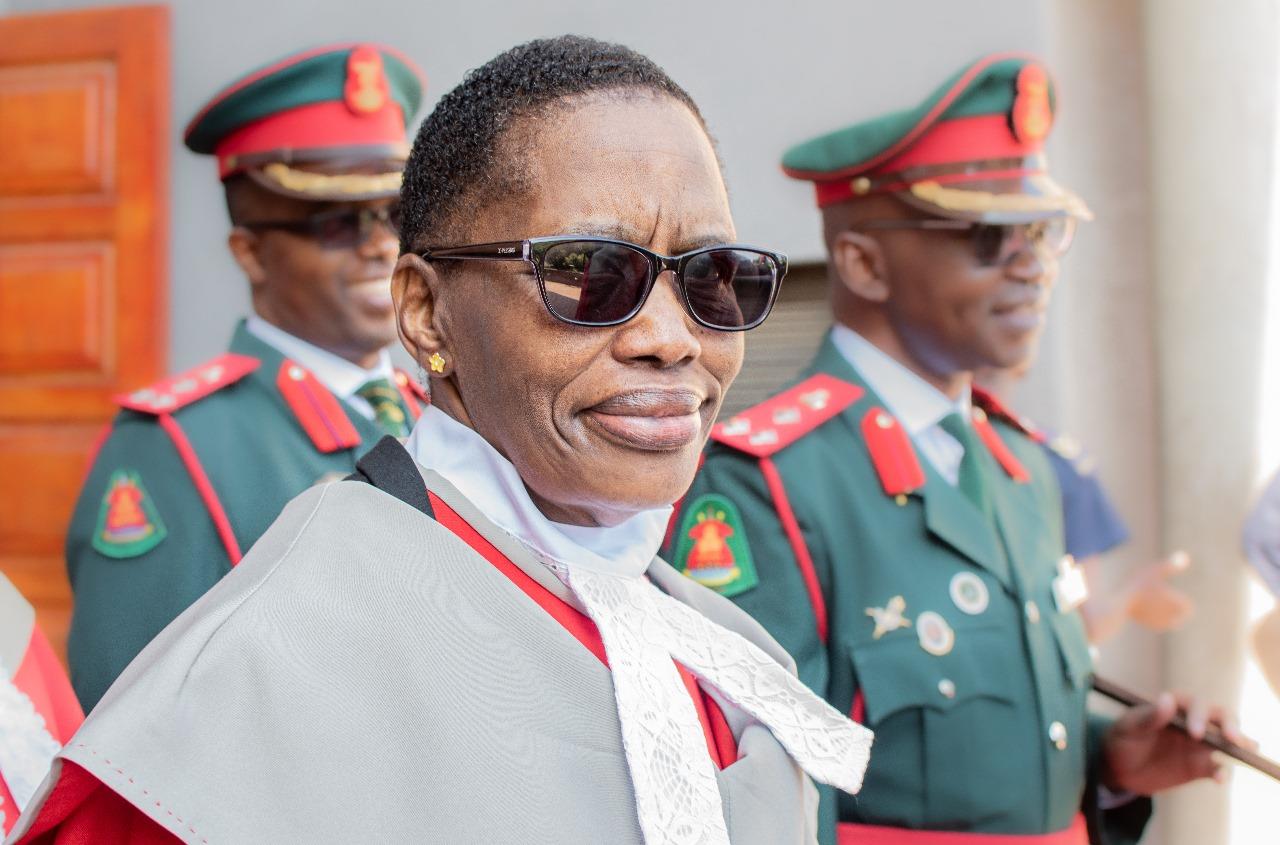
Hospital Faces M15m Lawsuit
(MENAFN- The Post)
MASERU – A landmark High Court judgement has cleared the way for a woman to file a M15.5 million medical negligence case against the government, a state hospital and a private clinic.
Limakatso Khalanyane's horror started in September 2019 after doctors at Sankatana HIV/AIDS and Oncology Centre misdiagnosed her with cervical cancer and performed an unnecessary operation that left her with a ruptured bladder.
Since then, she has suffered from incontinence and had to rely on diapers.
A corrective operation at Queen Mamohato Memorial Hospital failed to repair the damage.
Her efforts to get Sankatana HIV/AIDS and Oncology Centre and Queen Mamohato Memorial Hospital to perform a corrective surgery or transfer her to South Africa fell on deaf ears, as she was sent from pillar to post.
In pain and frustrated, Khalanyane filed a M15.5 million lawsuit against the centre, hospital and the government in 2024.
The defendants responded by asking Justice Maseforo Mahase to dismiss the case on the basis that it had been filed after the two-year prescription stated in the Government Proceedings and Contracts Act of 1965 and the Prescription Act of 1961.
That argument led to a trial-within-a-trial to decide if the court could still hear Khalanyane's lawsuit.
This week, Justice Mahase ruled that the court has the right to hear the case even after it had been filed after the prescribed two years.
In a lucid judgement that goes to the core of the right to access to the courts and justice, Justice Mahase found that the prescribed two-year rule was unconstitutional because it doesn't cover defendants who suffer ongoing harm and pain.
The judge noted that the constitution recognises three causes of action for litigants. The first is one accrued once and all.
The second is for damage that recurs for as long as the adverse results of an injurious act continue to be suffered.
The third is founded on future or apprehended harm to be suffered.
She said the cause of action for continuing and impending harm cannot be“arrested by prescription” because it is“moving forward and recurring daily and from moment to moment”.
The judge said the harm to Khalanyane is“a continuing one occasioned by her daily suffering of incontinence and incidental discomforts”.
“Put differently, the government's duty to abate or undo the wrongful act of causing ill-health to the plaintiff's physical integrity persists continuously as long as the plaintiff is not healed or suffers uncompensated indignity of ruptured bladder and the related illnesses.”
She said for Khalanyane's lawsuit to succeed, she only has to allege or prove that at the time of filing the summons, she suffered incontinence due to her ruptured bladder.
She said it is the court's role, not the legislature, to decide if Khalanyane's claim is late or not.
Any law purporting to remove the court's discretion violates common law and is therefore constitutionally invalid, she said.
Justice Mahase said section 6 of the Government Proceedings and Proceedings Contract is invalid to the extent that it doesn't recognise the cause of action founded on the continuous harm as stipulated in section 22 (10) of the constitution.
She, however, said declaring the section to be unconstitutional doesn't mean it should be struck down.
Its constitutional invalidity, she said, is only to the extent that it doesn't recognise claims founded on continuous harm.
Justice Mahase was also careful to avoid opening floodgates for more litigants to use her judgement to bring lawsuits by stating that the declaration of the invalidity of Government Proceedings and Proceedings Contract and the Prescription Act operates prospectively, not retrospectively.
She awarded legal costs to Khalanyane.
The judgement has cleared the way for Khalanyane to proceed with her lawsuit against the government, Queen Mamohato Memorial Hospital and Sankatana HIV/AIDS and Oncology Centre.
It would appear, from the opening lines of the judgement, that the defendants have not disputed Khalanyane's claim that she was misdiagnosed and subjected to an unnecessary operation that damaged her bladder.
The judge also said the defendants don't deny that Khalanyane continues to suffer due to their actions.
She said instead the defendants only concerned themselves with arguing that her case had prescribed and should be dismissed.
The judgement is important because it clears the hurdles that, for years, had stopped people from suing the government.
For decades, the Lesotho government had used the prescription argument to avoid paying damages.
The case is also critical for victims of medical negligence, whose cases might have been thrown out based on the prescription.
In the original case, Khalanyane was suing for M1.5 million medical costs, M4 million for further medical treatment, M2.5 million for pain and suffering, M3 million for loss of earnings and M3 million for permanent disfigurement.
Staff Reporter

Legal Disclaimer:
MENAFN provides the
information “as is” without warranty of any kind. We do not accept
any responsibility or liability for the accuracy, content, images,
videos, licenses, completeness, legality, or reliability of the information
contained in this article. If you have any complaints or copyright
issues related to this article, kindly contact the provider above.
Most popular stories
Market Research

More Story






Comments
No comment