




403
Sorry!!
Error! We're sorry, but the page you were looking for doesn't exist.
Promoting Democracy In Authoritarian Tajikistan Is Switzerland Making A Difference?
(MENAFN- Swissinfo)
While the government of Tajikistan's long-standing dictator grows more repressive, Switzerland continues to support human rights and digitalisation – a delicate balancing act.
This content was published on
April 30, 2025 - 09:00
11 minutes
Lake Nurak between Kulab and the Tajik capital Dushanbe, from 2008. Keystone-SDA
As a reporter I cover developments in democracy where the Swiss perspective becomes relevant. I am Swiss and have long been fascinated by the way public discussions shape society.
-
More from this auth
German Departme
-
Deutsch
de
Schweizer Demokratieförderung im autoritären Tadschikistan – was nützt das?
Original
Read more: Schweizer Demokratieförderung im autoritären Tadschikistan – was nützt das
This spring, for the first time, Tajikistan held parliamentary elections without independent, international observersExternal link . As in previous elections, the process was marked by irregularities. The country's largest opposition party has been banned for a decade.
Tajikistan, a Central Asian country with around ten million inhabitants, has been a focus of Swiss development cooperation for 25 years. Nearly one in ten people there has access to water thanks to Swiss-funded projects. From basic services to broader social initiatives, some projects have had a tangible impact.
According to a spokesperson for the foreign ministry, Switzerland played a key role in passing a domestic violence prevention law and helped establish a free legal aid service for marginalised populations.
External ContentBetween 2022 and 2025, Switzerland will invest CHF20 million ($24.2 million) in projects in Tajikistan focused on governance, human rights and public services. But as in other authoritarian regimes , this raises difficult questions about whether providing development aid ultimately shores up the power structure it hopes to reform. After all, good governance is just as important for dictatorships as it is for democracies .
A recent briefing on Switzerland's engagement in Tajikistan says that the“principles of good governance and the effective delivery of public services” are“the key indicators of a democratic society.”
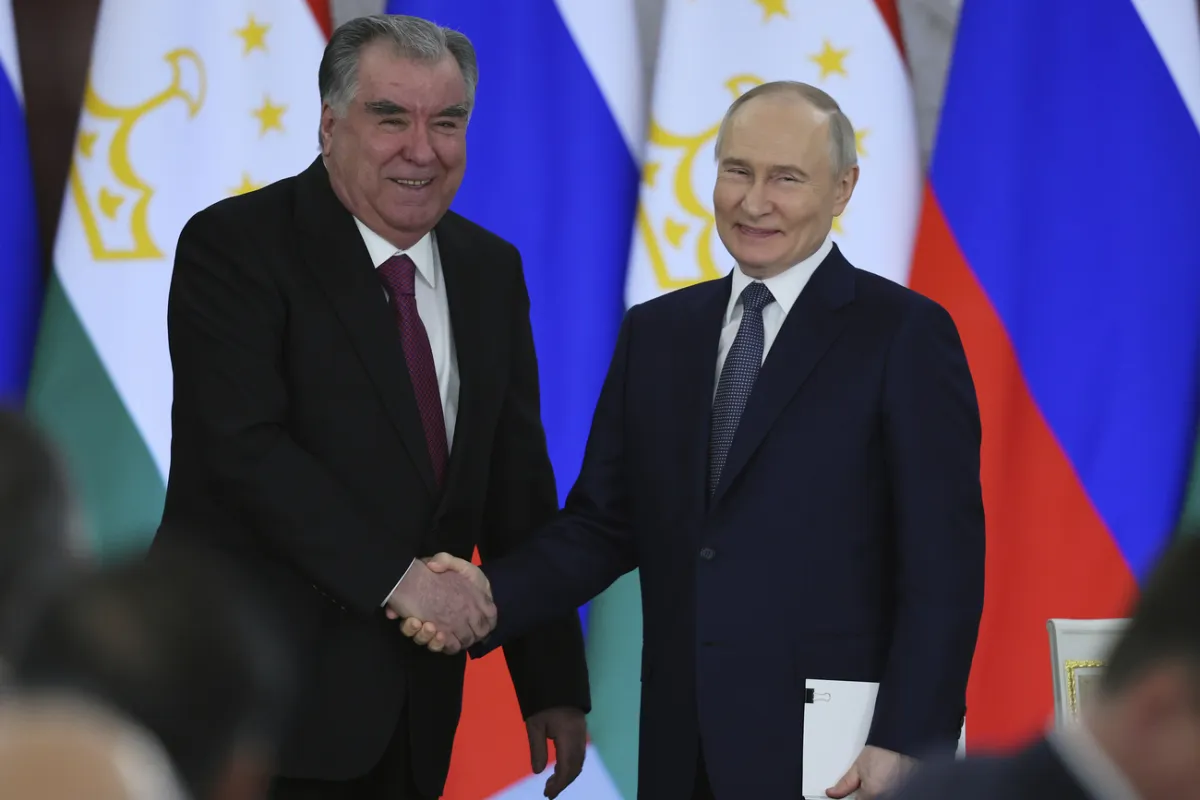
Tajikistan's ruler since 1994 is Emomali Rahmon. The country has long been considered an authoritarian state – and the situation regarding civil liberties and human rights continues to deteriorate.
In 2022 and 2023 alone, more than 700External link NGOs were dissolved in Tajikistan. During so-called“anti-terror operations”, the government has the legal right to shut down the internet and block telephone access. Many human rights defenders and journalists are in prison – including lawyer Manuchehr KholiqnazarovExternal link , who was awarded a human rights prize in absentia in Geneva in 2024. Tajiks abroad who criticise the government report being threatened, while their families at home face intimidation.
The regime's crackdown is growing harsherAmong Switzerland's projects are initiatives to digitise public administration and human rights grants worth CHF2 million, intended for NGOs and independent media. But those familiar with the country question whether there are any such organisations left to support.
Lake Nurak between Kulab and the Tajik capital Dushanbe, from 2008. Keystone-SDA
SWI swissinfo last reported from inside the country in 2008. Even then, local experts agreed to speak only under condition of anonymity . In 2015, the opposition leader was assassinated in IstanbulExternal link – and his party outlawed.
The country's ruler has remained Emomali Rahmon throughout – and even though he is now preparing a transition of power, the Rahmon name is likely to endure.
Rahmon's successor will be his son and, according to anthropologist Till Mostowlansky, his father wants to leave him a“tidy country, free of political opposition and with as little dissent as possible”. Mostowlansky, a research professor at the Graduate Institute in Geneva, describes it as a kleptocracy which is now set to become a family dynasty.
Following the collapse of the Soviet Union, Tajikistan declared independence in 1991. A civil war soon erupted, lasting until 1997, after which the country embarked on a peace process.“The peace agreement guaranteed the opposition's participation – despite the absence of free elections,” explains Mostowlansky. But after a brief opening in the early 2000s, the opposition was sidelined entirely.
Mostowlansky doubts Rahmon ever intended to bring democracy to Tajikistan. Since Russia's annexation of Crimea and the outbreak of war in eastern Ukraine in 2014, suppressing political opposition has once again become geopolitically“acceptable” in the region.
The US has been losing influence in Tajikistan for a long time, where many migrant workers go to Russia for work. The money they send back to their families is a vital part of the economy in one of Central Asia's poorest countries.
More Debate Hosted by: Benjamin von Wyl How will Swiss democracy promotion fare after the USAID funding freeze?Switzerland has followed America's lead so far. The freezing of USAID funds demands a rethink.
Join the discussi Mar 4, 2025 11 Likes 29 Comments View the discussi
Legal Disclaimer:
MENAFN provides the
information “as is” without warranty of any kind. We do not accept
any responsibility or liability for the accuracy, content, images,
videos, licenses, completeness, legality, or reliability of the information
contained in this article. If you have any complaints or copyright
issues related to this article, kindly contact the provider above.
Most popular stories
Market Research

More Story



Comments
No comment