




403
Sorry!!
Error! We're sorry, but the page you were looking for doesn't exist.
Curaçao And Cabo Verde Are Into The World Cup. What Impact Can These 'Minnow Nations' Make?
Author: Joshua McLeod
(MENAFN- The Conversation) For the first time in history, soccer's World Cup will expand to 48 teams in 2026, marking one of the most radical changes ever made to the tournament.

Starting on June 11 in Mexico City, the tournament will be the longest and largest ever. Across 39 days, there will be 104 matches.
The new format has allowed several so-called“minnow nations” to qualify for the first time. They include Uzbekistan and Jordan, while Haiti has returned after last appearing in 1974.
But it is two small island nations that have rightly grabbed the most international attention.
Read more: From 'USA94' to now: how soccer has changed since the last American World Cup
Curaçao makes historyCuraçao will appear at the World Cup for the first time.
With a population of around 156,000, Curaçao is the smallest nation ever to participate in the tournament.
Their place was confirmed after a draw against Jamaica in November 2025 and there were, as expected, huge scenes of celebration across the Caribbean island.
Curaçao is a former Dutch colony and remains part of the Kingdom of the Netherlands, and this plays a major role in its soccer story.
The entire starting team from the Jamaica match was born and raised in the Netherlands, eligible to play through family history. Tahith Chong, who plays for Sheffield United in England's second tier, was the only squad member born in Curaçao.
Curaçao has not often come up against the elite of world soccer, although a friendly match against current world champions Argentina ended in a 7-0 defeat in 2023.
They now face the daunting prospect of facing tenth-ranked Germany in their opening match in Houston on June 14.
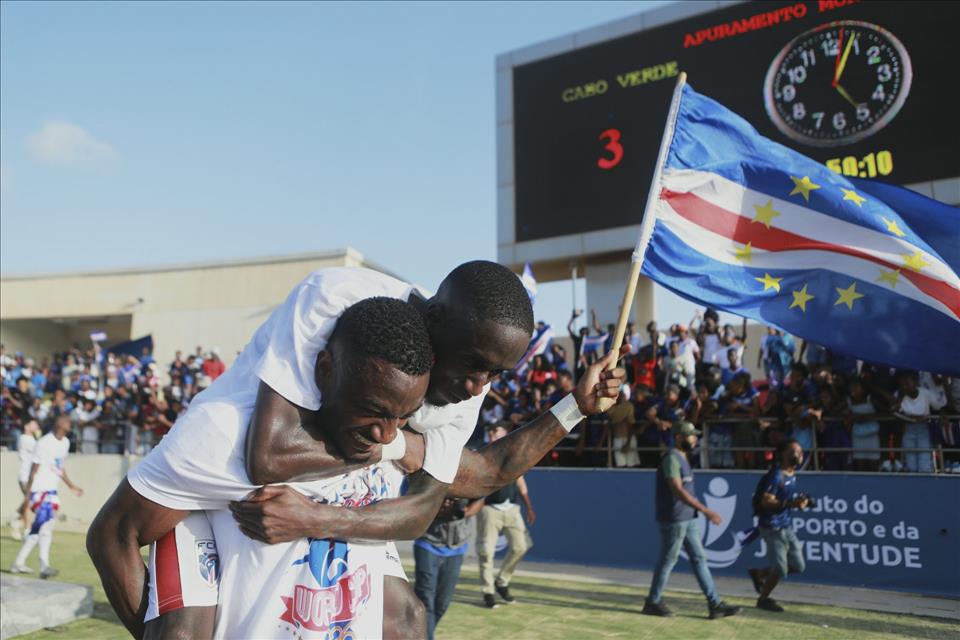
Cabo Verde joins the partyCabo Verde (formerly Cape Verde) is an island state off the west coast of Africa. With a population of around 525,000, the country is also preparing for its maiden World Cup appearance.
Similar to Curaçao, Cabo Verde's soccer context is shaped by its colonial past, with the nation gaining independence from Portugal in 1975. A large number of Cabo Verdeans live outside the country and the national side draws heavily on players born or developed in Portugal.
In their final two qualifying matches, 14 of the 25 players called up were part of the Cabo Verdean diaspora, born and raised in other parts of the world.
Compared with Curaçao, Cabo Verde has more experience against stronger soccer nations due to being affiliated with the Confederation of African Football. To qualify, they beat Cameroon – a country boasting a strong history in the World Cup, including reaching the quarter-finals in 1990.
Still, when Cabo Verde line up against second-ranked Spain in Atlanta on June 15, it will be a new level again.
Inclusive or excessive?There are two ways to assess the 48-team World Cup.
The FIFA view is the tournament is the biggest show on Earth, and the previous 32-team format did not do it justice. Expanding to 48 will help grow the game around the world and give more countries a chance to shine on soccer's biggest stage.
The distribution of the 16 new slots reflects this widened inclusivity, which has disproportionately benefited the global south.
Africa's confederation has received nine slots – up from five. Asia has grown from 4.5 to eight. Oceania now receives one direct entry where it previously only received 0.5, with the winner of its confederation entering a playoff (notable for Australia's memorable qualification battles with Uruguay in both 2002 and 2006).
By comparison, Europe's allocation only grew from 13 to 16.
This new model will only further exacerbate quirks in the rankings between those that do and do not qualify for the World Cup.
For the 2026 tournament, European nations Italy (ranked 12) and Poland (35) missed out, while Cabo Verde (69) and Curaçao (82) qualified.
Yet, the scenes of pure jubilation in Curaçao and all the other first-time qualifying countries show the case for inclusion is there. If growing the game is FIFA's mission, this is strong validation for it.
The other view is this is yet another example of FIFA prioritising commercial outcomes above all. More matches mean more money. Yet questions linger over the dilution of match quality.
There is a strong argument the old 32-team format struck the right balance between quality and inclusion. Critics worry FIFA is effectively ignoring any idea of scarcity that can make the World Cup special.
Then there is the soccer calendar, which is already bursting at the seams and contributing to more injuries to players.
Will there be upsets?FIFA will feel validated if we get a few shocks from smaller nations beating the established elite. And soccer, more than most sports, is capable of producing them.
Look no further back than the 2022 World Cup, when 51st-ranked Saudi Arabia shocked eventual champions Argentina during their group-stage match.
Could we see Cabo Verde or Curaçao produce an even greater World Cup upset?
Institution:Deakin University

Legal Disclaimer:
MENAFN provides the
information “as is” without warranty of any kind. We do not accept
any responsibility or liability for the accuracy, content, images,
videos, licenses, completeness, legality, or reliability of the information
contained in this article. If you have any complaints or copyright
issues related to this article, kindly contact the provider above.
Most popular stories
Market Research

More Story




Comments
No comment