




403
Sorry!!
Error! We're sorry, but the page you were looking for doesn't exist.
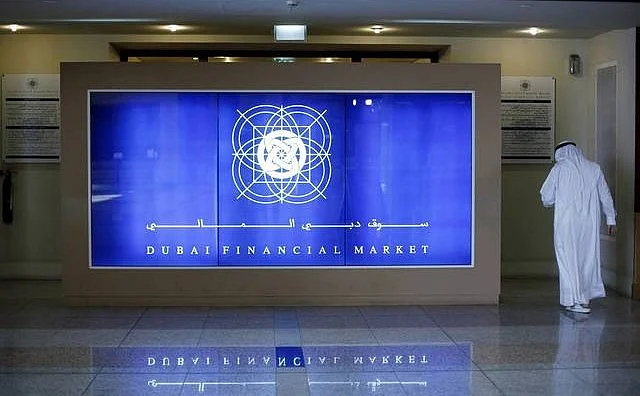
UAE Films Defy Regional Crisis With Double-Digit Profit Growth
(MENAFN- Khaleej Times) The UAE's corporate sector demonstrated remarkable resilience in the first quarter of 2026, posting double-digit earnings growth even as war-related disruptions rattled trade routes, financial markets and business sentiment across the Middle East.
Listed companies in Abu Dhabi and Dubai generated more than $17 billion in profits, powered by strong banking activity, a booming property market and sustained infrastructure spending, according to the latest GCC earnings review by Kamco Invest.
Recommended For YouThe robust performance comes at a time when businesses across the region have been grappling with supply-chain disruptions, shipping restrictions and heightened geopolitical uncertainty. Yet the UAE's diversified economy, supported by strong domestic demand, record tourism, sustained population growth and continued inflows of global capital, helped corporate earnings remain firmly on an upward trajectory.
Across the GCC, aggregate net profits of listed companies rose 15.5 per cent year-on-year to a record $67.9 billion during the first quarter, compared with $58.8 billion a year earlier. Revenues increased 7.7 per cent to $353.3 billion, underscoring the resilience of Gulf businesses despite a challenging operating environment.
The earnings surge was driven mainly by the energy sector, banks, food and beverage companies and capital goods manufacturers. Saudi Arabia remained the region's largest profit contributor, with listed companies generating $44.4 billion in earnings, up 22.2 per cent from a year earlier. However, the UAE emerged as one of the Gulf's most consistent growth stories, with both Abu Dhabi and Dubai delivering strong double-digit profit expansion.
Abu Dhabi-listed companies reported aggregate net profits of $10.6 billion during the quarter, up 16.1 per cent from $9.1 billion a year earlier. Dubai-listed firms generated $6.8 billion in earnings, representing a 12.3 per cent increase over the corresponding period of 2025.
The banking sector once again formed the backbone of corporate profitability.
Across the GCC, banks reported combined profits of $16.9 billion, up 5.1 per cent year-on-year. Lending growth remained robust despite geopolitical uncertainty, with outstanding credit facilities across GCC banking systems reaching approximately $2.1 trillion by the end of March, reflecting annual growth of 9.1 per cent.
The UAE's largest lenders continued to benefit from strong credit demand, rising customer activity and healthy balance sheets.
In Abu Dhabi, First Abu Dhabi Bank remained the single biggest profit contributor, reporting net earnings of $1.4 billion. Although profits edged lower due to higher impairment provisions, the bank recorded a 12 per cent increase in net interest income. Abu Dhabi Commercial Bank delivered one of the strongest performances among regional lenders, with earnings surging 37.3 per cent to $915 million, driven by double-digit growth in both funded and non-funded income streams.
Abu Dhabi Islamic Bank also continued its steady growth trajectory, reporting profits of $467 million.
Dubai's banking sector generated $3.2 billion in earnings during the quarter. Emirates NBD posted profits of $1.74 billion, benefiting from continued loan growth and increased business activity, while Mashreq reported earnings of $513 million, supported by strong operating income and expanding customer deposits.
The UAE property sector was another major earnings driver.
Dubai's listed real estate companies reported aggregate profits of $2.3 billion, up 38.3 per cent year-on-year, reflecting continued demand from international investors, expatriate professionals and family offices seeking exposure to one of the world's fastest-growing property markets.
Emaar Properties led the sector with profits of $1.4 billion, a 34.7 per cent increase from a year earlier. The developer recorded property sales worth $6.1 billion during the quarter as demand remained strong across both residential and mixed-use developments. Revenues rose 23 per cent while Ebitda climbed 34 per cent.
Its subsidiary, Emaar Development, delivered even stronger growth, reporting a 52.4 per cent jump in profits to nearly $796 million.
The strong earnings mirror broader trends in Dubai's property market. According to the Dubai Land Department, the emirate recorded property transactions worth more than Dh138 billion during the first quarter, while off-plan sales continued to account for the majority of residential activity, reflecting confidence in the long-term outlook of the market.
Utilities also made a significant contribution to Dubai's earnings expansion.
Dubai Electricity and Water Authority reported a 74.2 per cent increase in profits to $230 million, supported by rising electricity and water demand as the emirate's population and economic activity continued to expand. Electricity generation increased 5.7 per cent to 11.09 terawatt-hours during the quarter, while water production rose 5.5 per cent.
District cooling provider Empower reported a 44.8 per cent rise in earnings, highlighting growing demand for sustainable cooling solutions across the emirate.
In Abu Dhabi, profit growth increasingly reflected the success of economic diversification initiatives.
While banking remained the largest earnings contributor, the food, beverage and tobacco sector emerged as the fastest-growing segment, with profits surging more than threefold to $1.4 billion. The capital goods sector also recorded exceptional growth, with earnings increasing more than sixfold to $1.1 billion, reflecting rising industrial activity and investments linked to Abu Dhabi's manufacturing and advanced technology ambitions.
The energy sector presented a mixed picture. While higher oil prices boosted profitability across much of the Gulf, some Abu Dhabi energy companies experienced operational disruptions linked to regional tensions.
Adnoc Gas reported profits of $1.1 billion, down from $1.3 billion a year earlier as sales volumes were affected by geopolitical challenges. However, Adnoc Drilling continued to expand, posting a 1.1 per cent increase in profits as fleet utilisation remained high and demand for oilfield services strengthened.
The results underscore the UAE's growing ability to withstand external shocks through diversification. Non-oil sectors now account for nearly three-quarters of the country's economic output, while the IMF expects the UAE economy to maintain one of the strongest growth rates in the region over the next two years.
As geopolitical tensions continue to cast a shadow over regional markets, first-quarter earnings suggest that UAE corporates remain well positioned to capitalise on strong domestic fundamentals, reinforcing the country's status as the Gulf's most diversified and resilient business hub.

Legal Disclaimer:
MENAFN provides the
information “as is” without warranty of any kind. We do not accept
any responsibility or liability for the accuracy, content, images,
videos, licenses, completeness, legality, or reliability of the information
contained in this article. If you have any complaints or copyright
issues related to this article, kindly contact the provider above.
Most popular stories
Market Research

More Story








Comments
No comment