







403
Sorry!!
Error! We're sorry, but the page you were looking for doesn't exist.
World's Most Populous Country Records Fertility Rate Of 1.9 Elon Musk Flags India's Birth Rate 'Below Replacement'
(MENAFN- Live Mint) India - the world's most populous country with approximately 147.6 crores people - has seen its fertility rate slip below the“replacement threshold”, tech entrepreneur Elon Musk said, citing a report. Reacting to figures shared by AF Post on X, the Tesla and SpaceX chief wrote,“India's birth rate has fallen below replacement. Among those most educated, India's birth rate fell below replacement many years ago.”
His remarks came in response to reports highlighting a sharp decline in fertility across the country.
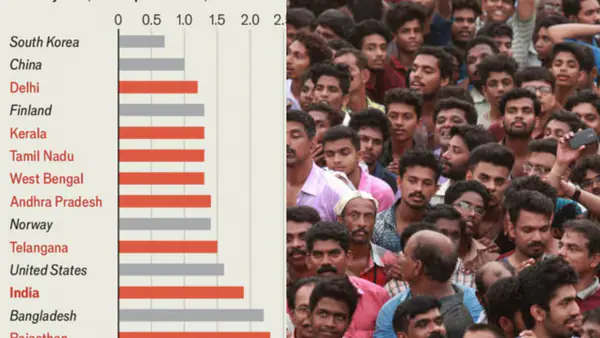
India's fertility rate drops below replacement levelFresh data from the 2024 Sample Registration System (SRS) report indicates that India's Total Fertility Rate has fallen from 2.1 to 1.9 children per woman. As a result, most states are now below the replacement fertility benchmark of 2.1.
Also Read | India's population will soon be falling-probably quite fastReplacement fertility refers to the average number of children a woman must have for a population to sustain itself across generations in the absence of migration.
According to the report, only six states - Bihar, Uttar Pradesh, Madhya Pradesh, Rajasthan, Chhattisgarh and Jharkhand - continue to record fertility rates above the replacement level. Delhi registered the lowest fertility rate in the country, with an average of 1.2 births per woman.
Also Read | SRS report: India's fertility decline demands a national-level policy response Why is the replacement level important?Demographers generally regard a TFR of 2.1 as the level required to maintain a stable population over time.
When fertility remains below this threshold for extended periods, population growth gradually slows and may eventually decline. Experts warn that such trends can contribute to an ageing society, a reduced working-age population and growing pressure on welfare and healthcare systems.
Also Read | Why PM Modi warned 'world's population would be pushed back into poverty'? UNFPA points to ongoing demographic shiftIndia's changing population pattern was also highlighted in the United Nations Population Fund's (UNFPA) 2025 State of World Population Report. The agency estimated India's fertility rate at 1.9 births per woman, again placing it below the replacement benchmark.
Although India remains the world's most populous country with a population exceeding 1.46 billion, the latest figures suggest the nation is moving into a new demographic phase characterised by smaller families and slower population growth.
Population still growingDespite the decline in fertility, India remains the world's most populous nation. The country surpassed China in 2023 to take the top spot globally and continues to add millions of people each year due to population momentum generated by previous decades of higher birth rates.
Experts note that while India's population is still growing, the sustained decline in fertility suggests that population growth could slow significantly in the coming decades, potentially leading to a shrinking population later this century.

Legal Disclaimer:
MENAFN provides the
information “as is” without warranty of any kind. We do not accept
any responsibility or liability for the accuracy, content, images,
videos, licenses, completeness, legality, or reliability of the information
contained in this article. If you have any complaints or copyright
issues related to this article, kindly contact the provider above.
Most popular stories
Market Research

More Story








Comments
No comment