







403
Sorry!!
Error! We're sorry, but the page you were looking for doesn't exist.
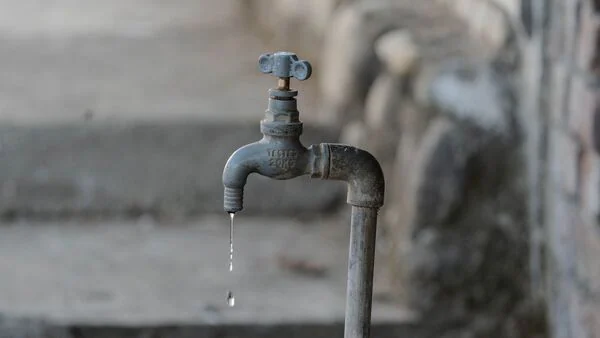
Can Delhi Jal Board Increase Its Revenue By Revamping Decades Old Water Pipelines? Here's What Expert Has To Say
(MENAFN- Live Mint) The problem of water shortage and supply takes a central stage and becomes a central topic of discussion on the occasion of World Environment Day. The latest economic survey suggests that the current non-revenue water due to due to leaks, theft and unmetered use accounts to 46%. Indian Plumbing Association National President Gurmit Singh Arora shared his insights as to how Delhi Jal Board's revenue can be increased if the city's decades old plumbing infrastructure is fixed.
With a budget allocation of ₹9000 crore in the Water Supply and Sanitation Sector, the government aims to overhaul the water supply system and reduce revenue loss to 15% in a phased manner. Gurmit Singh Arora suggested that DJB's revenue can be increased by 30% if the government focuses on revamping the old and leaky pipelines.
“If Delhi Jal Board upgrades its plumbing infrastructure, it can achieve an increase in revenue for about 30% by reducing losses, not by producing more water. Currently, Delhi Jal Board loses around 50 to 55% of its water before it reaches households, largely due to aging pipelines, with over 5,000 km of the network being more than 30 years old," Indian Plumbing Association President said.
Significant amount of treated and pumped water is lost as nearly 50% of Delhi's drinking water pipelines, spread over an area of around 7,900 km, are 20 to 30 years old. Corrosion, joint damage and pressure-related cracks are the main reasons for the loss.
"The solution is straightforward but requires sustained execution. Systematic replacement of old pipelines with durable materials, introduction of district metering areas to monitor losses," Gurmit Singh Arora added. According to the official, Delhi Jal Board can make significant increase in revenue recovery from the same water supply without investing in new dams or treatment plants as each litre lost represents wasted energy, chemicals, and operational effort.
What is the cost of revamping decades old water pipelines?Elaborating how fixing this issue will not only improve revenue but also reduce operational costs, he said that it will "Enhance supply reliability, and allow Delhi Jal Board to serve more people with existing resources. It also has clear environmental benefits, including reduced pressure on the Yamuna and groundwater sources, lower energy consumption, and a smaller carbon footprint. While the investment required is significant, it can pay back within five to seven years, followed by decades of long-term benefits. In simple terms, Delhi does not have a water shortage problem, but a water loss problem, and this is entirely solvable with the right infrastructure.”
His quote aligns with Water Minister Parvesh Sahib Singh statement made in January when he talked about revamping the entire drinking water network in Delhi.“In this tenure of the BJP government, 30% of the water pipelines can be revamped and to achieve this in a phased manner, the government will float tenders and award works in the next one year," Parvesh Sahib had said while confirming the overhaul cost to be around ₹50,000 crore. The authorities plan to replace around 7,000 km of old pipelines in the next two years.
A view at water tariff policyPresent water tariff policy follows the principle“use more pay more” on account of which DJB collected ₹1702.63 crore during financial year 2024-25, Economic Survey said. To address the issue of leakage and revenue loss, Delhi Jal Board has set up a leak detection and investigation (LDI) cell and plans to replace about 184.7 km length of the old, damaged and leaking water mains.

Legal Disclaimer:
MENAFN provides the
information “as is” without warranty of any kind. We do not accept
any responsibility or liability for the accuracy, content, images,
videos, licenses, completeness, legality, or reliability of the information
contained in this article. If you have any complaints or copyright
issues related to this article, kindly contact the provider above.
Most popular stories
Market Research

More Story







Comments
No comment