







403
Sorry!!
Error! We're sorry, but the page you were looking for doesn't exist.
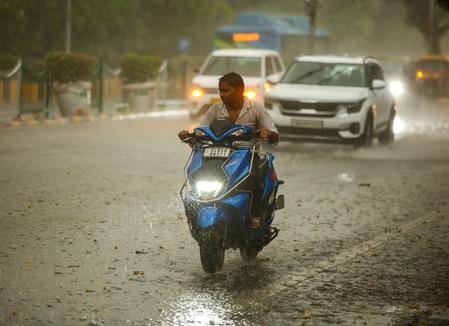
Delhi-NCR Likely To Receive Monsoon Between June 25-30 Rain Brings Temporary Relief, AQI Remains Poor
(MENAFN- IANS) New Delhi, June 6 (IANS) The India Meteorological Department (IMD) has indicated that the southwest monsoon is likely to reach Delhi and the wider National Capital Region (NCR) between June 25 and June 30, offering residents a clearer timeline for the arrival of the much-awaited rainy season.
The forecast comes after thunderstorms and scattered rainfall brought significant relief from the intense summer heat across Delhi-NCR on Thursday. With temperatures easing temporarily, attention has now shifted to the progress of the monsoon, which remains crucial for the region after weeks of sweltering heat.
The southwest monsoon made its onset over Kerala on June 4, three days later than its normal date and five days after the IMD's initial forecast. Despite the delayed start, weather experts expect the monsoon to advance steadily and cover most parts of the country by the third week of June.
According to the IMD's monsoon progression map, Delhi, Noida, Gurugram and Ghaziabad are expected to witness the onset of the monsoon between June 25 and 30. The weather system is also forecast to advance into parts of Haryana, Punjab and Chandigarh during the same period.
Several northern and hilly regions, including parts of Himachal Pradesh, Jammu and Kashmir, and Ladakh, may also receive rainfall around the same time, bringing respite from the prevailing heatwave-like conditions.
A Western Disturbance that became active around June 3 has already provided relief to millions across North India, where temperatures had remained exceptionally high in recent weeks. However, meteorologists have cautioned that sudden spells of heavy rain could lead to waterlogging in urban areas, while strong winds and lightning may pose risks in open spaces and mountainous regions.
The IMD has forecast continued thunderstorm and rainfall activity across several areas on June 6 before weather conditions gradually stabilise. Temperatures are expected to rise again after the current spell subsides and may remain elevated until the monsoon progresses further north towards the end of the month.
Last year, the southwest monsoon reached Delhi on June 29, two days later than its normal onset date of June 27, based on the 1961-2019 average.
Meanwhile, Delhi's air quality remained in the“poor” category. Anand Vihar recorded an AQI of 284, while Mundka (239), Wazirpur (214), Okhla Phase-2 (208) and IIT Delhi (187) were among the city's most polluted locations.

Legal Disclaimer:
MENAFN provides the
information “as is” without warranty of any kind. We do not accept
any responsibility or liability for the accuracy, content, images,
videos, licenses, completeness, legality, or reliability of the information
contained in this article. If you have any complaints or copyright
issues related to this article, kindly contact the provider above.
Most popular stories
Market Research

More Story






Comments
No comment