







403
Sorry!!
Error! We're sorry, but the page you were looking for doesn't exist.
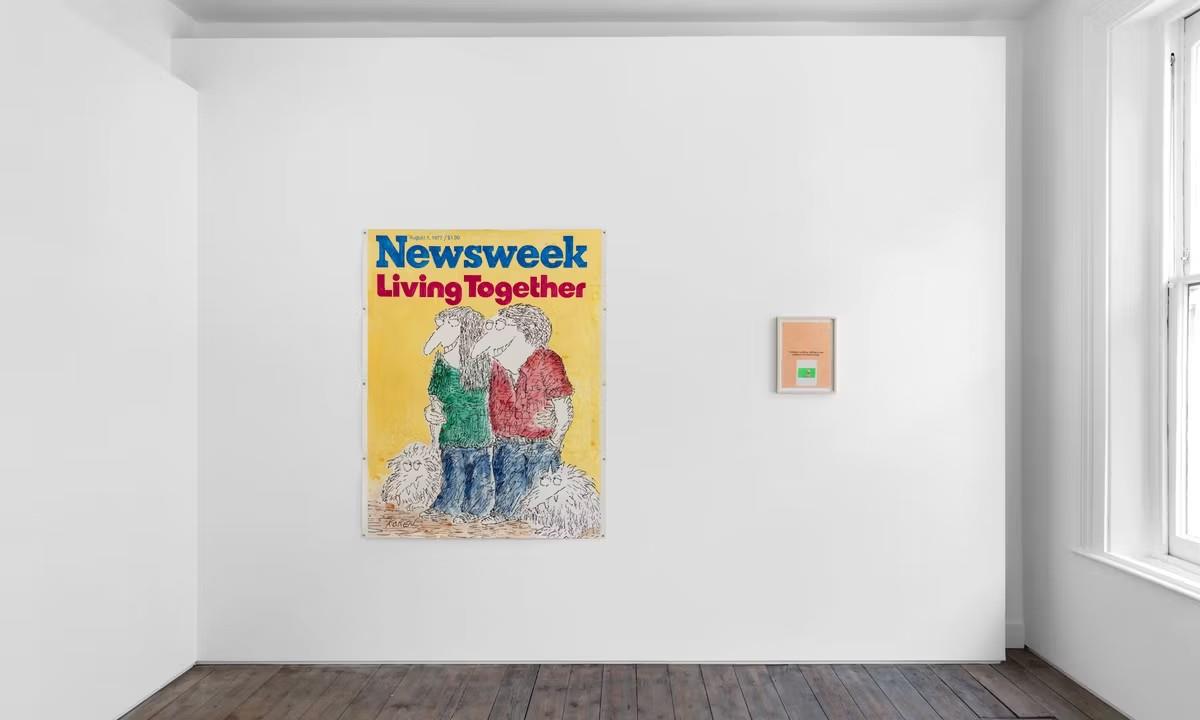
Come Together: How London Galleries Are Making It Work In The Capital The Art Newspaper International Art News And Events
(MENAFN- USA Art News)
London's Gallery Reset Puts Exhibitions Back at the Center
London's gallery sector is entering a period of recalibration, and the clearest sign may be what dealers are choosing to emphasize now: exhibitions, local audiences and more adaptable spaces. As London Gallery Weekend returns on 5–7 June, the city's commercial scene is showing both strain and resilience. Slower sales, rising operating costs and changing collector behavior have made the market more difficult to navigate, yet around two dozen galleries have opened across London in recent years.
That expansion matters because it suggests the capital's appeal has not disappeared, even as the economics of the trade have tightened. For many dealers, the art fair model no longer carries the same weight it once did. The costs are high, the risks are real and the return is less certain than it was a decade ago. In response, galleries are investing more heavily in the exhibition experience itself.
At Pale Horse Gallery in Marylebone, co-founded last year by Emma Hodgson and Thomas Graham, that shift is explicit. The gallery specializes in outside or self-taught artists and is presenting works by Dutch artist Marijn van Kreij during LGW, through July 18. Hodgson said at a June 4 panel marking the launch of the weekend that she and Graham came from a background where“doing ten art fairs a year was the norm,” but that for a young gallery,“everything you do, especially art fairs, is a gamble.”
The financial pressures are not abstract. London remains one of the most expensive cities in which to run a gallery, with business rates, overheads and post-Brexit shipping costs all cutting into margins. Jeremy Epstein, co-founder of Edel Assanti, said the gallery's“lifeblood, both culturally and from a business perspective, is exhibition making.” Edel Assanti opened a second London space in St James's earlier this year, a more intimate venue on Bury Street that allows for focused presentations. It is currently showing three paintings by Lonnie Holley through June 7.
Other galleries are reshaping their footprint in similarly pragmatic ways. Elizabeth Xi Bauer, which began as a pop-up in 2015, recently opened a second space in Exmouth Market and converted its original Deptford premises into studios and a residency program. Edward Sheldrick, the gallery's artistic director, said the move reflects both the character of the neighborhood and the value of visibility; the Exmouth Market space draws just under 1,000 people per show. Performances organized by curator Brian Griffiths are also taking place during LGW.
For some dealers, London's strength remains international as much as local. Sundaram Tagore opened a flagship London gallery last month with a group show on hybridity, and more than 400 people attended the launch. Larkin Durey has also pointed to museum acquisitions as a stabilizing force in a quieter market, citing institutions including Tate, Louvre Abu Dhabi and the Detroit Institute of Arts. The Detroit museum acquired a work last year by Bahamian artist Anina Major.
Taken together, these moves suggest that London's reset is not a retreat. It is a reordering of priorities, with galleries betting that the city's density, institutional reach and in-person energy still give it an edge.

Legal Disclaimer:
MENAFN provides the
information “as is” without warranty of any kind. We do not accept
any responsibility or liability for the accuracy, content, images,
videos, licenses, completeness, legality, or reliability of the information
contained in this article. If you have any complaints or copyright
issues related to this article, kindly contact the provider above.
Most popular stories
Market Research

More Story






Comments
No comment