







403
Sorry!!
Error! We're sorry, but the page you were looking for doesn't exist.
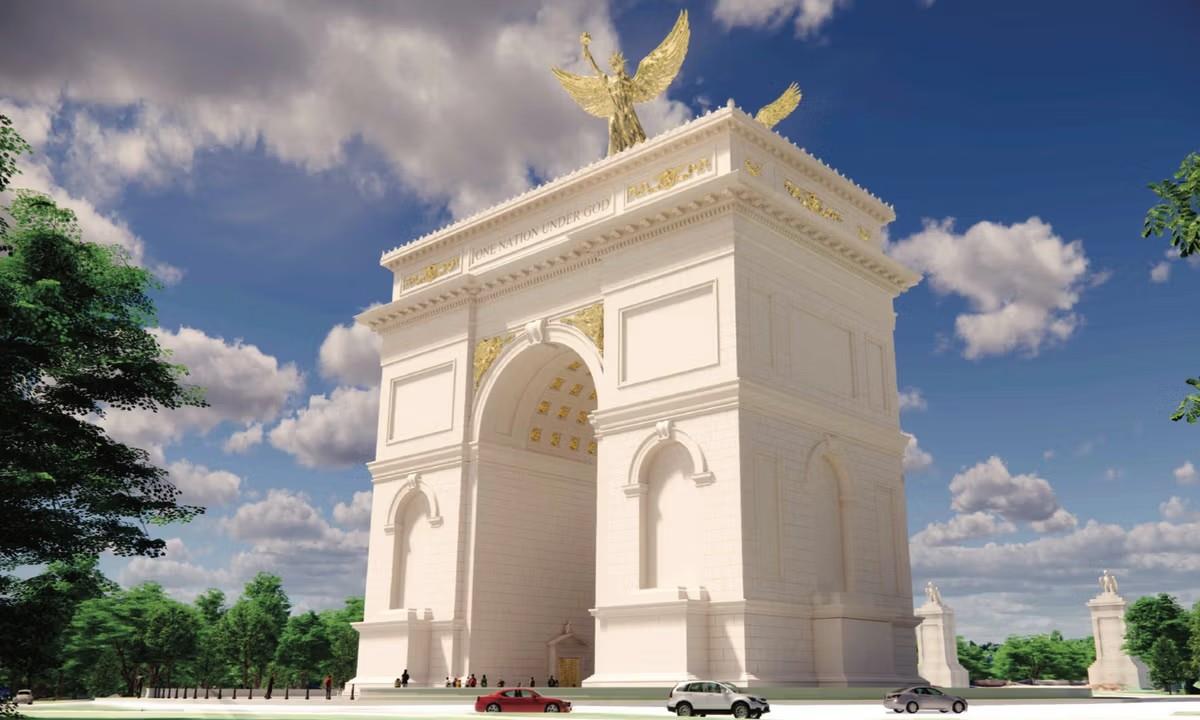
Veterans, Preservationists And Public Speak Out Against Trump's Arch The Art Newspaper International Art News And Events
(MENAFN- USA Art News)
Trump's Proposed Washington Arch Clears Early Vote Despite Fierce Opposition
A proposed triumphal arch tied to Donald Trump has taken a step forward in Washington, DC, even as veterans, preservationists and hundreds of members of the public warned that the project would be both legally fraught and symbolically offensive. On June 4, the National Capital Planning Commission voted 9-1 to advance conceptual plans for the monument to the next review stage.
The arch is planned for Memorial Circle, just outside Arlington National Cemetery, a location that has become central to the backlash. Nearly 1,700 public comments were submitted to the commission before the meeting, and the vast majority opposed the project. More than two dozen people also appeared in person to speak, many of them with direct military ties.
The legal dispute focused on the 1910 Height of Buildings Act, which restricts construction in Washington, DC, to 130 feet. William Scharf, the commission chair and White House staff secretary, said the NCPC's traditional view that the law applies to federal projects seemed questionable to him. He argued that applying the statute to all federal construction could create“serious issues of sovereign immunity,” because it would give local DC courts jurisdiction.
Scharf also pointed to two 1932 examples: the Masonic Temple, which received a congressional waiver, and the National Archives Building, which was built to a height of 166 feet without one.“I believe, speaking personally, that the best reading of the law is that the Height of Buildings Act is not applicable to federal construction,” he said.
That interpretation was challenged by commissioner Evan Cash, a member of the Washington, DC City Council, who confirmed with the NCPC general counsel that the act is a federal law enacted by Congress. He also noted that judges on local courts are appointed by the president, not by the local legislature.
The public comments were especially pointed. Jimi Shaughnessy, a former Marine, objected to the arch's proximity to Arlington and framed the project as an act of vanity. Stephen Eubank, another veteran, called it“a monumental disgrace” and“a monstrous insult” to the dead buried there. Holly Berkley Fletcher described the proposal as an expression of strongman vanity and historical revisionism, while David Parker argued that the Memorial Bridge columns cited by the administration were not comparable to the proposed arch.
The vote does not settle the project's fate, but it does move the administration's concept into the next phase of review. For now, the arch remains a test case for how far federal power can go in reshaping the capital's monumental landscape - and how much resistance that effort can still provoke.

Legal Disclaimer:
MENAFN provides the
information “as is” without warranty of any kind. We do not accept
any responsibility or liability for the accuracy, content, images,
videos, licenses, completeness, legality, or reliability of the information
contained in this article. If you have any complaints or copyright
issues related to this article, kindly contact the provider above.
Most popular stories
Market Research

More Story






Comments
No comment