







403
Sorry!!
Error! We're sorry, but the page you were looking for doesn't exist.
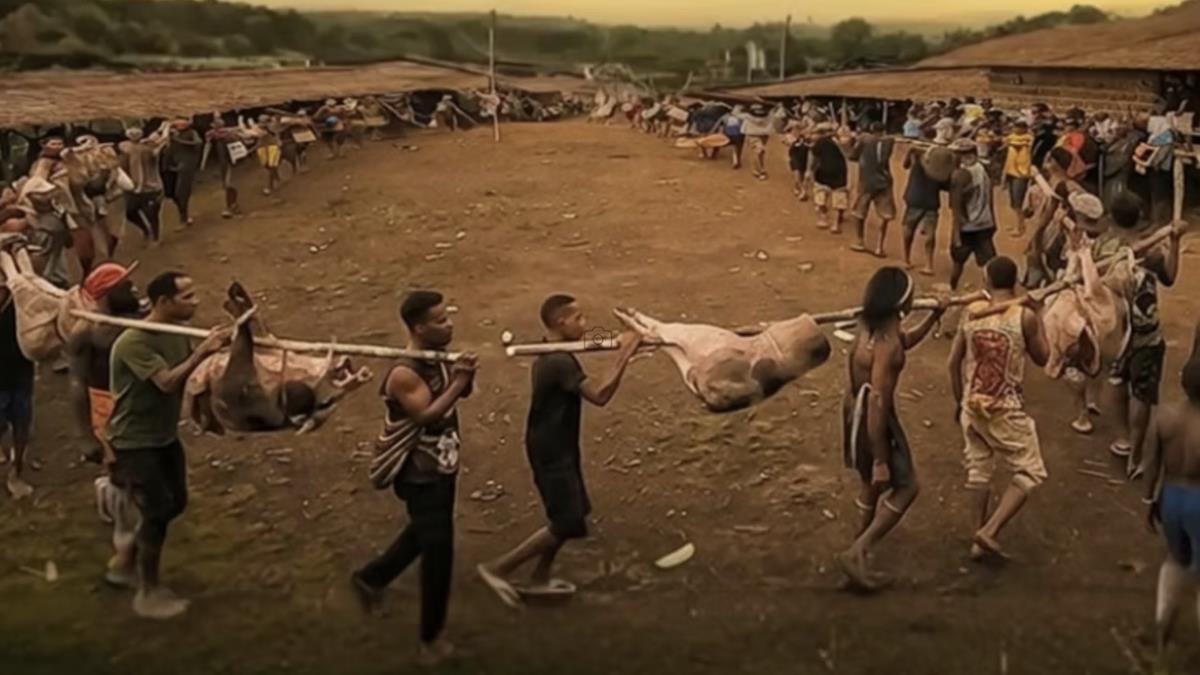
'Pig Feast': The Film Jakarta Doesn't Want You To See
(MENAFN- Asia Times)
The release of the investigative documentary“Pesta Babi” (Pig Feast) has triggered an unusually intense wave of public debate and political unease across Indonesia.
Directed by Dandhy Dwi Laksono and Cypri Jehan Paju Dale, the film captures the systemic collision between Indonesia's ambition for national food security and the survival of indigenous communities in South Papua.
Focusing on the regencies of Merauke, Boven Digoel, Mappi and Asmat, the documentary reveals how forests, wetlands and savannahs are being converted on a massive scale to accommodate state-backed National Strategic Projects (PSN).
Amid a growing number of independent screenings that have frequently faced intimidation and forced dispersal by security forces, the film has become a fractured mirror reflecting the trajectory of development in Indonesia's eastern frontier.
The documentary's title is rooted in a deeply layered sociological metaphor derived from the Awon Atatbon ritual tradition of the Muyu people in Boven Digoel. Within the social structure of Papua's interior communities, the ritual is led by tribal elders to safeguard ancestral rights, historical memory, lineage and the cosmological balance between humans and the forest.
The ceremony involves the slaughter of sacred pigs (ámín áwon) by ritual custodians (amín bòn tíbrí) under strict customary regulations (amop), the planting of sacred trees (waruk) and the chanting of ritual songs (kondum) intended to summon prosperity.
The entire tradition depends on ecological continuity. Without intact forests, wild pigs disappear. Without pigs, the Muyu people's cultural existence begins to collapse.
Yet under the shadow of contemporary agrarian expansion, the meaning of“pig feast” has undergone a tragic symbolic inversion. The phrase has increasingly become a metaphor for the greed of political elites and transnational capital exploiting Papua's customary lands.
What emerges is a portrait of how Indigenous living spaces and cultures are reduced to speculative commodities by development regimes in Jakarta that claim to be pursuing national progress.
At the same time, the struggle to defend customary land has not been free from internal tensions over representation and consent. The protest raised by Mama Yasinta, a 61-year-old Indigenous woman from Wogikel village in Ilwayab District who objected to the use of her image in the documentary without her approval, underscores the ethical dilemmas surrounding visual advocacy in remote Indigenous communities.
That conflict is now materializing on an enormous scale through Indonesia's national food and energy development agenda. Through central government regulations such as Coordinating Minister for Economic Affairs Regulation No. 8/2023 and Presidential Decree No. 15/2024, millions of hectares in South Papua have been earmarked for sugarcane plantations, bioethanol factories and industrial-scale rice estates.
The policy has effectively created a new territorial frontier where customary land ownership collides directly with large-scale capital penetration.
Development machine ryThe agrarian landscape of South Papua is increasingly dominated by giant corporations orchestrating colossal land-clearing operations.

Legal Disclaimer:
MENAFN provides the
information “as is” without warranty of any kind. We do not accept
any responsibility or liability for the accuracy, content, images,
videos, licenses, completeness, legality, or reliability of the information
contained in this article. If you have any complaints or copyright
issues related to this article, kindly contact the provider above.
Most popular stories
Market Research

More Story






Comments
No comment