



403
Sorry!!
Error! We're sorry, but the page you were looking for doesn't exist.
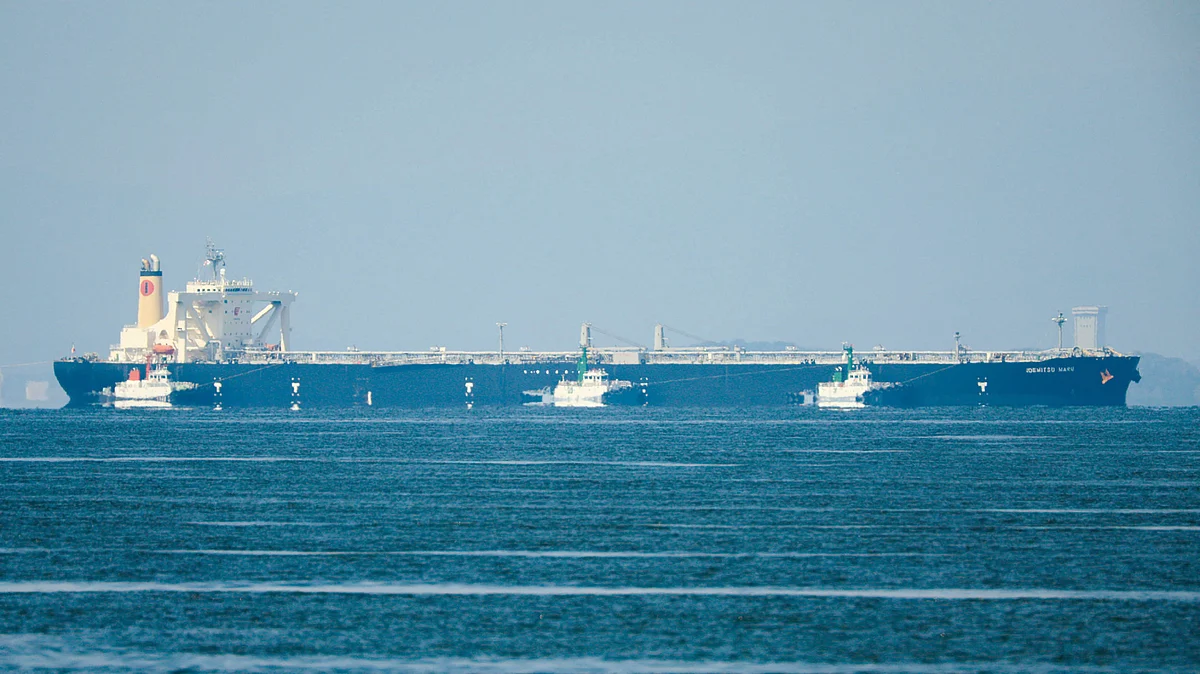
Commentary: Why Preparedness Matters Most Japan's Resilience Lessons From Hormuz Crisis
(MENAFN- Khaleej Times) The author is Ambassador Extraordinary and Plenipotentiary of Japan to the UAE
The ongoing disruption of trade through the Strait of Hormu z has had a grave impact on energy security and the sustainability of socio-economic activities in Asian countries, including Japan, as well as in many other parts of the world.
Recommended For You Trump says no more Israel troops going to Beirut; Hezbollah agrees to stop shootingAlthough the current crisis was unpredictable, one lesson is that resilience in the supply chains of critical commodities such as energy must be continuously strengthened in normal times. As the Japanese proverb goes,“preparedness averts future worries.”
Japan is able to deal with the shortage by releasing its oil reserves amounting to about eight months of domestic consumption. A portion of the oil being released comes from the joint crude oil stockpile with the UAE.
Stay up to date with the latest news. Follow KT on WhatsApp Channels.
From the standpoint of securing our supply chains, enhancing resilience of Asian countries with close links to the Japanese economy is equally important. On April 15, following the outbreak of armed conflict between US/Israel and Iran, Japan announced the Partnership on Wide Energy and Resources Resilience Asia (POWERR Asia).
Through approximately $10 billion in financial cooperation and related measures, the initiative is aimed at supporting Asian countries in strengthening the resilience of supply chains for energy and critical materials. Under this initiative, Japan also seeks to cooperate with the UAE in developing joint crude oil stockpiling arrangements.
Free and open Indo-PacificThese efforts form part of the Free and Open Indo-Pacific (FOIP), a vision for international order that Japan has been promoting since 2016. The core principles of FOIP are freedom, openness, diversity, inclusiveness, and the rule of law. Based on these principles, Japan has promoted various forms of cooperation with like-minded countries in pursuit of international peace and prosperity.
In recent years, the free and open international order based on the rule of law has increasingly come under challenges, making the FOIP initiative all the more important. At the same time, this initiative is gaining wider support in the international community.
On May 2, during her visit to Vietnam, Japanese Prime Minister Sanae Takaichi unveiled 'The Updated Free and Open Indo-Pacific' in her foreign policy speech. The purpose is to update FOIP in light of the significant changes in the international environment over the decade since it was first announced.
Prime Minister Takaichi emphasised that, in order to realise the vision, it is essential for countries in the region to“increase resilience” and“have freedom to decide for themselves” across the economic, social, and security domains in the challenging environment where countries are interdependent in a complex manner.
Three priority areasTo this end, Prime Minister Takaichi expressed her intention to promote both Japan's own efforts and cooperation with partner countries in three priority areas. These three priority areas are important for any country seeking its own security and prosperity.
The first is building economic infrastructure for the age of AI and data. Specifically, this includes strengthening supply chains for critical materials, protecting and developing AI- and data-related infrastructure, and establishing safe, secure and trustful innovation ecosystems.
Japan's Hiroshima AI Process promotes the development of international rules for advanced AI systems, including generative AI, from the perspective of safety, security, and trust. The UAE, along with other like-minded countries, participates in this framework; and further cooperation is expected in such areas as AI governance, human resource development, and digital infrastructure.
The second is co-creation of economic growth opportunities through public-private collaboration and rule sharing. This seeks to continue promoting trade and investment while co-creating business markets through solving challenges in the Global South by leveraging Japanese expertise and technology.
In this context, UAE's economic diplomacy which is aimed at creating a new economic network linking Asia, the Middle East and Africa through Comprehensive Economic Partnership Agreements (CEPA) is aligned with FOIP's emphasis on connectivity and resilience. The conclusion of the negotiation for Japan-UAE Economic Partnership Agreement in March this year is expected to further cooperation bilaterally and beyond.
The third is the further strengthening the capability in law enforcement and security. This includes building multi-layered security cooperation frameworks, enhancing law enforcement and defence capabilities, and cooperating to strengthen deterrence. Maritime security, in particular, is a critically important element from the perspective of ensuring the security of sea lanes and maintaining international movement of goods. Japan has deployed the Self-Defense Forces for counter-piracy operations in the Gulf of Aden and off the coast of Somalia, as well as promoted cooperation in the field of maritime law enforcement with the authorities in various countries.
The three priority areas under the Updated FOIP are essential elements for countries seeking to safeguard their security and economic security so as to achieve economic prosperity under today's international circumstances. The Updated FOIP slogan,“to be more resilient and prosperous together” will be realised through concrete cooperation between Japan and its partners.
Enhancing resilience and capabilityAs demonstrated by the fact that then-Prime Minister Abe Shinzo first announced FOIP in Kenya a decade ago, this initiative is not a geographically confined concept but rather one that is open to the broader international community. Indeed, the UAE along with other Gulf countries occupies an extremely important geostrategic position as a nexus connecting the Indo-Pacific and Africa, which is particularly relevant to FOIP's emphasis on connectivity.
Particularly with respect to Japan-UAE relations, cooperation is expanding beyond the traditional energy sector into a broad range of fields including AI, space, startups, and defence since 2020 when the two countries elevated their ties under the Comprehensive Strategic Partnership Initiative (CSPI).
The areas in which Japan and the UAE are advancing cooperation overlap significantly with the priority areas of the updated FOIP, reflecting the UAE's own policy orientation toward resilience and self-reliance.
It is hoped that the current Strait of Hormuz crisis will serve as a turning point for Japan and the UAE to deepen mutual cooperation in enhancing not only our respective resilience and capability to decide our own paths, but also those of Asian countries more broadly.
I believe such steady efforts during time of normalcy will undoubtedly prove valuable in times of national crisis.
(The views and opinions expressed in this article are those of the author and do not necessarily reflect the official position of the Government of Japan)
ALSO READ- Commentary: Why Strait of Hormuz has no alternative despite new Red Sea links UAE, 4 Gulf states reject Iran's new authority to manage traffic in Hormuz Australia-India-Japan-US Quad to build a port, unveil pact on critical minerals

Legal Disclaimer:
MENAFN provides the
information “as is” without warranty of any kind. We do not accept
any responsibility or liability for the accuracy, content, images,
videos, licenses, completeness, legality, or reliability of the information
contained in this article. If you have any complaints or copyright
issues related to this article, kindly contact the provider above.
Most popular stories
Market Research

More Story






Comments
No comment