



403
Sorry!!
Error! We're sorry, but the page you were looking for doesn't exist.
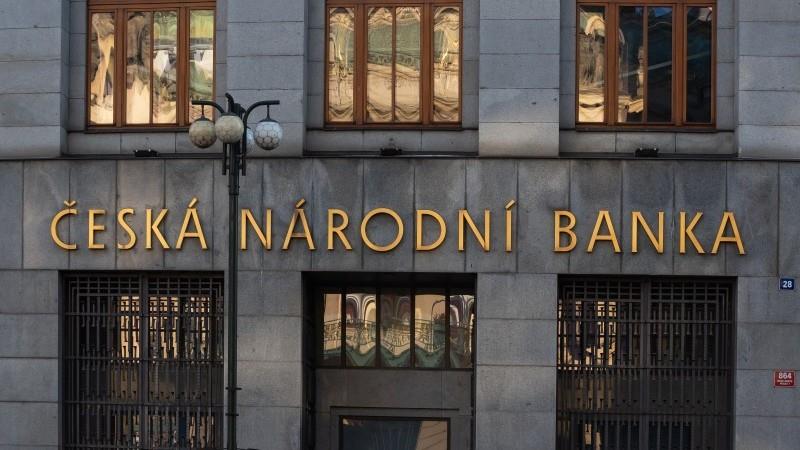
Czech National Bank's June Meeting Poised To Be Live Reasoning Will Be Key
(MENAFN- ING)
Future inflation pick-up to be transitory
Czech inflation likely softened to 2.3% year-on-year in May, while gaining 0.3% month-on-month, perfectly in line with the long-term May monthly average. Nevertheless, this subdued reading is driven by a drop in fuel prices, reflecting the government's cap on diesel margins at fuel stations. To take this effect on board, we apply a downward adjustment to the model forecast, which will likely fade over time once the cap is no longer binding.
May's price level increase was likely subdued Source: ING, Macrobond">
In any case, we expect annual headline inflation to stay below 2.5% up until October and then to crawl up and reach a peak of 3.5% in February. That said, the annual quickening is significantly affected by a low comparison base from 4Q25, when regulated and food prices finally started to respond to the ultra-low global energy prices (Brent average at $62 in 12/25) and by a strong koruna (USD/CZK average at 20.7 in 12/25). And while looking at our CPI forecast, we don't currently predict any substantial upward monthly moves, except for January when regulated prices will plug in the currently elevated oil prices.
Both headline and core set to ease throughout next year Source: CZSO, ING, Macrobond">Core inflation remains a pain point, with services prices and rents continuing their upward trend, supported by buoyant real wage gains. Yet even here, when looking at the seasonally-adjusted profile ahead, we don't forecast any significant monthly gains. We see the economy slowing down in response to the Hormuz turmoil, pushing the output gap back into negative territory and somewhat blunting the inflationary edge.
Clear and distinct idea always provides an edgeOn the CNB's reaction function, and recent talk of potential tightening in June, it is important to distinguish between responding to the inflationary effects of the global supply shock and reacting to underlying domestic conditions. Indeed, we should strive to approach the clear and distinct idea championed by René Descartes. If the driver is the Hormuz-related shock, we believe that we could still see negative effects on the real economy in 2Q26 and maybe even beyond.
In such a case, we take the position that it's better to wait a little bit longer with a one-off rate hike. This would support the necessary hawkish talk and foster credibility and do little harm to economic activity. Waiting until August or September would be more appropriate when the consequences of the global negative supply shock have become clearer.
Output gap turns negative again in our view Source: ING, Macrobond
">
If domestic forces are at play, it is in the interest of any central bank to distinguish the underlying drivers and communicate them clearly, as open communication and credible forward guidance are powerful levers. I can imagine that the CNB sees continued growth in rents and services prices as a threat to price stability, assesses the continued growth of credit for residential purchases as excessive, or believes that the economy is overheating already and expects inflation to breach the upper bound of the target over the monetary policy horizon. Yes, the Czech economy will ultimately surpass its growth potential once the Hormuz conflict is resolved and all is going well again, but I doubt that we are there just yet.
The ECB is not an example to followThere is a lot of discussion currently going on as to whether the CNB should follow suit if the ECB hikes rates this month. Well, the ECB faces a somewhat analogous situation, though an analogy, by definition, compares two distinct contexts that share only underlying similarities. In practice, the ECB's setup is materially different, with the scale of its challenge altering the policy positioning. With eurozone inflation accelerating to 3.2% in May and real GDP growth slowing to 0.8% year-on-year and 0.1% quarter-on-quarter in 1Q26, you could even say the region is edging close to stagflation. This marks a very different backdrop from that of the Czech economy.
CNB real interest rate remains restrictive Source: Macrobond">Yes, the two economies face the same negative global supply shock, yet they entered the turmoil in different initial conditions, and the ultimate impact may vary in a decisive way, which we believe is the case. For instance, Czech real interest rates are firmly positive, while the eurozone's real interest rates have fallen deeply into negative territory. Looking at the monetary policy setup of other advanced economies and their economic performance, we believe that the next big macroeconomic topic is whether the eurozone's economy can sustain expansion with positive real interest rates. Well, who knows. Meanwhile, the Czech economy has already shown that it can.
Overall, the macroeconomic setup for Czechia and the eurozone are substantially different, and the ECB should not serve as an exempla trahunt case for the CNB. On the contrary, I believe that the ECB may be embarking on a monetary policy mistake, should the impact of Hormuz prove harsh in 2Q26. Of course, you usually don't choose to make a mistake, but are rather pressured by circumstances. My take is that the CNB is currently not yet pressured by circumstances and should refrain from rushing into hikes that may prove harmful to economic activity. Yes, the CNB's June meeting will be a live one, and if tighter monetary policy is the outcome, we will be waiting for the explanation with great excitement.

Legal Disclaimer:
MENAFN provides the
information “as is” without warranty of any kind. We do not accept
any responsibility or liability for the accuracy, content, images,
videos, licenses, completeness, legality, or reliability of the information
contained in this article. If you have any complaints or copyright
issues related to this article, kindly contact the provider above.
Most popular stories
Market Research

More Story








Comments
No comment