

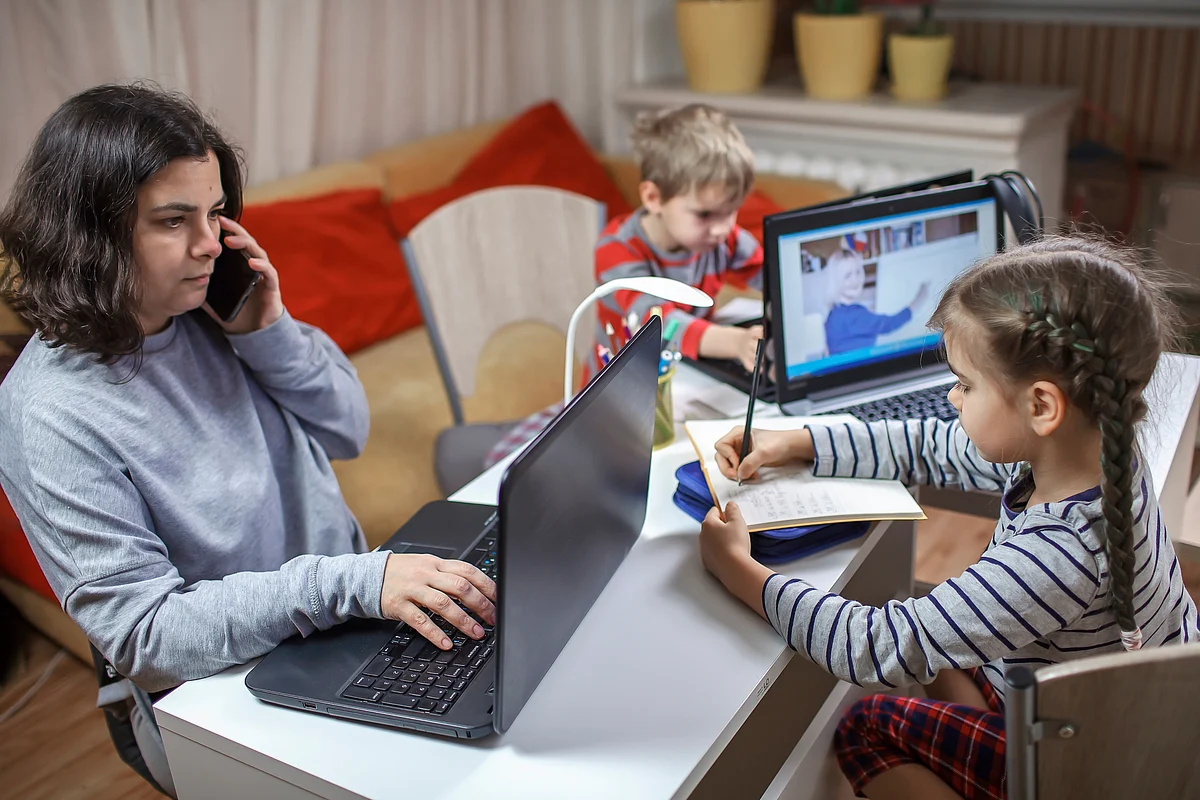
No Homework During Eid? UAE Parents And Schools Disagree


- By: Nandini Sircar
[Editor's Note: This article is part of Khaleej Times' Schools and Parents , a dedicated section designed to support families in the UAE as they explore educational choices. The section offers explainers, guidance from education leaders, expert advice and insights from parents to help readers make informed decisions about schools, curricula and communities.]
The nine-day Eid break is approaching for schools across the UAE, with families preparing for travel, gatherings and time away from classrooms.
Recommended For YouWith many residents planning overseas trips during the holiday, parents are once again navigating a familiar challenge - how to balance rest and family time with maintaining academic routines at home.
This has reignited a long-running debate in UAE households: should students be given homework during school holidays at all?
While some parents insist breaks should be fully free of academic pressure, others say light revision and reading can help students avoid learning gaps and return to school more smoothly.
Stay up to date with the latest news. Follow KT on WhatsApp Channels.
Schools, meanwhile, continue to advocate a middle path, prioritising wellbeing and rest while suggesting minimal, structured activities to maintain continuity.
Should children continue studying during the Eid break?
Views among pupils vary on whether holidays should include any learning, with some favouring light revision to ease the return to school while others argue breaks should remain free of academic work.
14-year-old Mark Kiwan said,“Honestly, I just do a bit of light revision before school reopens. It makes the first week much less stressful because I'm not trying to relearn everything at once. And now that I'm in my senior years, the workload has definitely increased quite a bit.”
9-year-old Salah Fahmy said,“I think holidays should feel like holidays. We should rest, play, and spend time with family - not worry about schoolwork all the time.”
What kind of learning, if any, is appropriate during the break?
Mother of a ten-year-old, Arpita Paul said regular revision, reading and writing exercises can help students stay engaged without creating pressure.
“Children should continue some form of learning at home during longer breaks so that they do not feel disconnected from studies. It does not have to follow the school timetable, but regular revision and reading are important. Even a couple of hours a day can help students stay engaged and settle back into routine more easily after reopening.”
She also believes basic writing habits remain important despite growing dependence on technology.
“I also feel children today are writing less by hand, and that affects both writing skills and patience. AI may become a bigger part of their lives, but hand writing will still remain an essential skill at some point.”
Have parents' views on holiday homework changed over time?
Several parents admitted their perspective on holiday homework has shifted after becoming parents themselves.
Shreya Chakraborty recalled that holiday homework used to be strictly enforced during her school years, even while travelling to visit relatives.
“In our time, in the Indian curriculum, holiday homework was non-negotiable. Schools gave us plenty of work and parents made sure it got done, even during long trips to visit relatives. My books always travelled with me. Also, academic activities help reduce excessive screen time during long breaks which is increasingly becoming a problem for parents these days.”
Looking back, she believes the experience helped build structured habits.
“In hindsight, that routine taught me some key values of life... one of which is discipline. I try to pass that on to my daughter, though I understand teaching methods and expectations have changed.”
Ben Ramos said he once disliked holiday homework while studying under the Philippine curriculum, but now sees its value as a parent.
“Back when I was a student under the Philippine curriculum, holiday homework was something I truly disliked. But now, as a parent, I see it differently. What once felt like a burden now feels like a useful habit for my children's learning.”
Should holidays remain completely free from academic work?
Some parents feel holidays should primarily be a time for children to rest, especially for younger students.
Egyptian national Yasmin Mahmoud said holidays during her childhood in Egypt involved no schoolwork at all.
“Growing up in Egypt, summer holidays meant exactly that - no homework and a real break. We followed a two-term system, and once school ended, it was time to rest.”
However, she believes older students can gradually take on more responsibility during breaks.
“For younger children, holidays should stay holidays to preserve their childhood, with only light learning activities at most, while older students can take on projects and learn to manage responsibility.”
What balance are schools encouraging during the Eid break?
School leaders emphasise that the focus should be on balancing rest, wellbeing and light academic continuity rather than assigning excessive workloads.
Simon Jodrell, Principal, Jebel Ali School, said,“During national holidays such as Eid Al Adha, which are centred on family and togetherness, it is important that students have genuine time to rest and recharge. We believe that when young people feel rested and supported, they are far more likely to perform at their best. Maintaining high standards is not about pressure, but about creating the right conditions for students to feel motivated, confident and ready to learn.”
Meanwhile, Richard John Drew, Principal, Jumeira Baccalaureate, stressed that students in examination years benefit from maintaining momentum through light revision.
“Our guidance to families is to focus on balance. Short, purposeful study sessions can sit alongside activities that support broader development, including reading for pleasure, play, exercise and time outdoors.”
He added that students often perform better academically after taking time to recharge.
“Ultimately, wellbeing and academic success go hand in hand. Giving students time to recharge, physically and mentally, helps them return to school more focused, resilient and ready to perform at their best.”
How are schools trying to prevent burnout among students?
Educators say schools are increasingly cautious about creating unrealistic expectations that leave students mentally exhausted during breaks.
Punit MK Vasu, CEO, The Indian High Group of Schools, said breaks can support both family bonding and academic continuity when approached sensibly.
“The fact that long breaks can serve as valuable opportunities for both family time and academic strengthening is not difficult to reconcile.”
He said students benefit more from shorter, focused learning routines instead of long study schedules.
“One strategy that has shown positive outcomes is encouraging students to follow short 'power study blocks' of 30–40 minutes followed by meaningful breaks. This helps maintain concentration without creating burnout.”
Vasu also stressed that wellbeing and academic rigour should not be viewed as opposing ideas.
“We would like to address a false binary that plagues competitive education globally: that rigour and wellbeing are in tension. They are not. They are co-requisites for sustainable excellence.”
Is holiday homework becoming more experiential than compulsory?
Some schools point out that holiday tasks today are less about formal homework and more about encouraging observation, creativity and practical learning.
Pramod Mahajan, principal of Sharjah Indian School, said assignments are optional and designed around experiential learning.
“Homework is not mandated; it is optional, and if children do it, it is in their larger interest. CBSE exams are becoming competency-based, so the idea is to enrich students through learning and not burden them.”
He suggested simple family activities can become meaningful learning exercises for children.
“For example, during the Eid holidays, children may go on field visits or outings with their parents and write a report on that experience.”
Mahajan said the larger focus is on helping students apply learning in real-life situations.
“It is all rooted in experiential and lifelong learning. This is situational learning, not task completion. The focus is on understanding, application, and identifying thinking gaps - not just learning gaps.”
ALSO READ- Bridge days, revision plans: How 9-day Eid Al Adha break impacts UAE school schedules CBSE class 12 results 2026: What UAE students should do next

Legal Disclaimer:
MENAFN provides the
information “as is” without warranty of any kind. We do not accept any
responsibility or liability for the accuracy, content, images, videos,
licenses, completeness, legality, or reliability of the information
contained in this article. If you have any complaints or copyright issues
related to this article, kindly contact the provider above.
Comments
No comment