



403
Sorry!!
Error! We're sorry, but the page you were looking for doesn't exist.
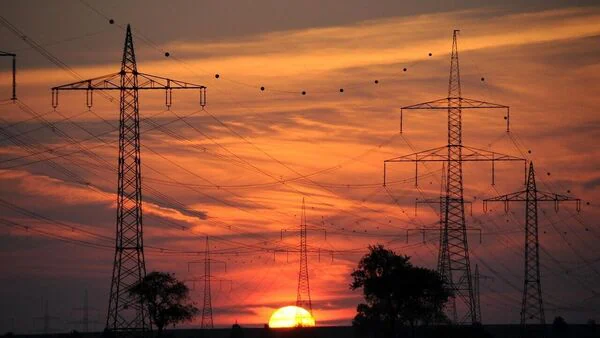
India's Peak Power Demand Hits Record 270GW As Temperature Soars
(MENAFN- Live Mint) New Delhi: India's peak power demand hit an all-time high of 270.7 GW on Thursday afternoon, marking the fourth consecutive day of record-breaking electricity consumption as a severe heatwave tightened its grip across the country. The previous record of 265.44 GW was set just a day earlier, on Wednesday.
Data from the National Power Portal showed that lead demand peaked at 3.47 PM on Thursday.
The Central Electricity Authority has projected a peak demand of 271 GW for this fiscal.
Meanwhile, in its latest update, the India Meteorological Department (IMD) on Thursday said heatwaves to severe heatwaves are likely to prevail over the plains of northwest and central India, including adjoining eastern regions, through the week ending 27 May, putting pressure on power grids.
Key Takeaways- India's peak power demand hit an all-time record of 270.7GW on Thursday. This is the fourth consecutive day national demand records have been broken. IMD forecasts severe heatwaves to persist across north India until 27 May. Coal stocks at power plants stand at an adequate level for roughly 16.5 operational days. Delhi's peak demand neared an all-time high, crossing 8,000MW for two consecutive days.
Haryana, Chandigarh and Delhi are expected to face the harshest conditions, with severe heatwaves forecast between 22 and 27 May, while Punjab is also likely to remain under a prolonged heatwave spell during the same period.
Thermal and solar sources were the top contributors, with 171.81 GW and 59.87 GW of power generation, respectively. Stocks of domestic and imported coal at plants stand at 51.12 million tonnes, according to data from the Central Electricity Authority, adequate for about 16.5 days of operations.
Also Read | Will the West Asia war accelerate the age of electricity?IMD said eastern and western Uttar Pradesh, Rajasthan, Madhya Pradesh, Vidarbha, Bihar, Telangana, Odisha and parts of coastal Andhra Pradesh are also expected to experience heatwaves over several days this week. Isolated pockets of Himachal Pradesh and Uttarakhand may also see heatwaves on Friday.
According to IMD, warm night conditions are very likely to prevail in isolated pockets over Odisha, Uttar Pradesh, Vidarbha, Bihar, Haryana, Chandigarh and Delhi during 22-25 May.
The generation pictureThe weather office said maximum temperatures across northwest, west and central India remained in the range of 40–47 degrees Celsius on 20 May, with Banda in Uttar Pradesh recording the country's highest temperature at 48°C. Temperatures were markedly above normal by more than 5°C in parts of Delhi, Haryana, Punjab, Uttarakhand, Madhya Pradesh and coastal Andhra Pradesh, underscoring the intensity of the ongoing heat spell on 20 May.
Meanwhile, peak power demand in the national capital reached its highest level this year on Thursday at 8,231 MW. The record peak demand in Delhi is 8,656 MW, achieved in June 2024.
Delhi's peak power demand rose sharply in May 2026 compared with previous years, reflecting the impact of an early, intense summer. This is the second consecutive day that Delhi's peak power demand has crossed the 8,000 MW mark.
Also Read | Power demand soars on heatwaves, seen at record high this yearA BSES official said that in the national capital, discoms are geared up to ensure reliable power supply to more than 53 lakh consumers and nearly 2.25 crore residents across South, West, East and Central Delhi. These arrangements include long-term power purchase agreements (PPAs), bilateral tie-ups, banking arrangements with other states, and the deployment of advanced technologies such as AI- and ML-based demand forecasting to accurately estimate load and maintain uninterrupted supply. BSES discoms have been successfully meeting Delhi's rising power demand
The spokesperson of Tata Power Delhi Distribution Ltd said that the discom has undertaken comprehensive measures to ensure an uninterrupted power supply during the peak demand season.
“Adequate arrangements have been put in place through Bilateral Agreements, Reserve Shutdown mechanisms, and participation in Power Exchanges to maintain supply reliability,” the spokesperson said.
A tale of two weathersIn contrast, isolated heavy to very heavy rainfall is likely over Sub-Himalayan West Bengal and Sikkim, northeast India and adjoining eastern regions on multiple days during the week, potentially providing some respite from rising temperatures in those areas.
Meanwhile, the southwest monsoon is showing signs of progress. According to IMD, conditions are favourable for its further advance into additional parts of the southeast Arabian Sea, Comorin area, southwest and southeast Bay of Bengal, the remaining Andaman Sea region, and parts of the east-central Bay of Bengal over the next three to four days.
Also Read | Power prices hit zero for first time on 1 May as demand dips but supply climbsThe contrasting weather pattern-extreme heat in the north and the advancement of the monsoon in the south-comes at a critical time for agriculture and power demand, with prolonged high temperatures likely to keep electricity consumption elevated while farmers wait for the onset of monsoon rains for kharif sowing.

Legal Disclaimer:
MENAFN provides the
information “as is” without warranty of any kind. We do not accept
any responsibility or liability for the accuracy, content, images,
videos, licenses, completeness, legality, or reliability of the information
contained in this article. If you have any complaints or copyright
issues related to this article, kindly contact the provider above.
Most popular stories
Market Research

More Story






Comments
No comment