




403
Sorry!!
Error! We're sorry, but the page you were looking for doesn't exist.
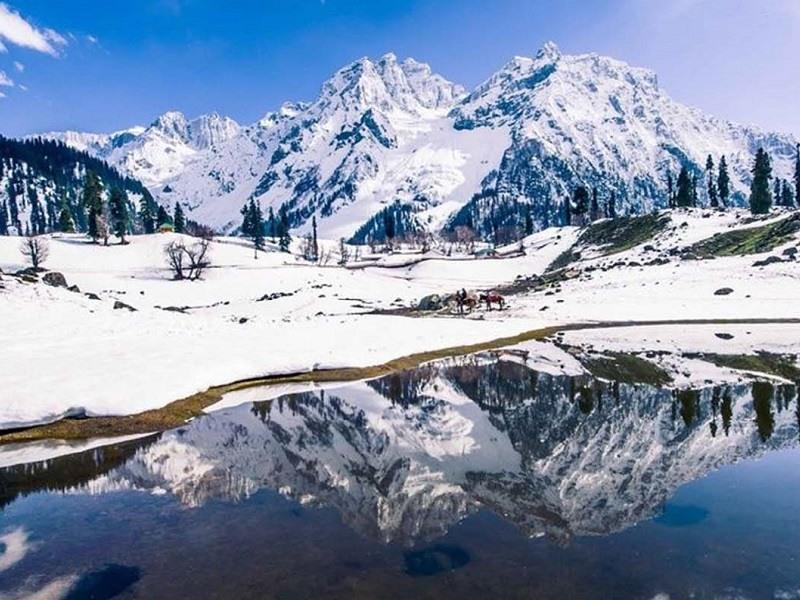
Kashmir's Thajwas Glacier Lost 86% Area Since Neoglaciation: Study
(MENAFN- Kashmir Observer) Srinagar- The Thajwas Glacier in the Kashmir Himalaya has lost nearly 86 per cent of its area and close to 88 per cent of its volume since the Neoglaciation period, according to a new scientific study published in the journal Geoscience Frontiers, highlighting the long-term impact of rising global temperatures on Himalayan glaciers.
ADVERTISEMENT
The study, published in the journal Geoscience Frontiers, reconstructed the paleo-glacial history of the Thajwas Glacier using cosmogenic Beryllium-10 (10Be) exposure dating and geomorphological mapping, providing one of the few detailed glacial chronologies from the Kashmir Himalaya.
ADVERTISEMENT
Researchers identified four major glacial advances over the past nearly 21,000 years, corresponding to the global Last Glacial Maximum (gLGM), the Younger Dryas period, the Early Holocene and the Neoglaciation phase.
According to the study, the glacier witnessed major advances around 20,770 years ago, 11,460 years ago, 9,120 years ago and nearly 4,190 years ago.
The researchers said the glacier has undergone a drastic reduction in both area and volume since the gLGM period.“The Thajwas Glacier lost around 64 per cent of its area and 73 per cent of its volume from the Last Glacial Maximum to the Neoglaciation stage,” the study noted.
It added that glacier retreat accelerated further in more recent times, with the glacier losing around 85.74 per cent of its area and 87.67 per cent of its volume from the Neoglaciation period to the present day.
The scientists said the findings indicate a strong connection between global temperature rise and glacier melt in the Himalaya.
The study also examined changes in the glacier's Equilibrium Line Altitude (ELA), the point on a glacier where accumulation and melting remain balanced. Researchers found that the ELA fluctuated significantly, from around 3,365 metres above sea level during the global Last Glacial Maximum to nearly 4,238 metres at present.
The lower ELA during the gLGM suggested colder climatic conditions and positive glacier mass balance, while rising temperatures over thousands of years led to sustained glacier retreat and ice loss, the researchers said.
They noted that quantitative records of past glaciations remain limited across the Himalaya, especially in Kashmir, making the study important for understanding long-term climatic changes in the region.
ADVERTISEMENTThe researchers said reconstructing the glacial history of Kashmir's Himalayan region could help bridge major gaps in understanding regional climate evolution and glacier response to changing temperatures.
Read Also Most Iconic Locations for Photography in KashmirScientists have repeatedly warned that rapid glacier retreat in the Himalaya could have serious implications for water availability, river systems and ecological stability across South Asia, where millions depend on glacier-fed rivers for drinking water, agriculture and hydropower.
The Himalaya, often referred to as the“Third Pole”, contains one of the world's largest reserves of ice outside the polar regions and remains highly vulnerable to climate change. (KNO)
Legal Disclaimer:
MENAFN provides the
information “as is” without warranty of any kind. We do not accept
any responsibility or liability for the accuracy, content, images,
videos, licenses, completeness, legality, or reliability of the information
contained in this article. If you have any complaints or copyright
issues related to this article, kindly contact the provider above.
Most popular stories
Market Research

More Story





Comments
No comment