





403
Sorry!!
Error! We're sorry, but the page you were looking for doesn't exist.
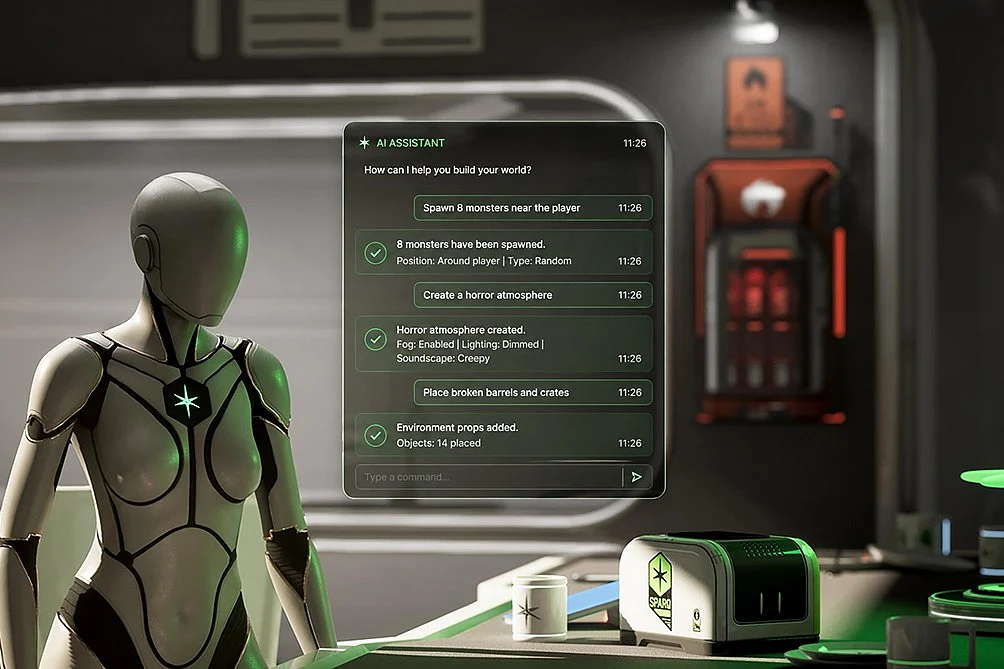
How AI Is Giving Gaming Its Tiktok Moment By Slashing Game Creation Time And Cost
(MENAFN- Khaleej Times) In 2016, a small Chinese company launched an app that let anyone with a phone shoot, edit and publish a video in under a minute. Within four years TikTok had over a billion users and the way in which we create and consume content had fundamentally changed forever. Did it achieve this by re-inventing video? No. It did so by removing the barriers between having an idea and sharing that idea with the world.
In the last 15 years, countless spaces have exploded in much the same way. From GarageBand through YouTube and Shopify we've seen massive industries transform through simplified and accessible creation. So why is Gaming – the largest entertainment industry on the planet – still waiting for that same moment?
The answer is simple: the tools never caught up. There are over 250 million content creators in the world today making a living from video, music and digital products. Almost none of them make games. Not because they lack ideas, but because the path from a sparked idea to a published game still looks like it did a decade ago. Even the successes we all know and love tell a brutal story. Angry Birds – a game so simple a toddler can play it – took a four-person team eight months and, by Rovio's own accounts, roughly $130,000 to build and ship. Yet I could open my phone right now and have a TikTok in front of a million people by tonight. In the age of AI, that gap is no longer acceptable.
Much like TikTok removed editing as a point of friction, the combination of new hardware, capable AI models, and a rethought creation tool is taking the grind out of building games. This heavy production layer is where most of the time used to be spent and subsequently what locked most creators out. It was never because of a lack of ideas, but because realising those ideas required a studio and years of work.
That is changing fast. A creator can describe what they want and have working logic generated in real time. Want different gravity? Say so. Enemies that behave differently at night? Describe it. Multiplayer networking, cross-device optimisation, asset generation, animation, lighting - all of these can now be handled by a capable game creation tool.
But AI does not solve the hardest part, because AI is still just the production crew, not the game director. It cannot tell you whether your game is fun, what is missing in the second hour, or why one mechanic clicks and another does not. That judgment - game design - remains an entirely human craft. And that is exactly the right inversion. For the first time, the people who win won't be the ones with the most engineers or the biggest art teams. They will be the ones with the sharpest instinct for what makes a game worth playing.
When the cost and complexity of production drops this far, we don't just get the same old games made faster. We get an entirely new category of content. Games that are made on a weekend and played for a week. Interactive experiences built around a moment, a meme, a cultural event - created and shared as casually as a TikTok. When video creation was democratised, we didn't get more television and movies. We got an entirely new format. Fifteen second clips. Reaction videos. Duets. Content forms that no one predicted but which now generate more engagement than anything Hollywood could ever produce. We've seen this pattern before and with gaming the potential is larger than any medium that has come before it. The merging of the $300 billion gaming industry and the $480 billion creator economy will define the next decade of digital entertainment.
The next generation of great games won't come from studios with hundreds of engineers. They will come from creators who understand their audiences better than any company ever could. The artist who turns their world into a playable experience. The streamer who builds something with their community in real-time. The storyteller who finally has the tools to make their vision interactive. The combinations of ideas and experiences are endless when the single most interactive creative medium is put into the hands of all.
Skeptics will say AI-generated game code is still brittle, that more games doesn't mean more games played, and that Steam and the App Store remain the real gatekeepers. They're not wrong - today. But the same was true of YouTube in 2006, when video quality was poor, discovery was broken, and broadcasters owned the access. Within five years the platform, the algorithms, and the creators had all caught up to one another. Game creation is on the same curve, and it is moving faster.
Today, taking an idea to a published game takes a team years. Tomorrow we will see an idea become a playable experience in a weekend, published on Monday. The technology pieces to enable this are here. The creators are ready. The only missing piece is the one creative platform connecting them all together - built from the ground up for this new way of making games. That's the next decade's opportunity.
Gaming's TikTok moment isn't coming. It has arrived.
This article was contributed by Christoffer Wilhelmsen, he is the COO and Co-Founder of SPARQ, the AI-native game engine headquartered in the UAE. A serial entrepreneur with a track record of scaling ventures to commercial success, he leads SPARQ's operations, fundraising, and business development. Christoffer has steered the company from early concept through a $2.5 million self-funded development phase to a 20+ global engineering team and a 6,000-strong creator waitlist, positioning SPARQ for its $8.5 million seed round with participation from leading US venture firms. His focus now is scaling SPARQ from beta to global launch, with a commercial strategy built around the 250 million content creators currently locked out of game development. Originally from Norway, he is a vocal advocate for the Middle East as a launchpad for globally ambitious tech companies and brings deep cross-border experience to SPARQ's expansion strategy. He is based in Dubai, UAE.

Legal Disclaimer:
MENAFN provides the
information “as is” without warranty of any kind. We do not accept
any responsibility or liability for the accuracy, content, images,
videos, licenses, completeness, legality, or reliability of the information
contained in this article. If you have any complaints or copyright
issues related to this article, kindly contact the provider above.
Most popular stories
Market Research

More Story







Comments
No comment