




403
Sorry!!
Error! We're sorry, but the page you were looking for doesn't exist.
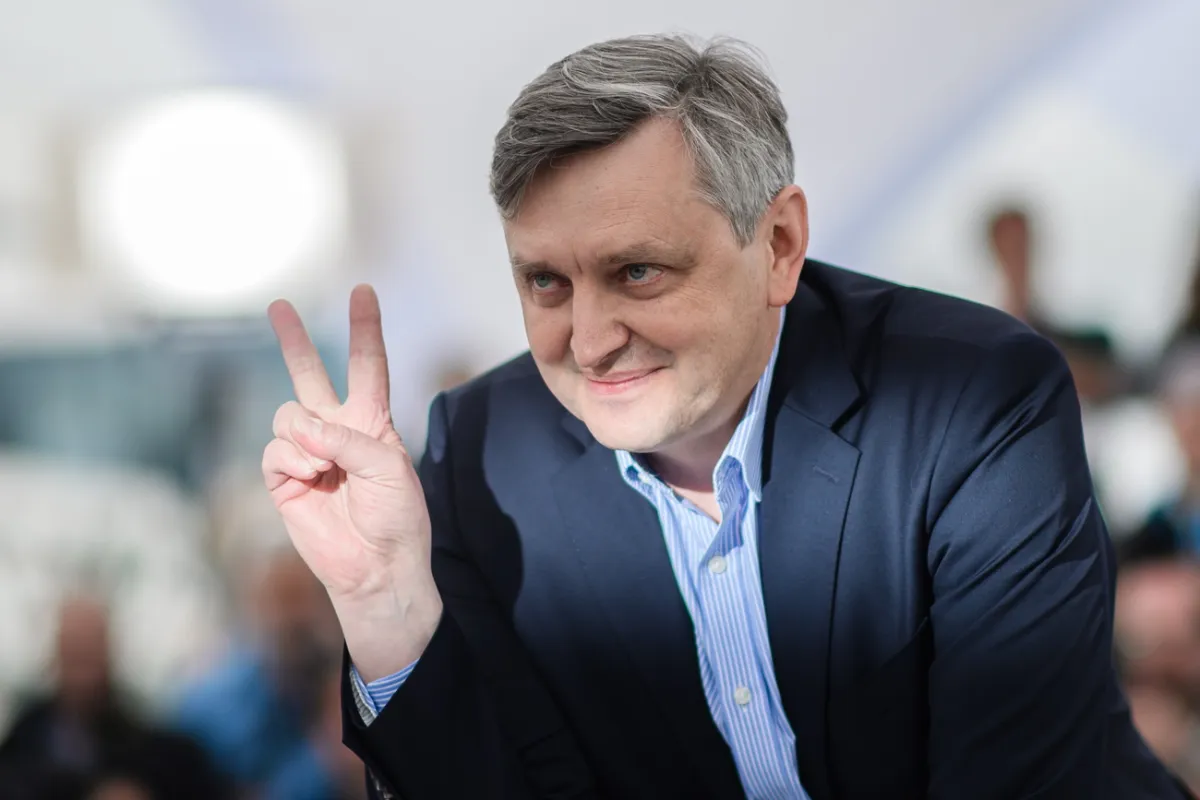
A Swiss Celebration Of Sergei Loznitsa Lays Bare The Battlefront Of Ukrainian Cinema
(MENAFN- Swissinfo)
Sergei Loznitsa, one of the most acclaimed filmmakers of his generation, was recently subject of a retrospective at Visions du Réel, the major Swiss documentary festival. Born in Belarus and raised in Ukraine, Loznitsa is unrelenting in his reckoning with Russia's imperial power. So why is he highly controversial in Ukraine?
Select your language
-
Русский
ru
Сергей Лозница: признанный на Западе, неудобный для Украины
Read more: Сергей Лозница: признанный на Западе, неудобный для Ук
Sergei Loznitsa is impossible to catch these days. Since his Gulag drama Two Prosecutors opened across Europe and the United States, the director is on a grand tour. New York's Metrograph External link screened his documentaries on the Ukrainian conflict; the American CinemathequeExternal link followed with an eclectic selection; and now Visions du Réel, which ended on April 26, curated a substantial retrospective, celebrating External link his cinematic devotion to“the post-Soviet territory and memory through its upheavals and cycles of violence”.
Loznitsa's documentaries carry the signature of a master chronicler of (post-)Soviet metamorphoses. His protagonist is the crowd, framed in wide compositions and vast landscapes that become a canvas to contemplate countless lives caught in trials, revolutions and wars. Uninterested in sentimentality or heroism, he studies humanity like a historian, an approach that was set in his early works.
Blockade (2006) distilled three-and-a-half hours of archival footage of siege-starved Leningrad into an hour-long film. These very few hours of surviving footageExternal link are part of the tragedy, for they do not do justice to the 900-day German siege during Second World War in which over half a million city residents died, most of them from starvation. With no commentary, the catastrophe speaks for itself.
External ContentWorking across fiction, documentary and the elusive border between both genres, Loznitsa seems most at home in the editing room. State Funeral (2019), his monumental picture of the state farewell to Stalin, is his genuine masterpiece. The hypnotic spectacle teaches the viewer more about the Soviet“soul”, its rituals and state tyranny than any textbook could.
As endless processions of mourners outgrow the figure of Stalin, they form a portrait of the Soviet Union caught in the moment of its own mass transformation. The sound design of trusted collaborator Vladimir Golovnitsky lends a sensory charge to the mute footage, reconstructing voices, noises and music.
Archival masteryLoznitsa's devotion to archives optimises their function: making the past speak of the present. The way the aerial footage of The Natural History of Destruction (2022) glides over bombarded German cities rhymes with current videos from Ukraine.
The Trial (2018), reassembled from propaganda footage of a 1930s tribunal, reads straight onto the lawlessness of Russian justice today. The Event (2015), built from footage of the August 1991 coup attempt in Leningrad, feels urgent as Russia retreats into the very authoritarianism that moment tried to end.
Against the backdrop of war, Western critics have elevated External link Loznitsa to the leading voice of Ukrainian cinema, praising his unshakeable interrogation of Russian imperialism. The shorthand is flattering, but it skips over his ongoing conflict with the Ukrainian film industry, which does not quite share in the applause.
External ContentHaving quit the European Film Academy over its weak response to the Russian invasion of Ukraine, Loznitsa was even more disturbed by their subsequent call to boycott Russian culture, which he denounced External link as“absurd”. Such rhetoric came as an unpleasant surprise to the Ukrainian Film Academy and served as grounds to expel him.“Now, when Ukraine is struggling to defend its independence, the key concept in the rhetoric of every Ukrainian should be his national identity,” its statement External link read at the time.
“Unfortunately, this is Nazism,” Loznitsa wrote back External link to the Ukrainian“academics” (his quotation marks). He used the moment to answer accusations of cosmopolitanism levelled at him, equating the charge with a Stalinist mindset: the denial of dissent, the reliance on hatred, the betrayal of the European values Ukraine is striving for.
The zone of traumaAt the 2023 Jerusalem Film Festival, his partner and producer Maria Choustova told External link Israeli newspaper Haaretz that Loznitsa's suspension stemmed“partly from jealousy and partly from hard-line rightist views”.“These are people [the Ukrainian“academics”] who are deeply traumatised,” she said.
Loznitsa himself has long lived outside that zone of war trauma. Born in Belarus and raised in Ukraine, his late 20s were spent in Moscow for film education, and since 2001 he commutes External link between Berlin and Vilnius.
Ukrainian filmmaker Vitaly Mansky recently alluded External link to Loznitsa in an interview.“One powerful director writes everywhere that he is a Ukrainian artist, though he doesn't live in Ukraine and doesn't even shoot his films there. If there were no war, I wouldn't pay attention. As it is, it's simply tactless.”
Nonetheless, Loznitsa's trajectory is bound up with Ukraine's modern history, and for a while this alignment was mutually beneficial: he gained the cachet of a Ukrainian auteur while his films drew attention to the war.
More More Culture Zurich honours Vitaly Mansky: documenting power, memory and the Russian EmpireThis content was published on Nov 5, 2025 Zurich is showcasing a comprehensive retrospective of the work of Russian-Ukrainian filmmaker Vitaly Mansky.
Read more: Zurich honours Vitaly Mansky: documenting power, memory and the Russian E
Legal Disclaimer:
MENAFN provides the
information “as is” without warranty of any kind. We do not accept
any responsibility or liability for the accuracy, content, images,
videos, licenses, completeness, legality, or reliability of the information
contained in this article. If you have any complaints or copyright
issues related to this article, kindly contact the provider above.
Most popular stories
Market Research

More Story

Comments
No comment