



403
Sorry!!
Error! We're sorry, but the page you were looking for doesn't exist.
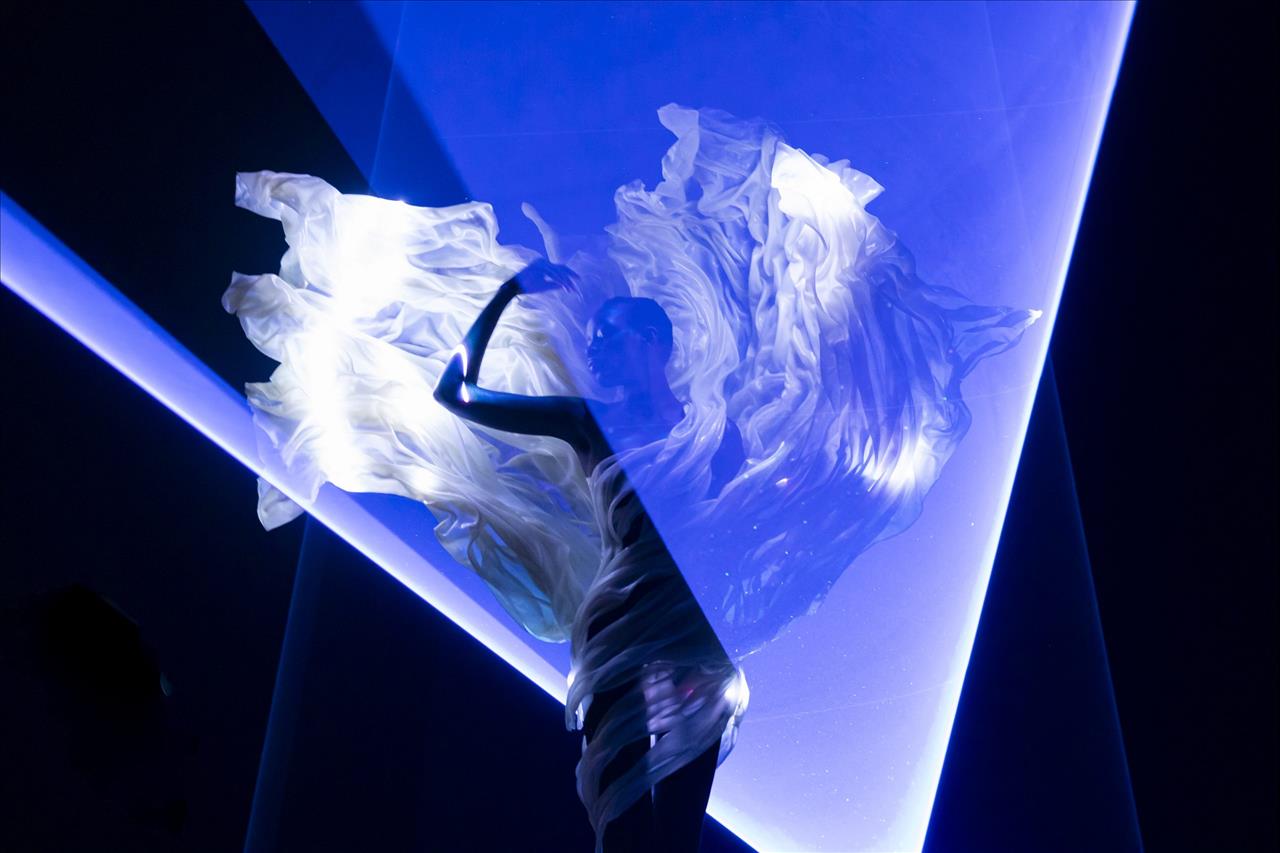
For Fashion Iconoclast Iris Van Herpen, 'Nature Is The Best Artist'
(MENAFN- USA Art News)
Iris van Herpen's Brooklyn Museum retrospective turns couture into a study of motion, matter, and time
At the Brooklyn Museum, fashion is being asked to do more than dress the body. Iris van Herpen: Sculpting the Senses, a traveling retrospective that first opened at the Musée des Arts Décoratifs in Paris in 2023, gathers more than 140 works by the Dutch designer Iris van Herpen (b. 1984) and frames them as part of a larger inquiry into nature, technology, and the future of form.
Curated by Matthew Yokobosky and Imani Williford, the exhibition resists the logic of a conventional fashion survey. Van Herpen's garments are installed alongside works by Agostino Arrivabene, Courtney Mattison, Tara Donovan, and Heishiro Ishino, as well as references to Ernst Haeckel, Ovid's Metamorphoses, and a 50-million-year-old fossil. The effect is less a chronology than an ecosystem, one in which coral systems, skeletons, algae, water, snakes, and birds' wings become recurring visual and conceptual anchors.
That interest in the natural world is matched by a sustained fascination with fabrication. Van Herpen's 2010 Crystallization collection included one of the earliest 3D-printed garments, a milestone that helped define her reputation for experimental couture. Since then, she has worked with silicone molding, magnetic sculpting, and collaborators such as Philip Beesley, whom she has called her“mentor in materials.”
The exhibition also includes pieces associated with Lady Gaga, Björk, and Anne Hathaway, underscoring how widely van Herpen's work has circulated across performance, film, and popular culture. One of the most recent examples is a dress made with A.A. Murakami for freestyle skier Elaine Gu, coated with 8,000 crystalline glass spheres and equipped with pressurized soap bubble-making technology. It extends the logic of her 2016 Seijaku design, which opens the exhibition, while shifting the material language into new territory.
Movement is central throughout. Runway videos show the garments activating on the body, where they undulate, spiral, and seem to breathe with the wearer. In the exhibition's center gallery, visitors can handle digitally printed organza and silicone spheres, a tactile counterpoint to the visual drama of the surrounding works.
Van Herpen has described couture as part of a long historical thread of invention, from the first needle to lace-making and beyond. Her point is not that technology replaces tradition, but that it extends it. By the time the exhibition reaches its final galleries, the emphasis has shifted toward a post-human future shaped by air and waves - a future in which fashion feels less static than elemental.

Legal Disclaimer:
MENAFN provides the
information “as is” without warranty of any kind. We do not accept
any responsibility or liability for the accuracy, content, images,
videos, licenses, completeness, legality, or reliability of the information
contained in this article. If you have any complaints or copyright
issues related to this article, kindly contact the provider above.
Most popular stories
Market Research

More Story






Comments
No comment