




403
Sorry!!
Error! We're sorry, but the page you were looking for doesn't exist.
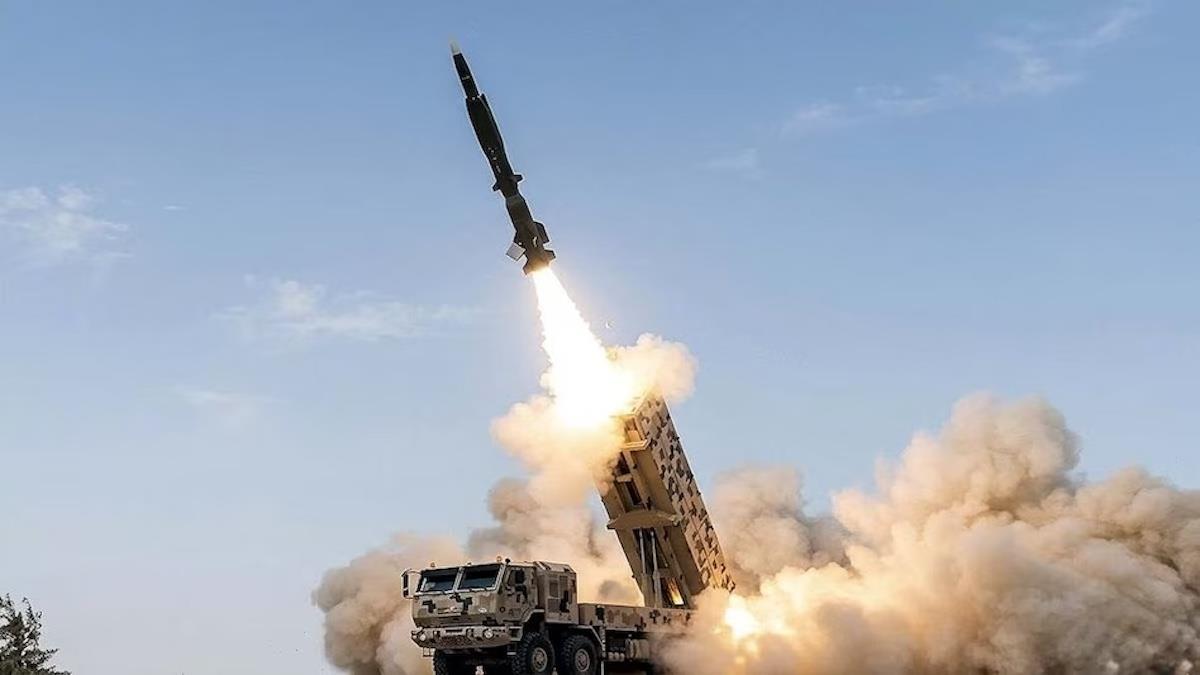
Pakistan's Fatah-3 May Open Gulf Door To Chinese Missiles
(MENAFN- Asia Times)
Pakistan's new Fatah-3 missile may signal the emergence of Islamabad as China's frontline broker for conventionally armed counterforce warfare from Kashmir to the Persian Gulf.
This month, multiple defense outlets reported that Pakistan publicly unveiled the Fatah-3 supersonic cruise missile through its Army Rocket Force Command, marking what analysts described as the country's first acknowledged operational supersonic cruise missile and signaling a significant shift in South Asia's conventional deterrence balance.
A possible localized derivative of China's HD-1 missile developed by Guangdong Hongda, the road-mobile, twin-canister system reportedly achieves speeds of Mach 2.5 to 4, carries a 240-400 kilogram warhead and has a strike range of roughly 290-450 kilometers, enabling both land-attack and anti-ship missions using reported terrain-hugging and sea-skimming flight profiles.
The missile's supersonic speed and low-altitude approach sharply compress interception timelines for air-defense systems, complicating radar tracking and layered defensive responses against fixed infrastructure, naval targets and mobile battlefield assets.
Pakistan's display of the missile alongside counter-UAV systems and long-range fires reflected a broader doctrinal shift toward survivable, distributed precision-strike warfare below the nuclear threshold, while underscoring deepening China-Pakistan missile cooperation.
The Fatah-3 also directly challenges India's longstanding advantage in supersonic strike systems anchored by the Russian-Indian BrahMos missile, narrowing one of India's key advantages in regional conventional warfare.
Pakistan's unveiling of the Fatah-3 missile raises questions about how a China-linked supersonic strike system could reshape South Asian conventional counterforce dynamics against India while simultaneously expanding Chinese defense influence and missile proliferation in the Middle East.
Looking at the specifications of China's HD-1 and the BrahMos missile, Missile Threat shows that the two systems occupy a similar supersonic anti-ship missile niche but differ in design priorities.

Legal Disclaimer:
MENAFN provides the
information “as is” without warranty of any kind. We do not accept
any responsibility or liability for the accuracy, content, images,
videos, licenses, completeness, legality, or reliability of the information
contained in this article. If you have any complaints or copyright
issues related to this article, kindly contact the provider above.
Most popular stories
Market Research

More Story








Comments
No comment