







403
Sorry!!
Error! We're sorry, but the page you were looking for doesn't exist.
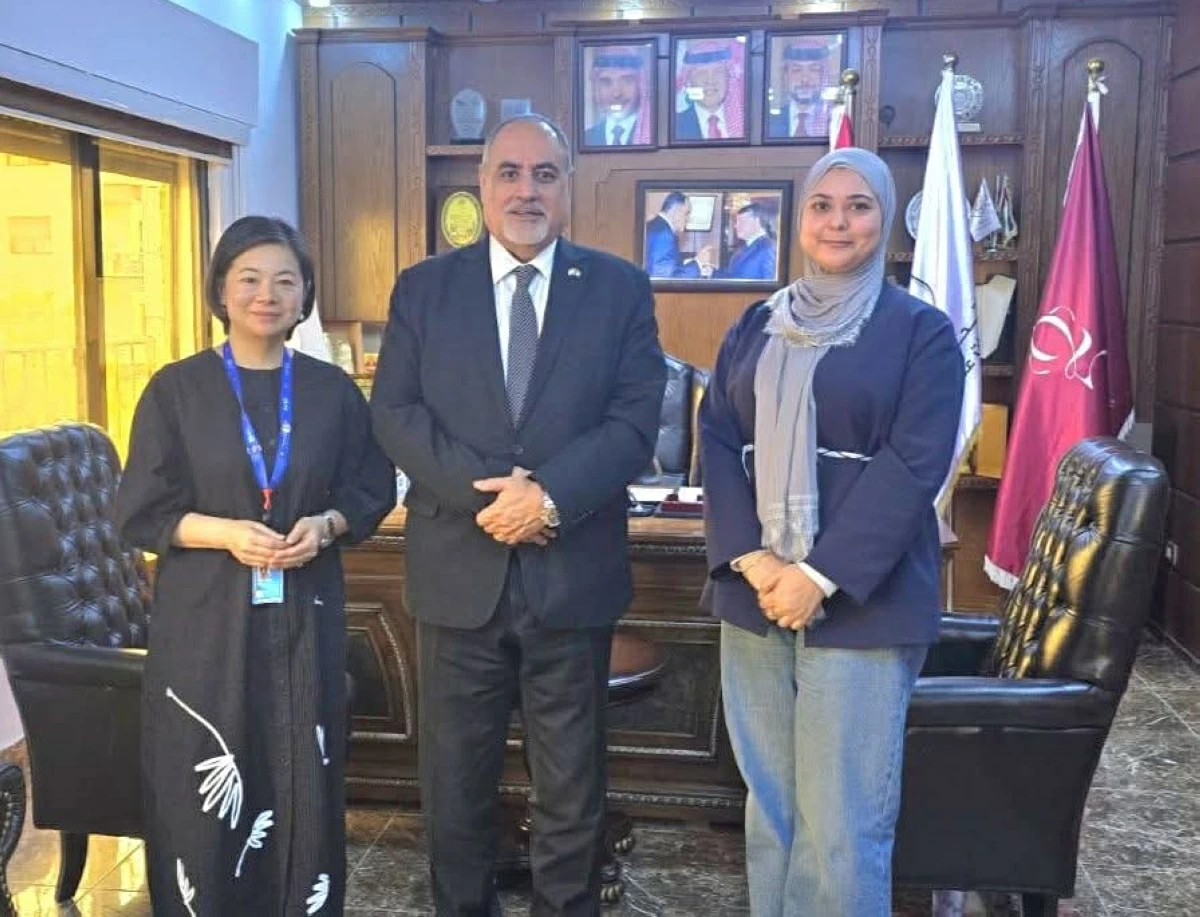
Trade Unions Federation, ILO Discuss MASAR Project
(MENAFN- Jordan Times)
AMMAN - The President of the General Federation of Jordanian Trade Unions (GFJTU), Khaled Fanatseh, met on Wednesday with the International Labour Organisation (ILO) MASAR project team to discuss ongoing cooperation.
The meeting was attended by Modernising Education, Skills and Administrative Reforms (MASAR) Project Manager Alia Odeh and ILO Senior Specialist on Gender Equality and Non-Discrimination Aya Matsuura.
Odeh briefed the participants on the MASAR project, highlighting its focus on ensuring safe and decent work environments for workers with disabilities and domestic workers while protecting their rights in the workplace, according to a GFJTU statement.
She also reviewed recent activities, including workshops for labour unions aimed at strengthening advocacy for these vulnerable worker groups.
The two sides agreed to establish a committee under the GFJTU umbrella to represent workers with disabilities.
The committee will provide a structured union framework to enhance representation, defend labour rights and improve working conditions.
Plans were also discussed to build committee members capacities in trade union procedures and to launch a media campaign promoting labour awareness among workers with disabilities and domestic workers.
Fanatseh emphasised the GFJTU full support for the project and its commitment to ensuring the committee's success, including allocating workspace for the initiative within the federation's headquarters, according to the statement.
He noted that workers with disabilities and domestic workers require greater protection in the labour market and praised the ILO's efforts to improve their employment conditions.
The MASAR project, implemented by the ILO in Jordan, aims to promote decent work and strengthen the care economy.
It supports national efforts to enhance women's participation in the labour market, reduce work-related inequalities and foster inclusion, in line with Jordan's National Strategy for Women and the 2030 Sustainable Development Goals.
The project collaborates with the Ministry of Labour, the Jordan Chamber of Industry (JCI), the GFJTU, and other partners to generate evidence through studies and sectoral assessments, facilitate national dialogue, and build capacities to improve equality, inclusion and decent work in selected care sectors.

Legal Disclaimer:
MENAFN provides the
information “as is” without warranty of any kind. We do not accept
any responsibility or liability for the accuracy, content, images,
videos, licenses, completeness, legality, or reliability of the information
contained in this article. If you have any complaints or copyright
issues related to this article, kindly contact the provider above.
Most popular stories
Market Research

More Story






Comments
No comment